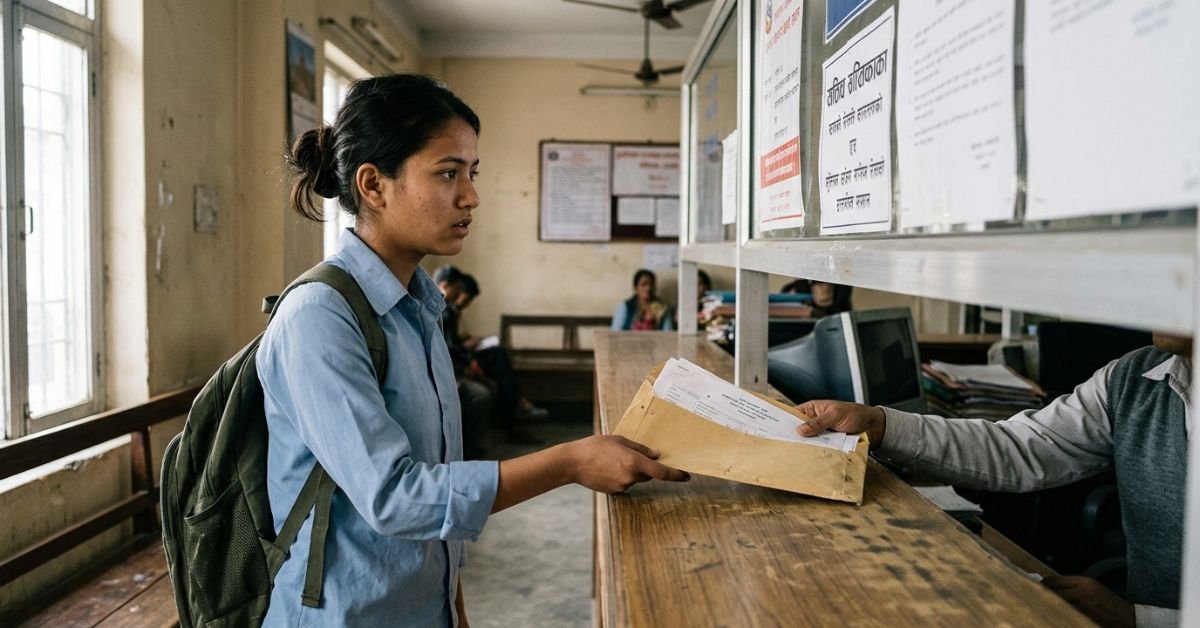
IBCC Equivalence Certificate: A Complete 2026 Guide for Every Type of Student
Rs 12,000 is what the urgent tier costs for a single O or A Level equivalence certificate double the ordinary foreign-qualification fee of Rs 6,000. That gap tells you something useful before you read another line: thousands of students every year discover their paperwork is wrong at the exact moment they cannot afford to wait, and pay twice to fix it.
Almost all of that panic is avoidable. The rules are published. They are simply scattered across half a dozen pages of the official site, written in committee language, and this is the part that catches people they are not the same for every student.
So this guide is built by student type. Find your pathway below, read that section, and skip the rest.
What an IBCC equivalence certificate actually is
The Inter Boards Coordination Commission is the federal body that decides what a non-Pakistani school qualification is worth in Pakistani terms. Its equivalence certificate standardises qualifications from more than 150 boards — O and A Levels, American, Canadian, Pearson and others — against national criteria, and it is required for admission to local schools, colleges and universities as well as for employment.
Two limits are worth knowing immediately.
First, the commission stops at Grade 12. Under Pakistan’s National Qualifications Framework, anything above Higher Secondary School — UK Level 4 and beyond — falls to the Higher Education Commission, not IBCC. If you need a bachelor’s degree equated, you are on the wrong website.
Second, equivalence is not an entry ticket. It converts your marks. You still sit MDCAT, ECAT or the university’s own test like everyone else.
The conversion tables: how grades become Pakistani marks
Every pathway below feeds into the same arithmetic, so start here.
GCSE / IGCSE / GCE O and A Levels (letter grades)
| Grade | Pakistani marks |
|---|---|
| A* | Above 90 (from examination session 2021 onwards) |
| A | 85 |
| B | 75 |
| C | 65 |
| D | 55 |
| E | 45 |
| F / G | Not applicable for IBCC equivalence |
GCSE 9–1 numbered grades
| Grade | Pakistani marks |
|---|---|
| 9 | Above 90 (from session 2021 onwards) |
| 8 | 87 |
| 7 | 82 |
| 6 | 77 |
| 5 | 70 |
| 4 | 60 |
| 3 | 50 |
| 2 | 40 |
| 1 | Not applicable |
International Baccalaureate (MYP and DP), session 2022 onwards
| Grade | Pakistani marks |
|---|---|
| 7 | Above 90 |
| 6 | 85 |
| 5 | 75 |
| 4 | 65 |
| 3 | 55 |
| 2 and 1 | Zero |
Now the detail almost every third-party “IBCC equivalence calculator” gets wrong. The top grade is not a fixed number. IBCC publishes separate subject-wise A* equivalent marks for each examination session — 2021, 2022, 2023, 2024, 2025 and 2026 each have their own notified PDF for O Levels, A Levels, IBDP and MYP. That is precisely why two students holding the same grade in the same subject can end up with different equivalence marks: the calculation runs session by session, and the average grade per subject shifts over time.
Treat any online calculator as an estimate. The notified session PDF on the official site is the number that counts.
If you sat O Levels inside Pakistan
This is the strictest pathway, and the one that produces the most deficiency letters.
Eight subjects are required: English, Mathematics, Urdu, Islamiyat and Pakistan Studies as compulsory, plus three elective academic subjects, each at a minimum grade of E. Pakistani students taking IGCSE, GCSE, GCE O Level or A Level examinations from within Pakistan must pass Urdu, Islamiyat and Pakistan Studies at O Level to obtain equivalence at all.
Two accommodations exist. Non-Muslim students may take Ethics instead of Islamiyat, either through their own examination board or any recognised Pakistani board. And both Urdu A (First Language) and Urdu B (Second Language) are accepted.
Science-stream students, note two rulings that quietly save admissions: Additional Mathematics taken in place of Biology or Computer Science still yields Science group equivalence at SSC level, and ICT or Computer Science combined with Physics and Chemistry also produces Science group equivalence.
If you sat O Levels overseas
Far lighter. Five subjects are required — English, Mathematics and three elective academic subjects, minimum grade E.
The exemption behind that reduction is set out in the equivalence rules: Pakistani students who study abroad and obtain qualifications equivalent to SSC and HSSC are exempt from Urdu, Islamiyat and Pakistan Studies, and students with foreign or dual nationality can claim the same exemption by submitting valid proof of nationality with the application.
You will need to evidence the study abroad properly. That means a photograph plus documentary proof of studies abroad, including the original passport and attested photocopies showing endorsed visas for the country concerned. The passport copy should cover visa details and the entry and exit stamps for the duration of study.
If you are an A Level student heading for MDCAT or ECAT
Three relevant A Level subjects are required for your target group — Physics, Chemistry and Biology for Pre-Medical; Physics, Chemistry and Mathematics for Pre-Engineering; any three electives for Humanities — each at minimum grade E. Computer Science studied alongside Physics and Mathematics at HSSC level produces Computer Science group equivalence.
Three practical points.
Your SSC or equivalent qualification must be proved before HSSC equivalence can be processed. If your Matric came from a Pakistani board and your A Levels from Cambridge, the Matric certificate has to be verified by that board first; the A Level side is verified online where possible, otherwise through the British Council. Cambridge International Education certificates from the past five years can be verified online by IBCC — which is why British qualifications generally move faster than others.
Applying for two groups? You receive a proper equivalence certificate for one group and an equivalence letter in lieu of a certificate for the other, with the group determined by the subjects passed in the final qualification.
And do not lean on your statement of result. It is valid for six months only; after that, the original certificate is required and applications without it are not processed.
If you hold a US High School Diploma
Marks are calculated from five academic subjects in grades 9 and 10 for SSC equivalence, and five academic subjects in grades 11 and 12 for HSSC equivalence. Canadian qualifications use ten subjects, five from each pair of grades.
The documentation is the heaviest of any pathway. A consolidated four-year official transcript covering grades 9 to 12, sealed, signed and embossed by the accredited issuing institution and delivered in a sealed envelope, is non-returnable — and it must record subjects and credits separately for each grade, including any transferred credits from prior learning. An attested copy of the school’s accreditation certificate and a school profile are also required.Students completing a High School Diploma at an American school inside Pakistan must additionally pass Urdu, Islamiyat and Pakistan Studies at SSC or O Level from any Pakistani board or British examination board, plus two Advanced Placement courses from College Board.
Missing a science subject? There is a documented remedy. A science subject passed at a recognised US community college counts toward Science stream equivalence provided it ran two semesters over one year and carried eight credits, with the college transcript submitted alongside the diploma.
GED holders: the diploma is recognised, but the examination must have been taken through an approved study centre in Pakistan, with a minimum two-year gap between your SSC or equivalent qualification and the GED, plus your GED ID and password for online verification.
If you are an IB student
The IB Diploma is assessed on its core components and subject choices, including Theory of Knowledge, the Extended Essay and CAS. IB students can enter medical and engineering programmes in Pakistan once equivalence is issued and the subject criteria in science and mathematics are met.
One MYP rule to check before you apply: internal MYP assessments are accepted only for applicants who studied abroad and for whom the IBO does not issue MYP certificates — MYP report cards from schools inside Pakistan are not accepted. Helpfully, Integrated Humanities studied at MYP level is recognised in place of Pakistan Studies at SSC level.
If you studied in the Middle East
Certificates and transcripts for the final three years of secondary education — Grade 10, Grade 11 and Grade 12 — must be submitted with English translations.
For Saudi Arabia specifically: online or digital certificates from the Ministry of Education, KSA are accepted when they carry a valid QR code or another online verification mechanism. Without a QR code, the documents must be physically verified and attested by the Ministry of Education KSA, the Ministry of Foreign Affairs KSA and the concerned embassy or consulate in Pakistan. School-issued report cards are not accepted at all — only Ministry certificates.Translations, where needed, must come from the concerned embassy or from the National University of Modern Languages (NUML), Islamabad.
If your qualification is local or indigenous
IBCC is not only for foreign boards. It also handles indigenous qualifications including Aama and Khasa, nursing diplomas and various national institutional awards.
| Qualification | Treated as | Additional requirement |
|---|---|---|
| DAE / D.Com from a recognised BTE | Post-SSC technical diploma | SSC verified by the BISE, plus diploma, all mark sheets and technical board verification |
| Shahadat us Sanwia Aama | SSC | Urdu, English and Pakistan Studies passed additionally at SSC level from a BISE or AIOU |
| Shahadat us Sanwia Khasa | HSSC | Urdu, English and two electives at HSSC level from a BISE or AIOU |
| Post-matric General Nursing diploma | HSSC (Nursing) | Board verification plus a valid Pakistan Nursing Council registration card |
| First two years of B.Sc. Home Economics | HSSC (Home Economics) | Verified SSC and university-verified mark sheets |
Two exclusions to note: HSSC equivalence is not granted to a one-year diploma or certificate, even from a recognised board, and ordinary professional or vocational qualifications are outside the scope, though BTE technical diplomas may be considered case by case.
Fees, timing and how to apply online
Three submission methods are offered: walk-in and courier, both of which handle originals and photocopies, and online submission, which is for photocopies only.
All three start in the same place. You register on the equivalence portal, log in, submit the application with your personal information and uploaded certificates and CNIC, pay the fee through the online instructions, and track progress from the dashboard. Courier applicants can pay via a 1Bill link or download a challan and pay at any UBL branch, then dispatch the completed form, payment receipt, original and photocopied certificates and a CNIC photocopy to the IBCC office.
| Service | Official fee |
|---|---|
| Foreign qualification | Rs 6,000 each |
| Local qualification | Rs 4,000 each |
| Aama / Khasa | Rs 1,500 each |
| Urgent — O/A Levels only | Rs 12,000 each |
| Duplicate certificate | Rs 8,000 |
| Verification of an issued certificate | Rs 600 per certificate plus Rs 300 courier |
Normal processing is stated as 15 to 20 working days, and the urgent tier exists only for O and A Levels — no other local or foreign qualification qualifies for it.
A duplicate is deliberately painful, so guard the original. Replacing a lost certificate requires an application, all original documents with attested copies, a copy of the previous certificate, the Rs 8,000 fee, a newspaper advertisement announcing the loss, and an affidavit attested by a first class magistrate on stamp paper of Rs 50 or above.
Why applications get rejected
The commission lists incomplete documentation, non-recognition of the foreign institution, discrepancies in transcripts and unverified academic records as the common causes. In practice, the recurring ones are these:
- Name mismatch. The name printed on the equivalence certificate is taken from the original board-issued qualification, not your CNIC — so where the two differ, the board must correct it first. Your father’s name, meanwhile, is recorded exactly as it appears on your CNIC. Name, father’s name and date of birth must match across every educational document and your CNIC or passport.
- A subject short. Eight O Level subjects and three A Level subjects are mandatory; a deficient student must pass the missing subject from the relevant examination board before the certificate can be issued. In some cases an additional subject studied at a higher level can compensate for a lower-level deficiency, provided the subject-count and combination criteria are still met.
- Missing board verification. Equivalence is granted only after the issuing authority has verified the documents.
- An expired statement of result submitted more than six months after issue.
- Untranslated documents where an embassy or NUML translation was required.
Rejected or short-changed? A written appeal with supporting documents or clarifications goes to IBCC and is reviewed by the Equivalence Committee. Remaining documents can be submitted in person, by courier, or through the CCD portal, attested as specified in the deficiency letter and carrying your application reference number.
Who should act now, and who can wait
Act this week if you are a Pakistan-based O or A Level student in a final admission cycle. Your risk is not the grade conversion — it is board verification and the eight-subject rule, both of which take longer than the certificate itself. Add the stated 15–20 working days to the verification wait, then work backwards from your university deadline.
Act soon, but calmly, if you hold a US, Canadian, Middle Eastern or IB qualification. Your bottleneck is document assembly: sealed transcripts, accreditation certificates, embassy attestations, NUML translations. Start collecting now; apply once the file is genuinely complete, because a deficiency letter costs more time than a careful week did.
You can wait if you have finished O Levels and are simply moving on to A Levels, or if your results are not yet issued. SSC is treated as equivalent to O Levels for progression purposes, and the certificate does not expire once you have it.
Do not pay for urgent processing until you have confirmed your subject combination meets the rule for your pathway. Speed does not fix a deficiency; it only delivers the deficiency letter faster.
One honest limitation: the figures and rules above are drawn from the official IBCC website as published, and the commission revises them by notification. Verify your specific fee, subject list and session-wise A* marks on ibcc.edu.pk before you submit.
FAQ
Can I get an IBCC equivalence certificate entirely online?
Partly. Online submission is available, but only for photocopies — walk-in and courier modes cover both originals and photocopies. Originals still have to be sighted and endorsed at the head office or a regional centre.
How do I track my application?
Log in to the equivalence portal with your application number or CNIC/passport number and check the status on your dashboard, which displays processing stages. A helpline is available for further assistance.