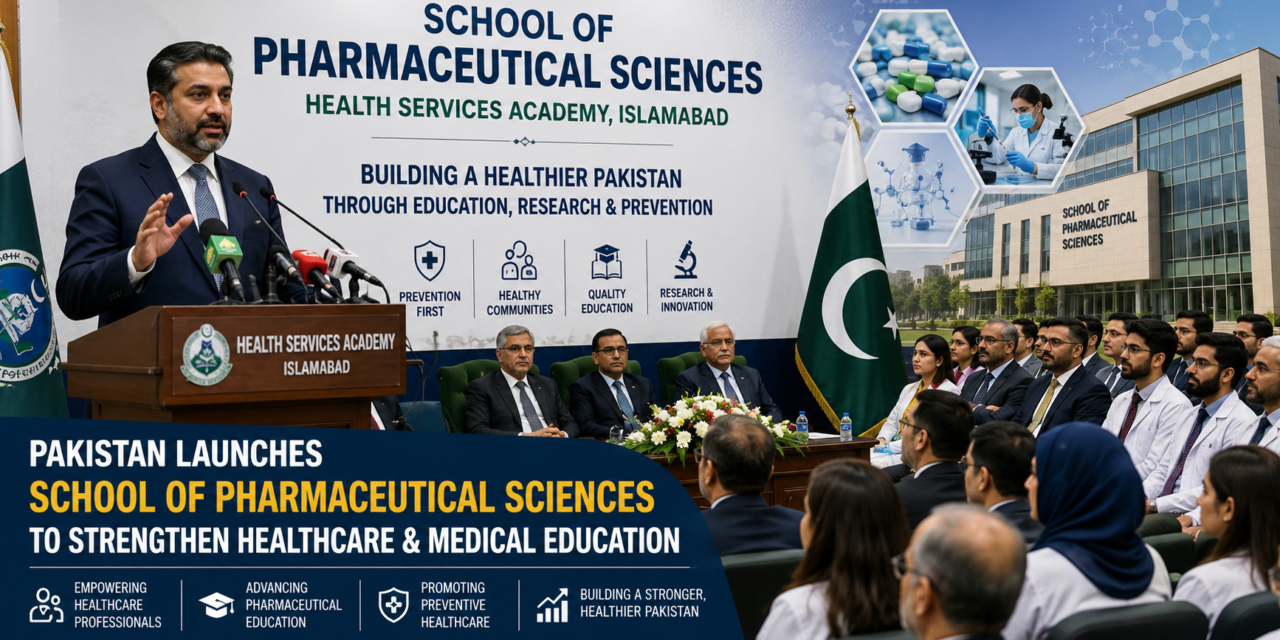
Inauguration Marks a Major Step Toward Health Services Academy Pakistan
The Government of Pakistan has taken a significant step toward strengthening the healthcare and education system of country with the inauguration of the School of Pharmaceutical Sciences at the Health Services Academy in Islamabad. The initiative was officially launched by a Federal Minister for National Health Services, Regulations and Coordination, Syed Mustafa Kamal, who have emphasized that Pakistan has the talent, institutional strength, and professional capacity to develop a modern, efficient, and sustainable system of healthcare. This development is being viewed as a strategic move to improve a pharmaceutical education, enhance the research of a public health, and build a more competent workforce of healthcare which is capable of addressing an emerging challenges of health in the country.
During the ceremony of inauguration, the minister have highlighted that the establishment of this institution is not just an academic milestone but also a national investment in the future of a healthcare system of Pakistan. He have stressed that the country needs a highly skilled professionals, with including a doctors, pharmacists, and experts of a public health, who are not only technically qualified but also ethically responsible and socially aware. According to him, strengthening the system of healthcare have requires a planning on a long-term, institutional development, and a strong focus on the education that have aligns with a modern global standards of healthcare. The School of Pharmaceutical Sciences is expected to play a key role in fulfilling this vision by producing a professionals who are capable of contributing to both a national and international health sectors.
Shift from Treatment-Based Healthcare to Preventive Healthcare Strategy
One of the most important aspects of the minister’s address was his strong emphasis on shifting the healthcare model of Pakistan from a treatment-centered system to a prevention-oriented approach. He have stated that expanding a hospitals and facilities of treatment alone will not solve the healthcare challenges in the country. Instead, there is a growing need to focus on preventing a diseases before they occur through a public awareness, early diagnosis, health education, and improved practices of a lifestyle.
This preventive approach of healthcare is considered globally as one of the most effective ways to reduce a costs of healthcare and improve the outcomes of population health. In Pakistan, where a resources of healthcare are often limited and growth of population is high, the need for a preventive strategies have becomes as even more critical. The minister have highlighted that a strong system of healthcare is not measured by the number of a hospitals alone but by how effectively it can prevent a people from becoming a patients in the first place. This shift in thinking have represents a major direction of policy that have aligns with a modern global trends of healthcare and sustainable goals of a development.
He have further stressed that a primary systems of healthcare must be strengthened at the level of grassroots so that a diseases can be controlled at early stages. This have includes a better programs of vaccination, campaigns of a health education, and improved access to the basic facilities of healthcare in a rural and urban areas. By focusing on a prevention, Pakistan can reduce the burden on a hospitals and improve the overall efficiency of its infrastructure of healthcare.
Importance of Pharmaceutical Education in Pakistan’s Healthcare System
Pharmaceutical education have plays a crucial role in any modern system of healthcare, and the establishment of the School of Pharmaceutical Sciences is expected to significantly enhance this sector in Pakistan. Pharmaceutical sciences are directly linked to a development of drug, safety of medication, clinical research, and frameworks of a regulatory that have ensure the effectiveness and safety of a medicines that are used in the system of healthcare.
At the inauguration, it was emphasized that Pakistan have needs a strong academic foundation in the pharmaceutical sciences to keep a pace with the global advancements in a medical research and innovation of healthcare. The new institution will not only provide an academic training but will also contribute to a development of policy in the regulation of pharmacy, drug quality control, and strengthening of a healthcare system.
The expansion of a pharmaceutical education is also important for addressing a challenges such as the counterfeit medicines, improper usage of drug, and lack of an awareness as regarding to the safety of medication. By producing a highly trained pharmacists and researchers, the institution will help to improve the quality of a healthcare delivery and ensure that patients receive a safe and effective treatments. This will also support the pharmaceutical industry of Pakistan by creating a skilled professionals who can contribute to a research, innovation, and international competitiveness.
Role of Health Services Academy in Public Health Development
The Health Services Academy, where the School of Pharmaceutical Sciences has been established, is already known as an important institution for the public health education and research in a Pakistan. With the addition of this new school, its role is expected to expand as further in shaping a policies of healthcare and developing a skilled professionals in the health sector.
According to an academic leadership, particularly Prof. Dr. Shahzad Ali Khan, pharmaceutical sciences are one of the core pillars of a modern systems of healthcare. He have stated that the new school will enhance an academic excellence and contribute to an evidence-based policymaking in the health sector of Pakistan. This have includes a research in the safety of drug, management of a healthcare systems, and interventions of a public health.
The integration of a pharmaceutical sciences into a broader framework of public health will allow for a more coordinated strategies of healthcare. It will also promote an interdisciplinary research, where the experts from a different fields such as the medicine, pharmacy, and public health work as together to solve a complex challenges of health. This approach is expected to improve an outcomes of healthcare and strengthen the ability of Pakistan to respond to a future health crises.
Development of a Skilled and Ethical Healthcare Workforce
A key focus of the initiative is the development of a trained, ethical, and professional healthcare workforce. The minister have emphasized that Pakistan must invest in producing a professionals of healthcare who are not only technically competent but also committed to an ethical standards and values of a public service.
The workforce of healthcare have includes doctors, pharmacists, nurses, and experts of a public health who play a critical role in delivering a services of healthcare to the population. However, the effectiveness of this workforce have depends on the quality of an education and training they have receive. The establishment of the School of Pharmaceutical Sciences is aimed at improving this quality by providing an advanced education, practical training, and opportunities of a research.
Ethical responsibility was also highlighted as a key requirement for the professionals of healthcare. In a modern systems of healthcare, ethical practices have ensure a safety of patient, transparency, and trust in between a providers of healthcare and the public. By focusing on an ethics, professionalism, and accountability, Pakistan have aims to build a system of healthcare that is both efficient and trustworthy.
Also Read: Pakistan Launches School of Pharmaceutical Sciences to Strengthen Health Services Academy Pakistan
Strengthening Public Health Research and Policy Development
Another important outcome of the new institution is the strengthening of a public health research in the Pakistan. Research is a critical component of any modern systemof healthcare because it have provides the evidence which is needed for an effective policymaking and planning of a healthcare.
The School of Pharmaceutical Sciences is expected to contribute as significantly to a research in an areas such as the development of drug, prevention from disease, healthcare systems, and a pharmaceutical regulations. This research will help the policymakers to make an informed decisions that have improve a delivery of healthcare and address the emerging challenges of health.
In an addition, the institution will play a role in developing the policies that are related to a regulation of medicine, healthcare quality standards, and growth of a pharmaceutical industry. This will not only benefit the sector of healthcare but also contribute to the overall economic development of the country by strengthening one of its key industries.
Long-Term Impact on Pakistan’s Healthcare System and National Development
The establishment of the School of Pharmaceutical Sciences is expected to have a positive effects on long-term on the healthcare system and national development of Pakistan. By improving an education, research, and training in workforce, the institution will help to create a more resilient and infrastructure of an efficient healthcare.
In the long run, this initiative is expected to reduce the burden of a disease, improve the outcomes of a public health, and increase a life expectancy. A stronger system of healthcare have also contributes to an economic stability by reducing a costs of healthcare and improving the productivity in workforce.
Moreover, the focus on a preventive healthcare will help to shift a national priorities toward the promotion of health and prevention from disease, which are essential for a sustainable development. By investing in an education and research today, Pakistan is laying the foundation for a healthier and more prosperous future.
FAQ’s
What is the School of a Pharmaceutical Sciences in Islamabad?
It is a newly established academic institution at the Health Services Academy which is aimed at improving a pharmaceutical education, research, and development of a healthcare workforce in Pakistan.
Who have inaugurated the School of Pharmaceutical Sciences?
The institution was inaugurated by a Federal Health Minister Syed Mustafa Kamal in during a formal ceremony in the Islamabad.
Why is this new school important for a healthcare system of Pakistan?
It have helps to strengthen a pharmaceutical education, improve the public health research, and produce a skilled professionals of healthcare for a better delivery of healthcare in the country.
What is the new healthcare focus of government in Pakistan?
The government is shifting from a treatment-based model of healthcare to a preventive system of healthcare which is focusing on a prevention from disease, health promotion, and primary healthcare.
How will this initiative benefit a public health in the Pakistan?
It will improve the quality of healthcare, reduce a disease burden, strengthen the research, and support a sustainability of healthcare system on long-term in Pakistan.
Conclusion
The inauguration of the School of Pharmaceutical Sciences at the Health Services Academy in Islamabad have represents a major milestone in the journey of Pakistan toward a healthcare reform and educational development. With a strong focus on the pharmaceutical education, preventive healthcare, and development of workforce, the initiative have aligns with a modern global standards of healthcare and goals of a national development.
By strengthening an academic institutions, promoting a research, and investing in the skilled professionals, Pakistan is taking an important step toward building a more efficient, ethical, and sustainable system of healthcare. The long-term impact of this initiative is expected to benefit not only the sector of healthcare but also the overall well-being and economic stability of the country.