KIMS Lahore Exams Controversy
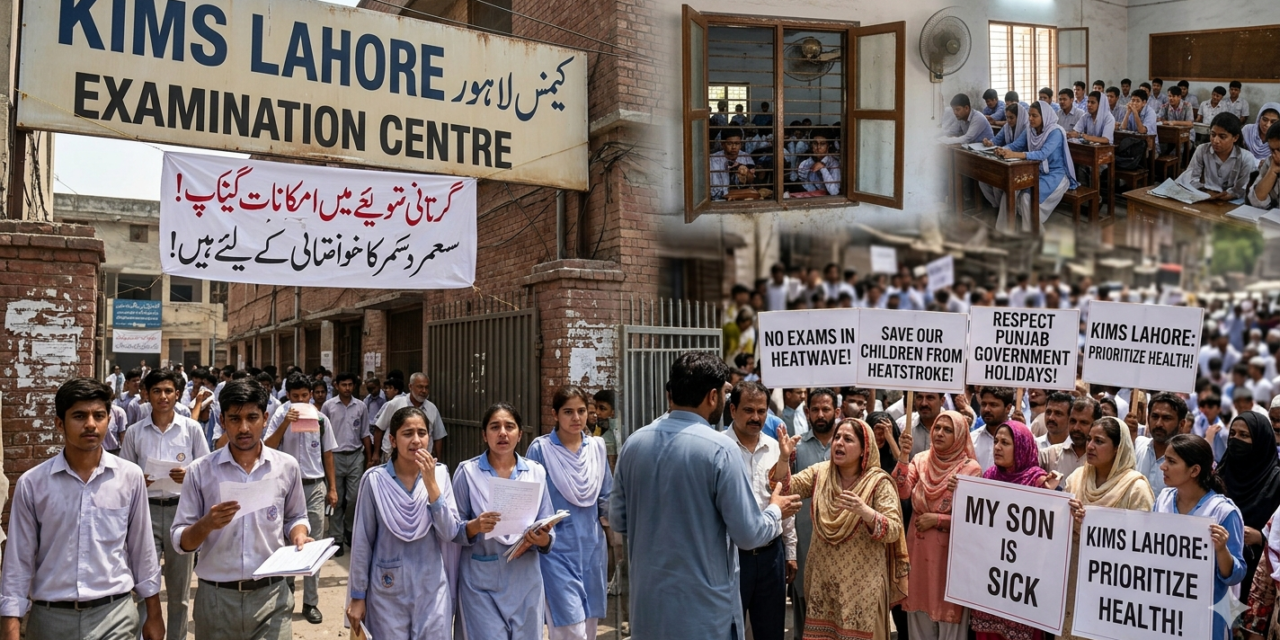
The Keynesian Institute of Management & Sciences (KIMS) Lahore has recently come under a strong public criticism after the reports were emerged that the institution have continued its schedule of examination in during the officially announced holidays of summer in Punjab. According to a multiple claims of student and schedules of an internal exam that are circulating on social media, O-Level examinations at the KIMS are reportedly continuing until a June 11, while Grade 8 exams are scheduled to extend up to a June 4, despite the government of Punjab which is announcing an early summer vacations that are starting May 22 due to a conditions of an increasing heatwave in across the province. This situation has triggered a wider debate in the education sector of Pakistan as regarding to a private school autonomy, wellbeing of student, and adherence to the directives of government.
The controversy have gained a traction as parents and students expressed a concern over what they described as “unfair academic pressure” in during an extreme conditions of weather. The government of Punjab had clearly issued an early summer vacation notification in a response to the rising temperatures, with aiming to protect the students from a health risks that are associated with a heatwaves. However, KIMS Lahore’s examination calendar have appears to follow a condensed academic structure, which the institution have reportedly justifies as part of its O-Level program design. This has raised a questions about whether a private institutions are fully complying with the directives of government holiday or operating under an independent academic policies that have conflict with a decisions of public welfare.
This news story has gained an attention due to its relevance to an ongoing educational reforms, climate-related disruptions, and concerns of a student welfare in Pakistan. Topics that are involving an education policy, conflicts in a school scheduling, and impacts of heatwave that have tend to perform as strongly because they combine a timely relevance with the engagement of public interest. Additionally, similar controversies which is involving other institutions in Lahore, such as fee increases at the Government College University (GCU) and attendance-related concerns at Lahore Grammar School (LGS), have further amplified the narrative of increasing a tension in between the private educational systems and regulatory expectations in Punjab.
Punjab Government’s Early Summer Vacation Decision and Heatwave Situation
The decision of Punjab government to announce an early summer vacations have came after a meteorological departments that are issued as repeated warnings about the severe conditions of heatwave in across a major cities, which is including Lahore, Multan, Faisalabad, and surrounding regions. Temperatures in many areas crossed a safe thresholds for the outdoor activity, especially for a children and young students who are more vulnerable to the heat-related illnesses such as dehydration, heat exhaustion, and heatstroke. As a preventive measure, authorities have directed both a public and private educational institutions to suspend an academic activities and begin the summer vacations as earlier than usual.
Despite of this directive, reports have suggest that KIMS Lahore have continued its schedule of an internal exam without a major adjustments. This has created a conflict in between the government policy and institutional academic planning. While some private schools have argue that their calendars of examination are pre-designed and aligned with an international academic systems such as the O-Level structures, critics have argue that the health of student and safety should take a priority over the rigid scheduling. Parents have particularly expressed a frustration, stating that children are being forced to attend an exams in the extreme conditions of weather, which have not only affects a performance but also raises a serious health risks.
Education experts have believe that this situation have highlights a broader issue within the schooling system of Pakistan, where a private institutions have often operate under a semi-autonomous frameworks. While they are expected to follow a government-issued directives of safety, mechanisms of enforcement are sometimes weak, which is leading to an inconsistencies in the implementation. This controversy has therefore become a case study in how the decisions of policy are interpreted as differently in across an educational institutions, especially in during a conditions of emergency such as heatwaves.
Student Reactions and Growing Public Concerns Over Exam Scheduling
Students and parents have associated with a KIMS Lahore have reportedly voiced a strong concerns that are regarding to the continuation of exams in during the period of an official summer break. Many students have claim that the academic workload, combined with an extreme conditions of weather, has have created an unnecessary stress and discomfort. Social media platforms have played a significant role in amplifying these voices, with a several posts which is criticizing the decision of institution to proceed with an exams despite of a warnings of government.
Some students have argue that while an academic discipline is important, the timing of an examinations should reflect the environmental realities and wellbeing of a student. They have believe that scheduling a high-stakes exams in during a peak summer heat have undermines their ability to perform as effectively. Parents, on the other hand, have raised a concerns about the transportation safety, heat exposure in during a travel, and lack of an adequate cooling arrangements at the centers of examination. These issues have collectively contributed to a growing dissatisfaction in among the stakeholders.
From a perspective of digital media, this type of controversy have tends to gain a traction because it have combines an emotional engagement with the real-world impact. Stories that are involving the students, education systems, and decisions of government are highly clickable, especially when they involve a conflict or perceived injustice.
Examination Schedule at KIMS Lahore and Institutional Response Context
According to the available information which is shared by students and internal sources, KIMS Lahore’s examination structure for an O-Level and Grade 8 students have follows a condensed academic calendar. The institution have reportedly operates on a tightly packed schedule, which have results in an examinations that are extending into a periods that overlap with a public holidays. In this case, O-Level exams are said to continue until the June 11, while Grade 8 assessments extend until June 4, despite the official summer vacation that are beginning on May 22 in Punjab.
Supporters of such an academic scheduling have argue that O-Level programs often follow a frameworks of an international examination, which have require a strict adherence to the predefined academic timelines. They have suggest that shifting the dates of exam could disrupt an academic progression and alignment with a boards of an external examination. However, critics have counter this argument by emphasizing that a local environmental conditions and directives of a government emergency should take a precedence over the rigid academic calendars, especially when a safety of student is at risk.
This tension in between an institutional autonomy and regulatory compliance is not new in the education sector of Pakistan. Private schools have often design their schedules as independently, but government interventions in during an emergencies such as the heatwaves or concerns of a public health have create a situations where the adjustments are expected. The lack of a clear mechanisms for enforcement have sometimes leads to a confusion and criticism in public, as seen in this case.
Other Private Institutions Facing Similar Criticism in Lahore
The controversy which is surrounding KIMS Lahore did not emerge in an isolation, as it have comes at a time when a several educational institutions in Lahore are already under a public scrutiny for the different policy-related decisions. In a recent weeks, Government College University (GCU) Lahore have faced a criticism after the reports suggested a significant increase in the summer semester fees, which many students and parents that have described as an unnecessary financial burden in during an already challenging economic conditions. The fee hike have sparked a debates about an affordability, accessibility, and fairness in a higher education, especially for a students that are belonging to a middle-income families. While administration of university have defended the increase as necessary for an institutional sustainability and operational costs, critics have argued that such a decisions reduce an educational inclusivity and disproportionately have affect a financially weaker students.
Similarly, Lahore Grammar School (LGS), one of the most prominent private school networks in the Pakistan, has also been mentioned in a public discussions that are regarding adherence to a government holiday notifications. Reports that are circulating on the social media have suggested that some private school branches continued an academic activities or required attendance despite the official announcement of a summer vacations by the government of Punjab. Although these claims have vary by a branch and region, the discussion has fueled a broader narrative that the private institutions sometimes operate as independently of a government directives. This perceived inconsistency has contributed to a rising frustration in among the parents who expect a uniform implementation of an educational policies in across both the public and private sectors.
From a perspective of an educational policy, these cases have highlight a recurring challenge in the schooling system of Pakistan: the gap in between an announcements of regulatory and ground-level implementation. While authorities of government have issue a directives in during the emergencies such as a heatwaves, enforcement in across a thousands of the private institutions have remains as uneven. This have creates a situations where some schools comply as immediately, while others have continue an academic schedules as based on an internal policies. As a result, controversies like as the KIMS Lahore exam scheduling issue have tend to gain a traction as quickly, especially when they align with a broader public concerns about the fairness, safety, and an institutional accountability.
Impact of Heatwave Conditions on Students and Academic Performance
The ongoing conditions of a heatwave in Punjab have significantly intensified a concerns about the wellbeing of student in during an academic activities. Medical experts have consistently warn that a prolonged exposure to the high temperatures can lead to a dehydration, fatigue, dizziness, and in severe cases, heatstroke. Students who are appearing in an examinations in during such a conditions may face a reduced levels of concentration, lower cognitive performance, and increased physical discomfort, all of which can negatively impact an academic outcomes. These risks have become as more pronounced in a densely populated urban areas like as Lahore, where the temperatures have often feel as higher due to an urban heat island effects.
Parents and education advocates have argue that the examinations of scheduling in during a conditions of an extreme weather have places an unnecessary stress on a students, particularly younger age groups such as the students of Grade 8. Many have believe that educational institutions should prioritize a flexible academic calendars that can adapt to an environmental emergencies. The argument is not necessarily against an academic rigor but rather against the rigid scheduling that have fails to account for a real-world conditions that are affecting a health of student. In contrast, some private institutions have maintain that maintaining a academic timelines is essential for a completion of curriculum, especially in the systems that are aligned with an international examination boards.
This debate have reflects a larger global issue where a climate change is increasingly affecting an academic planning and institutional scheduling. Countries that are facing an extreme conditions of weather are gradually adapting by introducing a flexible academic calendars, online assessments, or heatwave contingency plans. In Pakistan, however, such an adaptive systems are still developing, and the lack of a standardized heat-response educational policies have often results in an inconsistent decision-making at the institutional levels. The KIMS Lahore case has therefore become a symbolic example of how a climate-related disruptions are influencing an educational debates in the South Asia.
Public Response and Social Media Outrage Over School Policies
Social media platforms have played a central role in amplifying the controversy which is surrounding the examination schedule of KIMS Lahore. Students, parents, and commentators of education have shared a posts that are expressing a frustration over what they perceive as disregard for a government-issued directives of summer vacation. Hashtags that are related to a school holidays and welfare of student have circulated as widely, with contributing to an increased visibility of the issue. In many cases, social media discussions have tend to simplify a complex institutional policies into an emotionally charged narratives, which can accelerate an outrage in public even before the official clarifications are issued.
However, social media have also serves as an important accountability tool in the modern education systems. It have allows the students and parents to voice a concerns as directly and publicly, which is increasing a pressure on institutions to justify their decisions. In this case, discussions have centered around a fairness, health risks, and administrative transparency. Some users have defended the KIMS Lahore by suggesting that private institutions have a different academic calendars and should not be judged as solely on a public school schedules. Others have strongly disagree, with emphasizing that the directives of an emergency government should apply as universally regardless of an institutional type.
Also Read: HEC New Rules for Visiting Faculty in Pakistan Universities
Role of Education Authorities and Possible Regulatory Actions
The Education Department of Punjab have plays a key role in issuing the academic schedules, notifications of holiday, and directives of emergency for a schools in across the province. However, enforcement of these directives in a private institutions have often depends on a compliance rather than a strict regulatory intervention. In a cases like as the heatwave-induced early summer vacations, authorities have typically expect that all the schools—public and private—to adhere to a guidelines of safety. When discrepancies have arise, the department may issue a reminders, conduct an inspections, or request the institutional explanations.
In the current scenario which is involving KIMS Lahore, there has been no official confirmation of a disciplinary action at the time of reporting. However, public pressure and media attention have often influence how such a cases are addressed in the subsequent administrative reviews. Education experts have suggest that a clearer frameworks of policy are needed to ensure a uniform implementation of the emergency decisions in across all the educational institutions. This may include a standardized academic calendars, protocols of enforceable safety, and a stronger coordination in between the regulatory bodies and private school networks.
At a broader level, the situation have highlights the need for an improved communication in between a policymakers and educational institutions. While schools have require a flexibility to manage the academic requirements, directives of government in during an emergencies are designed to protect a health of public and safety. A balanced approach that have respects an institutional autonomy while ensuring a compliance with the regulations of safety that may help to prevent a similar controversies in the future.
FAQs
Why is the KIMS Lahore facing a criticism?
KIMS Lahore is facing a criticism for an allegedly continuing exams in during the official summer holidays of Punjab that are announced due to a severe heatwave.
When did the Punjab have announce a summer vacations in 2026?
Punjab government have announced an early summer vacations that are starting from May 22 due to a rising temperatures and conditions of heatwave in across the province.
Are private schools in Pakistan required to follow a government holidays?
Yes, private schools are generally expected to follow the government-issued holiday schedules, especially in during a situations of emergency like as heatwaves, although an enforcement may vary.
What exams are reportedly ongoing at the KIMS Lahore?
Reports have suggest that O-Level exams have continue until June 11 and Grade 8 exams until June 4 despite of the schedule of a summer vacation.
How are students reacting to the situation?
Students and parents have expressed a concern over the health risks, stress, and academic pressure which is caused by an exams in during an extreme conditions of weather.
Are other schools also facing a similar issues?
Yes, other institutions like as the GCU and LGS have also faced a criticism which is recently for a hikes in fee and attendance-related concerns in during a holiday periods.
Conclusion – Balancing Academic Rigor and Student Safety in Pakistan’s Education System
The controversy which is surrounding KIMS Lahore’s examination schedule in during a summer holidays in Punjab have reflects a deeper structural issue within the education system of Pakistan. It have highlights the ongoing tension in between an academic rigidity and welfare of student, which is particularly in during an environmental emergencies such as the heatwaves. While a private institutions have often operate under an independent academic frameworks, government-issued directives of safety are intended to ensure a uniform protection for all the students regardless of a school type.
This case have also demonstrates that how an educational decisions can quickly escalate into a public debates when they intersect with a risks of health, policy enforcement, and social expectations. The involvement of other institutions such as GCU and LGS in a related controversies have further emphasizes that this is not an isolated incident but part of a broader discussion about the transparency, fairness, and accountability in an education.
Ultimately, the KIMS Lahore controversy have serves as a reminder that systems of education must continuously adapt to a changing environmental, social, and regulatory conditions. A collaborative approach in between the authorities of government, private institutions, parents, and students is necessary to ensure that an academic excellence does not come at the cost of a wellbeing of student.