Introduction to Beaconhouse National University BNU News: A Turning Point in Pakistan’s Higher Education System
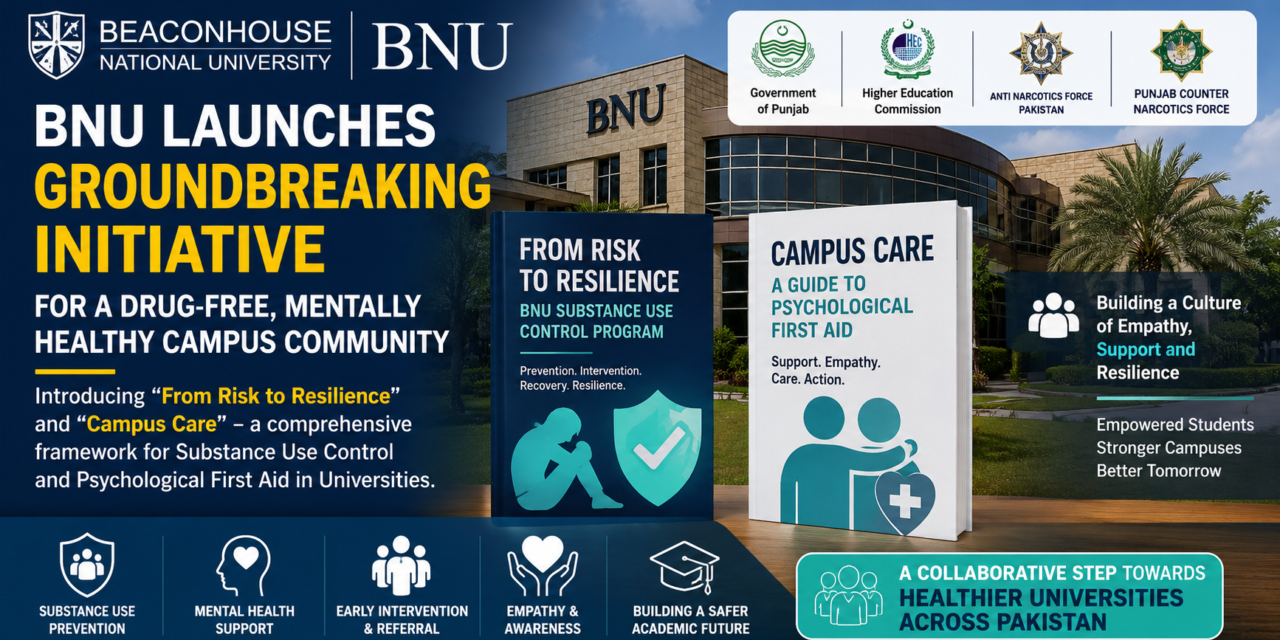
Beaconhouse National University (BNU), which is one of most prominent liberal arts institutions in the Pakistan, has introduced a groundbreaking initiative which is aimed at transforming the welfare of student and support systems of mental health in across the universities. The university has officially launched a two comprehensive manuals that are titled as “From Risk to Resilience: BNU Substance Use Control Program” and “Campus Care: A Guide to Psychological First Aid”. These publications have represent a major shift in how the institutions of a higher education in Pakistan have approach a substance use the prevention, psychological distress, and well-being of student. Unlike a traditional punitive frameworks, this initiative have emphasizes an empathy, early intervention, structured systems of support, and institutional responsibility, with marking a significant evolution in an academic governance.
The initiative was unveiled in during a high-profile ceremony which was attended by a senior officials in government, with including Punjab’s Senior Minister Marriyum Aurangzeb and Provincial Minister for a School and Higher Education Rana Sikandar Hayat. The presence of a vice chancellors from the multiple universities, representatives from a Anti-Narcotics Force (ANF), Punjab Counter Narcotics Force (CNF), and leading psychologists have highlights the seriousness and national importance of this program. The initiative is not only a reform at university-level but also a potential nationwide model that have aims to address a deeply rooted challenges that are affecting the students in across the education system of Pakistan.
BNU’s Groundbreaking Initiative for Student Wellbeing
The initiative which is introduced by BNU have reflects a comprehensive understanding of modern challenges to student, particularly those that are related to a mental health, emotional stress, and substance use vulnerability. According to the leadership of university, the goal is to create a safe, supportive, and drug-free academic environment where the students can thrive as academically and emotionally. The From Risk to Resilience manual have focuses on a strategies of prevention, structured systems of intervention, and pathways of rehabilitation for students on long-term who may be affected by a substance-related issues.
Meanwhile, the Campus Care guide have provides a practical psychological first aid tools for the faculty, administrative staff, and student leaders. It have equips them with the ability to identify an early signs of the psychological distress, provide an immediate emotional support, and ensure a timely referrals to the services of a professional mental health. This dual-manual system have reflects a holistic framework that have addresses both the root causes and visible symptoms of a vulnerability of student. By integrating an awareness of mental health into the institutional structure, BNU is setting a new benchmark for the institutions of a higher education in Pakistan.
Government and HEC Support for Mental Health Reform in Universities
One of the most significant aspects of this initiative is the strong institutional and governmental support it has received. The Government of Punjab has officially expressed its commitment to adopting and scaling the framework which is introduced by BNU. Senior Minister Marriyum Aurangzeb have praised the initiative for breaking a long-standing social taboos that are surrounding to the use of drug and mental health in an academic institutions. She have emphasized that the program have moves as beyond an enforcement alone and instead focuses on an empathy-driven intervention and rehabilitation of student.
Additionally, the Higher Education Commission (HEC) of Pakistan has taken a steps to establish a dedicated committee under the leadership of a BNU Vice Chancellor Dr. Moeed Yusuf. This committee have aims to replicate the model in across a universities nationwide, with ensuring that educational institutions will develop a standardized frameworks for the substance use prevention and psychological support. This collaboration in between a bodies of government and academic institutions have demonstrates a coordinated national effort to address the challenges that have a long been overlooked due to the stigma and institutional hesitation.
From Risk to Resilience: A Structured Approach to Substance Use Prevention
The From Risk to Resilience program is designed as a structured roadmap for the universities to prevent, identify, and address a substance use the issues in among a students. It is built on an evidence-based practices and real institutional experiences from a BNU itself. The framework have identifies a key risk factors that have contribute to a vulnerability of substance, with including an academic pressure, emotional trauma, peer influence, and lack of an institutional support systems.
Rather than relying as solely on a disciplinary action, the program have emphasizes early intervention and rehabilitation. It have introduces a mechanisms for the counseling, peer support groups, campaigns of awareness, and pathways of a structured recovery. The core philosophy of this framework is that substance use should not be treated purely as a disciplinary issue but as a complex social and psychological challenge. This shift in a perspective have allows the universities to adopt as more humane and effective strategies that have focus on a development of student on long-term rather than a punishment on short-term.
Campus Care: Psychological First Aid in Academic Environments
The Campus Care manual introduces a structured approach to psychological first aid within university environments. Psychological first aid have refers to the immediate and compassionate response as provided to the individuals who are experiencing an emotional distress, trauma, or psychological crisis. The guide have trains a members of faculty, administrative staff, and student leaders to recognize a signs of the mental health struggles and respond as appropriately.
This have includes an active techniques of listening, non-judgmental communication, methods of an emotional stabilization, and referral protocols to a professional services of mental health. The manual have recognizes that environments of university have often lack an immediate access to the professionals of mental health, which is making it as essential for a non-specialized staff to act as first responders in the psychological crises. By embedding these skills into an institutional culture, BNU is ensuring that mental health support have becomes an accessible and immediate resource rather than a distant or stigmatized service.
Root Causes of Student Stress and Substance Vulnerability
A critical aspect of BNU’s research highlights the root causes of psychological stress among university students. The institution identifies three major contributing factors: childhood or family-related trauma, peer pressure and toxic social relationships within academic environments, and a generational communication gap between Gen Z students and academic staff. These issues have collectively create an environment where the students may feel as isolated, misunderstood, or emotionally overwhelmed.
The lack of an effective channels of communication in between a students and faculty have further intensifies these challenges, with often leaving the students without a proper emotional support systems. In such a situations, some individuals may turn to the harmful mechanisms of coping, with including a use of substance. By identifying these underlying issues, BNU has shifted the focus from a surface-level treatment to the deep structural understanding of a psychology of student, which is making the initiative as more sustainable and impactful in the long term.
Empathy as the Foundation of Modern University Systems
One of the most important philosophical shifts that were introduced by BNU is the emphasis on an empathy as a core institutional value. Traditional university systems have often rely as heavily on a disciplinary action and punitive measures when dealing with the misconduct of student or substance-related issues. However, BNU’s framework have argues that enforcement alone is insufficient and must be combined with a compassion, understanding, and structured support.
Empathy-based intervention have ensures that the students are not immediately criminalized or stigmatized but are instead guided toward a recovery and reintegration. This approach have not only improves an outcomes of student but also strengthens an institutional trust and engagement. By fostering a culture of the care, universities can create an environments where the students have feel as safe to seek a help without the fear of a judgment or punishment.
National Impact and Future of Higher Education in Pakistan
The initiative introduced by BNU is expected to have far-reaching implications for the future of higher education in Pakistan. With support from government authorities and HEC, the framework is likely to be adopted across universities nationwide. This could lead to the establishment of a standardized mental health and substance use policies in across an academic institutions, fundamentally transforming the experience of student.
Experts have believe that this model could serve as a blueprint for other developing countries that are facing a similar challenges. By integrating an awareness of a mental health, prevention of a substance use, and student support systems into an academic policy, Pakistan is taking a significant step toward modernizing its system of education. The initiative have also aligns with a global trends in the higher education, where a well-being of student is increasingly recognized as a critical component of an academic success.
FAQs
What is new initiative of BNU about?
BNU has launched a manuals that are focused on a control of substance use and psychological first aid to improve the wellbeing of student in a universities.
What are “From Risk to Resilience” and “Campus Care”?
These are two official manuals of BNU that are designed for a prevention from drug and mental health support in an academic institutions.
How will this program help the students in Pakistan?
It have provides a structured support, early intervention, and tools of a mental health to create a safer and healthier campus environments.
Is the initiative supported by the government?
Yes, the Government of Punjab and HEC have shown a strong support and plan to expand the model in nationwide.
Why is psychological first aid important in a universities?
It will helps the staff and faculty to respond as immediately to the emotional distress of student and guide them toward a professional support.
Conclusion: A New Era of Student Protection and Institutional Responsibility
Beaconhouse National University’s initiative have marks a defining moment in the educational history of Pakistan. By launching a structured manuals as focused on substance use control and psychological first aid, the institution has demonstrated that universities can play a proactive role in addressing a complex social and psychological issues. The emphasis of program on an empathy, prevention, and structured intervention have reflects a modern and progressive approach to the welfare of student.
With a strong support from the bodies of government, authorities of regulatory, and academic leadership, this initiative has the potential to reshape the landscape of a higher education in the Pakistan. It have signals a shift from a reactive disciplinary systems to the proactive care-based frameworks, with ensuring that the students are not only educated but also protected, supported, and empowered. Ultimately, this initiative have represents a powerful commitment to building a safer, healthier, and more resilient academic communities for the future generations.