Libraries on Wheels
Punjab’s education authorities are preparing to introduce an ambitious and forward-looking initiative called “Libraries on Wheels” for government schools across Lahore. The project is designed to bring a books, tablets, and tools for a digital learning that are directly to students instead of waiting for a students to come to a fixed building of library. In a time when the systems of education in across the world are trying to mix a traditional reading with the modern technology, this initiative have stands out as a practical and student-friendly model. It have aims to strengthen a reading habits, improve an access to the educational resources, and create a more interactive environment of learning for children in a public schools. The plan is especially important for a students who may not have an easy access to the private libraries, digital devices, or updated materials pf learning at home. By turning the electric vehicles into a mobile libraries, the government is trying to make a learning as more flexible, visible, and engaging. This is not just a transport idea; it is an education reform idea that have connects a mobility, technology, and reading culture in one project. If implemented as properly, the initiative could become a model for other cities in the Punjab and later for other provinces in Pakistan as well. It have reflects a broader shift in the planning of education, where learning is no longer limited to a classrooms and textbooks alone but expanded through a smart tools, digital content, and better access for every child.
A Modern Library System Designed for Government Schools
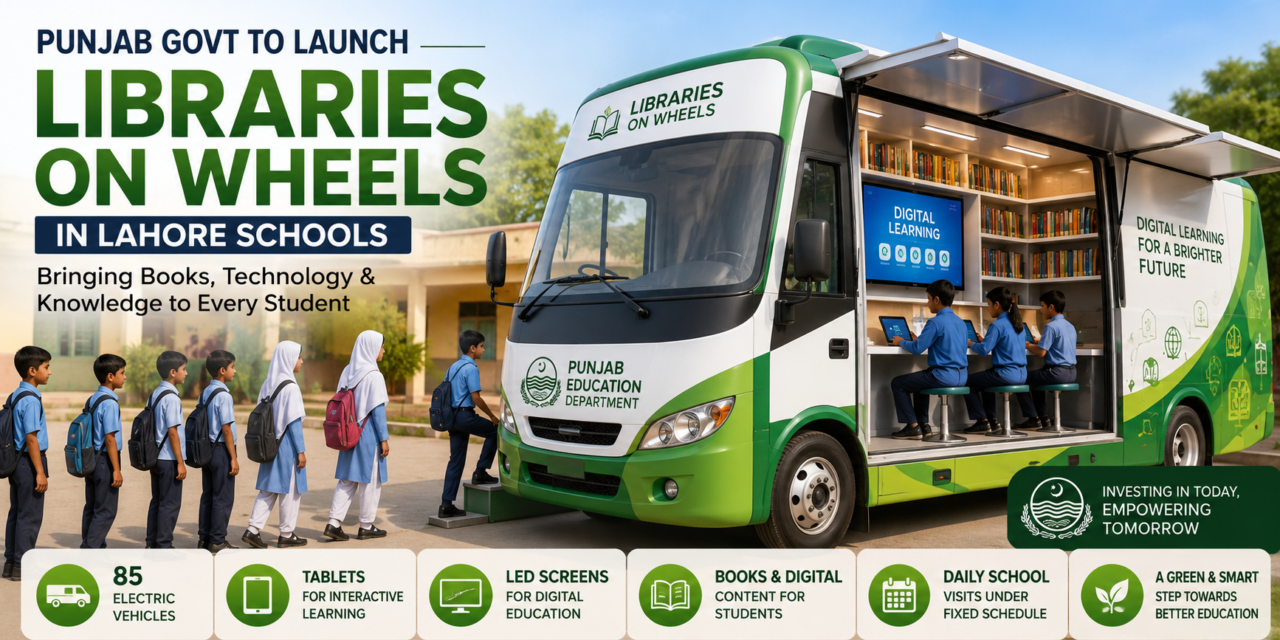
The most notable part of this project is its modern structure. According to the plan, 85 electric vehicles will be purchased and converted into a mobile libraries, each serving as a small but center of a powerful learning on the wheels. Every vehicle will carry 20 tablets and a large LED screen, with creating an environment where the students can interact with both a books and digital content in the same visit. This combination is important because it have connects the benefits of a traditional reading with the convenience of a technology. Many systems of school talk about digital learning, but this project actually takes the resources to the students. It is especially useful for government schools where library facilities may be limited or outdated. The idea of a mobile library also solves the problem of unequal access, because students in different schools can receive the same educational support on a scheduled basis. The use of electric vehicles adds another smart dimension to the project, making it environmentally cleaner and modern in appearance. These vehicles are expected to visit schools daily under a fixed schedule, which means the service will be organized and reliable rather than random. A project of this type can also help the children see books and materials of learning as part of a daily life, not just as something which is available in a special circumstances. That shift in a perception can have a lasting effect on how the students value a reading, exploration, and self-learning.
How the Project Will Work in Practice
The success of the Libraries on a Wheels project will depend on how smoothly it have operates at the school level. The District Education Authority has indicated that each mobile library will visit one school per day, with following a planned and fixed schedule. This is an important detail because a predictable routine will helps the schools to prepare ahead of a time and ensures that students can benefit from the service without a confusion. The mobile libraries will not only provide a books but will also allow an activities of a digital learning through the tablets and the LED screen which is installed in each vehicle. That means a classroom could become part of a larger learning experience where students read stories, watch educational material, and use digital resources under supervision. The project have also includes an arrangements of a daily charging, as the electric vehicles will be charged at a designated stations of charging that are set up within a schools. This have shows that the initiative has been designed with an operational planning in mind, not just a visual appeal. In the educational systems, logistics have often determine whether a good idea becomes a successful reality. A mobile library can only work if the vehicles are maintained, schedules are followed, and school staff have cooperate with the process. If the authorities will manage these practical elements as properly, the project could become a regular and dependable educational service. It may also encourage an administrators of school to think as more creatively about how the libraries, technology, and engagement of student can work as together in the public sector.
Why Reading Culture Still Matters in a Digital Age
Although this project includes tablets and digital learning, one of its strongest goals is to encourage book reading among students. This is important because a digital learning should not replace the culture of reading; as it should strengthen it. In many schools, students spend more time in memorizing the material than discovering the joy of a reading. A mobile library can help to change that by giving the children a direct access to books that are interesting, age-appropriate, and educational. When students see books as being brought to them regularly, reading have begins to feel as more accessible and less formal. This can be especially helpful for a younger learners, who have respond as well to a visual and environments of an interactive learning. The project also has the potential to build a better habits of study by exposing the children to a wider range of topics as beyond their standard curriculum. Reading have improves a vocabulary, imagination, concentration, and academic performance on long-term. At the same time, digital content can support the students who learn as better through the visuals, touchscreens, and explanations of multimedia. The combination of a reading and technology may therefore create a balanced model of learning that have suits a different types of the students. In a country where the public education have often faces a limitations of resource, even a small increase in the engagement of reading can have a meaningful results. If students will begin to enjoy reading as more frequently, the impact may go as beyond a school results and influence the confidence, skills of communication, and habits of a lifelong learning.
Rs. 198 Million Investment in Educational Innovation
The project is estimated to cost Rs. 198 million, which makes it a major investment in educational innovation for Lahore’s government school system. Whenever a public funds are used for the education, people have naturally ask that whether the money will produce a real results. In this case, the answer will depend on an implementation, maintenance, and consistency on long-term. Still, the concept itself is significant because it have represents a shift from an ordinary spending toward a more targeted educational intervention. The budget is not being spent only on a vehicles; as it is being used to create a complete system of learning that have includes a mobility, digital tools, and access to student. That is why the project has drawn an attention as a modern and practical education initiative. If the mobile libraries will prove as successful, they could reduce the gap in between a schools with the strong resources and schools that have still lack a basic support. Public education systems have often struggle with an outdated spaces of library, limited book collections, and low engagement of a student. A dedicated model of mobile may offer a smarter way to distribute the resources of learning as more fairly. The project may also inspire a further innovation in other areas, such as the mobile science labs, digital learning vans, or traveling counseling services for a students. In that sense, the Libraries on Wheels program is not just a single announcement; as it could be a sign of how the public education in Punjab is beginning to adapt to a modern needs with a more flexible, student-centered solutions.
Technology, Learning, and the Future of Public Education
One of the most interesting elements of the initiative is the way it have blends a technology with education. According to the plan, each vehicle will have tablets and a large LED screen to support an interactive learning. This is important because the students today are growing up in a digital world, and systems of education must adapt to their environment of learning. Traditional books have remain as valuable, but digital content can make a lessons as more engaging, especially when it have includes a videos, visual explanations, and guided activities. The project can help the students to become as familiar with technology in a supervised and educational setting, which is especially useful for a students of government school who may have a limited exposure to such tools. The inclusion of a digital resources have also suggests that the authorities want to modernize the way of learning is delivered, not just increase the number of a books that are available. This is a meaningful step because the modern education have requires both a knowledge and access. A child who reads a book and then watches a related explanation on a screen may understand the topic as more deeply than through a textbook alone. The project may also help the teachers by giving them an additional material to support the lessons in classroom. Over a time, such an integration could improve the participation of student, make the lessons as more interactive, and reduce the gap in between a conventional schooling and modern educational standards. If executed with a care, the project can become a practical example of how a technology can support the learning without replacing the human side of a teaching.
A Positive Step for Lahore and a Possible Model for Other Cities
The decision to begin this project in Lahore is important because the city has a large number of the government schools and a diverse population of student. A successful pilot in Lahore could provide a valuable lessons for an expansion in future into other districts of Punjab. Government education projects have often work as best when they start with a manageable area, allow time for an adjustment, and then grow as based on a real feedback. That is why this initiative could become as more than a one-city program if it have performs as well. The model is attractive because it is flexible, visually modern, and easy to explain to the public. It have also combines two goals that are often discussed as separately: with improving a literacy and promoting the digital education. Many education reforms have fail because they focus on only one side of the problem, but this project have tries to address both an access to the books and access to technology at the same time. The involvement of the District Education Authority have also suggests that the project is being managed within the formal system of school rather than as a temporary outside activity. CEO Tariq Mahmood has stated that a modern digital technology will be used to provide the students an access to the advanced resources of learning, while both the books and digital educational content will be made as available through the initiative. That message have reflects the broader spirit of the program: education should be practical, inclusive, and connected to the real needs of a students. If that vision is delivered as effectively, Lahore’s Libraries on Wheels may become as one of the more memorable projects of education in the province.
FAQs
What is the Libraries on a Wheels project?
It is a initiative of Punjab government to provide the mobile digital libraries in a Lahore government schools.
How many vehicles will be included in the project?
The project will use an 85 electric vehicles that are converted into a libraries of mobile.
What facilities will the students get through the mobile libraries?
Students will get an access to a books, tablets, LED screens, and digital educational content.
Why is Punjab launching mobile libraries in a schools?
The initiative have aims to improve a habits of reading and promote the digital learning in among a students.
How will the mobile library system operate?
Each mobile library will visit one school daily under a fixed schedule.
What is the estimated cost of the Libraries on a Wheels project?
The government of Punjab has estimated the cost of project at a Rs. 198 million.
Conclusion: A Smart and Hopeful Education Initiative
The Libraries on Wheels project have represents a thoughtful attempt to improve a public education through the movement, access, and innovation. It is not just about sending a vehicle to a school; it is about sending the opportunity, information, and inspiration as directly to a students. With a 85 electric vehicles, tablets, LED screens, and a scheduled school visit system, the project has the potential to create a culture of stronger reading and a more modern atmosphere of learning in the government schools in Lahore. Its estimated cost of a Rs. 198 million have shows that the authorities are treating it as a serious investment in the future of an education. More importantly, it have acknowledges a simple truth: students learn better when the resources come within a reach. Whether through a books, digital tools, or interactive content, children need a regular exposure to the materials of learning that have spark a curiosity and confidence. If the project is managed as well, it could improve not only an academic support but also the overall atmosphere of a public education in Lahore. It may encourage the children to read as more, teachers to teach a creatively, and policymakers to think as differently about how an educational services are delivered. In the long run, Libraries on Wheels could become a symbol of the smart public education in a Punjab, with showing that with the right planning, even a mobile library can help to build a stronger future for students.