HEC Program Learning Outcomes
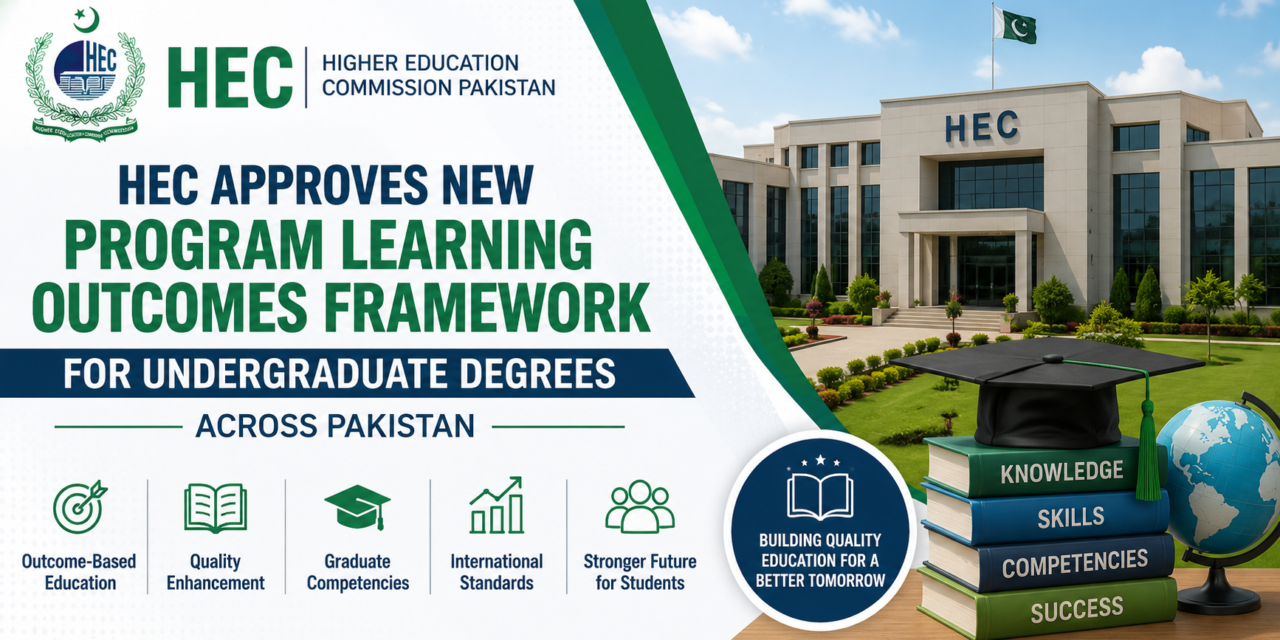
Pakistan’s higher education sector is set to undergo an important transformation after the Higher Education Commission (HEC) finalized and recommended a new framework of Program Learning Outcomes (PLOs) for the undergraduate degree programs that are currently not regulated by any accreditation or professional council. The initiative have represents another step toward strengthening an academic quality and implementing the Outcome-Based Education (OBE) in across universities in the country. According to the Higher Education Commission, the recommended learning outcomes will be shared with higher education institutions after receiving an approval from the HEC Commission. The framework have aims to establish a clear academic standards and improve the quality of a graduates that are produced by the universities. Through this initiative, HEC have intends to ensure a consistency, assurance of quality, and alignment with a national and international educational standards. The move is expected to benefit the universities, members of faculty, students, and employers by focusing on a measurable outcomes and competencies rather than the traditional approaches of teaching. Educational experts have consider this development a major milestone because it have promotes a continuous improvement in quality and encourages the institutions to develop a programs that are more relevant to the needs of industry and global trends. By emphasizing an outcomes of learning and graduate competencies, HEC is seeking to enhance the overall competitiveness of a graduates of Pakistan in the national and international markets while strengthening the higher education system of country.
What Is the New HEC Program Learning Outcomes Framework?
Program Learning Outcomes are statements that have describe the knowledge, skills, competencies, and abilities that the students should possess upon completing their programs of degree. The new framework of HEC have specifically addresses an undergraduate programs that fall outside the jurisdiction of an accreditation or councils of a regulatory. Previously, several disciplines have lacked a clearly defined outcomes of learning, with creating an inconsistencies in among the institutions and making it as difficult to assess an educational quality as uniformly. Through this initiative, HEC has developed a standardized outcomes of learning that can serve as a reference for the universities throughout the Pakistan. These outcomes will provide a clear expectations for the academic achievement and enable an institutions to evaluate whether the students are acquiring the intended knowledge and practical skills. The framework have supports the Outcome-Based Education, which have focuses on what the students should be able to demonstrate after completing their studies rather than simply measuring an activities in classroom. The adoption of a standardized Program Learning Outcomes will also assist a universities in designing the curricula, methods of assessment, and mechanisms of a quality assurance. Furthermore, it will strengthen a transparency and accountability in the higher education while promoting a consistency in among the institutions. Educational planners have believe that such a reforms can contribute as significantly to improving the academic standards and ensuring that the graduates are equipped with a competencies as required by the employers and professional sectors in Pakistan and beyond.
Why Has HEC Introduced Outcome-Based Education for Undergraduate Programs?
Outcome-Based Education has become as increasingly important in worldwide because it have emphasizes a measurable learning and competencies of graduate. Recognizing a global trends and changing requirements of a workforce, HEC has adopted the principles of OBE to modernize the higher education sector of Pakistan. Traditional educational models have often focus on a processes of teaching without clearly defining an expected outcomes. In a contrast, Outcome-Based Education have places the students and their achievements at the center of an academic planning. The approach have enables an institutions to assess whether educational objectives are being achieved as effectively. HEC have believes that OBE can improve a quality of curriculum, strengthen the methodologies of teaching, and ensure a continuous enhancement in quality. By defining a clear outcomes of learning, universities can design a courses that help the students to develop a critical thinking, skills of communication, analytical abilities, and practical competencies. The implementation of an OBE have also supports a transparency and accountability because the institutions are required to evaluate an educational effectiveness through the methods of a direct assessment. Moreover, employers have increasingly demand a graduates who possess both the theoretical knowledge and practical skills. Through an Outcome-Based Education, HEC have hopes to bridge the gap in between an academia and requirements of industry. The initiative have aligns with an international practices and reflects the commitment of Pakistan to improving an educational quality, graduate employability, and institutional performance while promoting an innovation and lifelong learning in among the students.
Two Separate Program Learning Outcomes Frameworks Approved by HEC
During its first meeting, the Outcome-Based Education Implementation Committee approved two distinct Program Learning Outcomes frameworks for disciplines not currently covered by regulatory councils. One framework focuses on Natural Sciences, Human Sciences, and Social Sciences, while the second framework has been designed specifically for Art, Design, and Media programs. This distinction have recognizes the unique requirements and competencies as associated with a different academic fields. Science and social science disciplines have often require an analytical thinking, capabilities of research, and problem-solving skills, whereas the art and media programs have emphasize a creativity, innovation, communication, and professional practice. HEC stated that both frameworks were developed through extensive research and benchmarked against national and international standards. Such a benchmarking have ensures a consistency with the globally accepted educational practices and facilitates as comparability of the quality of graduate. The separate frameworks have also enable the universities to tailor their academic programs as according to the disciplinary needs while maintaining a common standards of quality. Educational experts have believe that specialized outcomes of learning are essential for producing a graduates who are capable of meeting the expectations of an employers and society. Through these frameworks, HEC have aims to create a balanced educational environment that have encourages an intellectual development, creativity, and professional excellence in across the diverse academic disciplines. The initiative have highlights commitment of HEC to comprehensive reforms of a higher education and academic development on long-term.
HEC’s Implementation Strategy and Capacity Building Plans
The OBE Implementation Committee also approved a nationwide strategy of implementation which is designed to facilitate the adoption of an Outcome-Based Education in across a institutions of higher education. Recognizing that a successful implementation have requires an institutional support, HEC has emphasized a training of faculty and capacity building for the Quality Enhancement Cells. These efforts have aim to equip the universities with the knowledge and tools that are needed to implement a direct methods of assessment and continuous practices of improvement in quality. Faculty members will play a critical role in designing the courses, conducting an assessments, and evaluating a performance of student. Therefore, programs of training will focus on helping the educators understand an outcomes of learning, assessment techniques, and procedures of a quality assurance. Quality Enhancement Cells are expected to serve as a central units that are responsible for monitoring an educational standards and ensuring an effective implementation of the principles of OBE. HEC have believes that capacity-building initiatives will strengthen an institutional capabilities and encourage a culture of the continuous improvement. In an addition, the strategy of implementation have seeks to promote a collaboration in among the universities and facilitate a sharing of knowledge with regarding to a best practices. By investing in a development of faculty and mechanisms of a quality assurance, HEC have intends to ensure that Outcome-Based Education becomes an integral part of the higher education system of Pakistan. Such a reforms are expected to contribute to the improved quality of graduate and enhanced institutional performance.
Role of the OBE Implementation Committee in Strengthening Academic Standards
The Outcome-Based Education Implementation Committee has emerged as a central pillar in HEC’s efforts to modernize undergraduate education and establish a culture of quality assurance throughout Pakistan’s higher education system. The committee held its first meeting under the chairmanship of Prof. Dr. Samreen Hussain and finalized recommendations that are expected to shape the future direction of academic programs. Apart from approving the Program Learning Outcomes, the committee have also endorsed a Terms of Reference for the discipline-wise groups of working and approved a strategy of implementation for the universities in across the country. The work of committee have demonstrates a commitment of HEC to ensuring that an educational reforms are based on a consultation, research, and evidence-based planning. During the meeting, a report of progress on a special task which is assigned by the Chairman of HEC was presented, with highlighting the ongoing efforts to engage an academic councils and institutions that are lacking a formally published outcomes of learning. By bringing together the experts and stakeholders, the committee have aims to ensure that an educational policies are implemented as effectively and aligned with the international standards of quality. Educational specialists have believe that the establishment of a dedicated implementation committee have reflects the long-term vision of HEC of strengthening an academic governance, promoting the accountability, and ensuring that the institutions are capable of producing a graduates with the relevant skills and competencies.
International Benchmarking and Alignment With Global Standards
One of the most significant aspects of the newly approved framework of a Program Learning Outcomes is its alignment with a national and international standards. HEC have emphasized that the proposed outcomes of learning were developed through an extensive research, comparative analysis, and consultations with the stakeholders. International benchmarking have enables an educational institutions to compare their academic standards with a globally recognized frameworks and ensure that the graduates possess a competencies as comparable to those of the students who are studying in an advanced education systems. Benchmarking also facilitates an assurance of quality and improves the institutional credibility, which is increasingly important in an interconnected and competitive global environment. Through this approach, HEC have seeks to enhance a mobility of graduate, support the international recognition of a degrees, and strengthen an academic excellence. The adoption of a globally relevant outcomes of learning have ensures that the students acquire an analytical skills, abilities of communication, professional ethics, and problem-solving capabilities that are required in a modern workplaces. Furthermore, international benchmarking have contributes to a modernization of curriculum and helps the institutions adapt to a technological advancements and changing the requirements of a labor market. Experts have consider this initiative as essential for increasing the competitiveness of a universities of Pakistan and enhancing the reputation of an institutions of a higher education both as regionally and internationally. By aligning with a global standards, HEC is taking a significant step toward improving the educational quality and preparing the graduates for a challenges in future.
Working Groups to Support Higher Education Institutions
To facilitate effective implementation, HEC has approved Terms of Reference for discipline-wise working groups that will provide mentorship and technical support to designated councils and higher education institutions. These working groups are expected to play an important role in guiding the universities in during the transition toward an Outcome-Based Education. Their responsibilities have include providing an assistance in the development of curriculum, methodologies of assessment, Program Learning Outcomes attainment, and processes of a quality assurance. Working groups will also help the institutions to understand the practical aspects of implementing a principles of OBE and maintaining a continuous improvement in the quality mechanisms. The establishment of such a groups have reflects the recognition of HEC that successful educational reform will requires a cooperation in among the stakeholders and sustained institutional support. Universities have often face a challenges as related to the faculty training, procedures of assessment, and alignment of a curriculum. Through a mentorship and technical guidance, working groups will help to address these challenges and encourage the adoption of a best practices. Educational experts have believe that a collaborative structures such as these are essential for promoting a consistency and ensuring that the reforms are implemented as uniformly in across the institutions. The involvement of an experienced professionals and academic specialists is expected to strengthen the institutional capacities and create a sustainable framework for an assurance of quality and an academic excellence.
Benefits of the New Framework for Students and Universities
The newly approved Program Learning Outcomes framework offers numerous benefits for both students and higher education institutions. For a students, Outcome-Based Education have provides a greater clarity as regarding to the academic expectations and competencies that must be achieved in during their degree programs. Clearly defined an outcomes of learning that have enable the learners to understand the skills, knowledge, and attributes which are required for a professional success. This approach have also encourages an active learning, critical thinking, and problem-solving capabilities, which are highly valued by the employers. For a universities, the framework will provides a systematic method for the design of curriculum, assessment, and enhancement of a quality. Institutions will be better positioned to monitor an academic performance and evaluate the effectiveness of an educational programs. Furthermore, the framework have promotes a transparency and accountability by establishing the measurable standards and outcomes. Employers are also expected to benefit because the graduates will possess a competencies that are more closely aligned with a requirements of labor market. In an addition, universities that are adopting the Outcome-Based Education can enhance their academic reputation and strengthen an opportunities of international collaboration. The emphasis on a continuous improvement of quality will encourage an innovation and help the institutions adapt to a changing educational trends. Overall, the initiative have represents an important step toward creating a more dynamic, responsive, and globally competitive system of higher education which is capable of producing a highly skilled graduates.
Long-Term Impact on Pakistan’s Higher Education Sector
The long-term implications of the Program Learning Outcomes framework have extend as beyond a curriculum reform and procedures of assessment. Educational analysts have believe that the successful implementation of an Outcome-Based Education can transform the overall structure and quality of a higher education in the Pakistan. By focusing on a measurable outcomes and graduate competencies, universities can produce a professionals who are better prepared for an employment, entrepreneurship, and lifelong learning. Improved academic quality will also contribute to an increased confidence of public in an institutions of a higher education and strengthen the position of Pakistan in the international educational rankings. The emphasis on a continuous improvement of quality and evidence-based assessment is expected to encourage an innovation and institutional development. Furthermore, graduates who are possessing an internationally recognized competencies may find an enhanced opportunities for a higher studies and employment in abroad. The reforms can also contribute to an economic growth by ensuring that the industries have an access to a highly skilled workforce which is capable of meeting a challenges of emerging. As technology and labor market demands have continue to evolve, universities must adapt their programs as accordingly. Outcome-Based Education will provides a flexible and sustainable framework for achieving this objective. In the coming years, the initiative may become as one of the most significant developments in the higher education sector of Pakistan and serve as a foundation for the broader educational reforms.
Future Reforms and Expansion of Outcome-Based Education
HEC’s efforts to implement Outcome-Based Education represent only one component of broader higher education reforms aimed at strengthening quality assurance and academic excellence. As institutions have gradually adopt the Program Learning Outcomes and methods of a direct assessment, additional reforms are expected to emerge. Future initiatives may focus on a modernization of curriculum, digital learning, interdisciplinary education, development of faculty, and stronger collaboration with an industry and international partners. The successful implementation of an OBE can also encourage a bodies of accreditation and professional councils to adopt a similar approaches, thereby creating a more integrated framework of a quality assurance. Continuous review and revision of an outcomes of learning will be necessary to ensure that academic programs have remain as relevant and responsive to changing a societal and technological needs. Faculty development programs and Quality Enhancement Cells are expected to play an increasingly important roles in sustaining an educational reforms and promoting the innovation. HEC’s emphasis on an evidence-based planning and continuous improvement of quality have reflects a commitment to building a modern and globally competitive system of education. These reforms have the potential to enhance an employability of graduate, strengthen the institutional performance, and contribute to a national development by producing a skilled professionals who are capable of addressing a complex challenges in the various sectors.
FAQ
What are the Program Learning Outcomes (PLOs)?
Program Learning Outcomes (PLOs) are a measurable statements that have define the knowledge, skills, competencies, and attributes the students should achieve by the time they complete an academic degree program.
Why has the HEC introduced a new Program Learning Outcomes framework?
HEC have introduced the framework to strengthen an academic quality, standardize the outcomes of learning in across the universities, and support the implementation of an Outcome-Based Education (OBE) in a undergraduate programs as not covered by the councils of accreditation.
Which undergraduate programs are covered under the new framework of HEC?
The framework have applies to an undergraduate degree programs that do not fall under the jurisdiction of any accreditation or council of regulatory.
What is the Outcome-Based Education (OBE)?
Outcome-Based Education is an educational approach that have focuses on what the students should know and be able to do after completing a program, with emphasizing a measurable outcomes of learning and continuous improvement in quality.
How will the new framework benefit the students?
Students will gain a clearer objectives of learning, stronger academic competencies, improved employability, enhanced critical-thinking skills, and qualifications as aligned with the national and international standards.
How will universities implement the new Program Learning Outcomes?
Universities will implement the framework through a training of faculty, Quality Enhancement Cells, direct methods of assessment, alignment of a curriculum, and continuous practices of an improvement in quality.
Are the new learning outcomes aligned with international standards?
Yes. HEC has stated that the framework was developed through research and international benchmarking to ensure consistency with globally recognized educational standards.
What role do Quality Enhancement Cells play in implementation of OBE?
Quality Enhancement Cells help the universities to monitor an educational quality, assess the outcomes of learning, support a development of faculty, and ensure an effective implementation of the Outcome-Based Education.
Conclusion
The decision of a Higher Education Commission to finalize and recommend the Program Learning Outcomes for an undergraduate programs have marks an important milestone in the educational landscape of Pakistan. Through the adoption of a Outcome-Based Education principles, HEC have aims to establish a clear academic standards, strengthen the mechanisms of a quality assurance, and improve the competencies of graduate. The approval of a separate frameworks for the Natural Sciences, Human and Social Sciences, and Art, Design and Media disciplines have demonstrates a commitment to addressing the unique requirements of a diverse academic fields. Supported by an international benchmarking, training of faculty, Quality Enhancement Cells, and discipline-wise working groups, the initiative will provides a comprehensive strategy for implementing a sustainable educational reforms. The framework is expected to benefit the students, universities, employers, and society by promoting an academic excellence and ensuring that the graduates to possess a skills as aligned with the national and international expectations. As higher education system of Pakistan have continues to evolve, Outcome-Based Education can serve as a foundation for the reforms in future and contribute to strengthening the competitiveness of country in an increasingly knowledge-driven world. With an effective implementation and continuous improvement, the framework of a Program Learning Outcomes has the potential to reshape an undergraduate education and create a new opportunities for the students and institutions in across Pakistan.