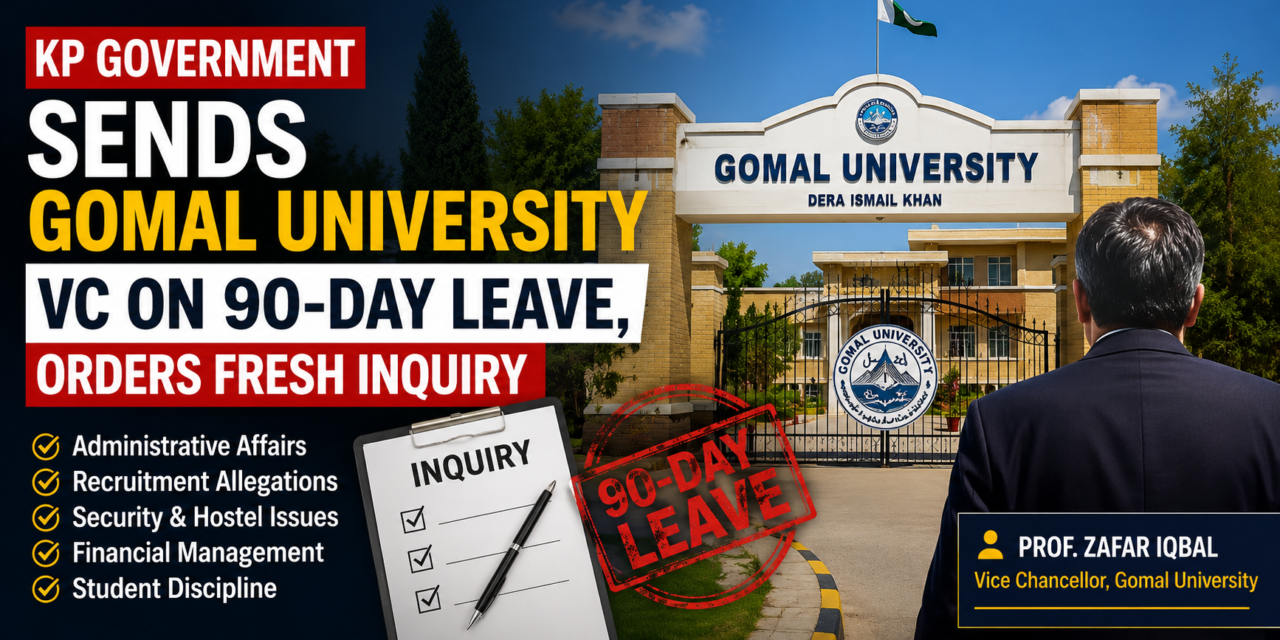
Introduction to Gomal University VC
A major development in the higher education sector of Pakistan has drawn a nationwide attention after the Khyber Pakhtunkhwa (KP) government have placed the Vice Chancellor of Gomal University, Prof. Zafar Iqbal, on a 90-day forced leave and simultaneously ordered a fresh inquiry into the administrative affairs of university. The decision has sparked a discussions in among the students, members of faculty, education experts, and policymakers as regarding to the governance, transparency, and accountability within a universities of the public sector. As one of the prominent institutions of a higher education in the southern Khyber Pakhtunkhwa, Gomal University have plays a crucial role in providing an academic opportunities to a thousands of the students. Therefore, any significant administrative action involving the university leadership naturally becomes a matter of public interest. The provincial government has stated that the move is aimed at ensuring an impartial investigation into a several allegations and administrative concerns that have emerged over a time. The inquiry is expected to examine a multiple aspects of the operations in university, with including an administration, security, practices of recruitment, student discipline, management of hostel, and financial oversight. The development is also being closely watched by a stakeholders in across the education sector of Pakistan because its findings may influence a reforms of future governance in the public universities. As discussions have continue, many observers have view the inquiry as an opportunity to strengthen the institutional accountability while ensuring that the educational standards and administrative integrity have remain as protected.
Why Was the Gomal University Vice Chancellor Sent on Leave?
The decision to place the Gomal University Vice Chancellor on a forced leave was taken under the provisions of the Khyber Pakhtunkhwa Universities Act 2012. According to an official information, the Chief Minister, acting in the capacity of a Chancellor of the university, have approved the action to facilitate a comprehensive and independent review of the affairs in institution. The government have believes that allowing the committee of inquiry to perform its duties without an administrative complications will help to ensure a transparency throughout the investigative process. While the move does not represent a final judgment against any individual, it have reflects the seriousness with which the authorities are treating the allegations and concerns that are raised as regarding to the operations in university. In a public institutions, temporary administrative measures are sometimes adopted to prevent a potential conflicts of the interest in during an investigations and to maintain a confidence in the process of inquiry. The decision of government have indicates a commitment to examining all the relevant matters through an evidence-based procedures rather than relying on a speculation or unverified claims. The announcement has generated a mixed reactions, with some stakeholders who are supporting the move as a necessary step toward an accountability, while others have expressed a concerns about the possible impact on an institutional stability. Regardless of a differing opinions, the development have highlights the increasing emphasis which is being placed on a standards of governance and administrative responsibility within the higher education system of Pakistan.
Appointment of Acting Registrar to Ensure Continuity
To ensure that the day-to-day operations in university have continue without a disruption in during the leave period of Vice Chancellor, the government have assigned an additional responsibilities to the Imranullah Khan, the senior-most administrative officer of institution. He has been entrusted with acting as a registrar until the further orders. This arrangement is intended to maintain an administrative continuity and prevent an interruptions in the academic, financial, and operational activities. Universities are complex institutions that have require a consistent management of an admissions, examinations, student affairs, faculty coordination, administration of budget, and maintenance of an infrastructure. Any transition of leadership can create an uncertainty if a proper arrangements are not established. By appointing an acting registrar, the authorities have aim to reassure a students, members of faculty, and staff that university functions will continue as normal while the inquiry have proceeds. The decision have also reflects a standard administrative practices that are commonly used in an educational institutions when the senior officials are temporarily unavailable. Stakeholders have expect the acting administration to focus on maintaining a stability, supporting the academic schedules, and facilitating a cooperation with the committee of inquiry. During this period, ensuring an uninterrupted educational activities will remain a top priority because a thousands of the students have depend on the university for their academic progress and opportunities of career in future.
Formation of a Three-Member Inquiry Committee
Alongside the administrative changes, the provincial government constituted a three-member inquiry committee tasked with conducting a detailed investigation into a broad range of university affairs. The committee is headed by the Commissioner of Dera Ismail Khan and have includes a senior academic and administrative representatives from the other public universities. The Vice Chancellor of the University of Peshawar and the Registrar of the University of Science and Technology Bannu have been appointed as a members, with the latter also serving as the secretary of committee. The composition of the committee have suggests an effort to combine the administrative experience, academic expertise, and institutional knowledge to ensure a comprehensive review. Such a committees have typically play a vital role in evaluating the evidence, reviewing a records, interviewing the stakeholders, and identifying an areas that are requiring a corrective action. The government has directed the panel to submit an evidence-based report within a specified timeframe, with highlighting the urgency attached to the matter. The findings of committee are expected to provide a recommendations as regarding to the potential reforms, measures of accountability, and future administrative improvements. Many observers have believe that the inclusion of a senior educational professionals may help to strengthen the credibility of the investigation while ensuring that the recommendations are informed by a practical understanding of the challenges in a governance of university.
Key Allegations and Issues Under Investigation
One of the most significant aspects of the inquiry is the wide scope of issues assigned to the committee for examination. Reports indicate that investigators will review allegations relating to a firing incident involving a university security officer and a student at the Law College. In addition, concerns regarding alleged drug abuse in a university hostel have also been included within the inquiry’s mandate. Beyond these specific incidents, the committee has been directed to investigate a complaints that are concerning an appointments that were allegedly made in a violation of the merit-based principles of recruitment. Recruitment transparency have remains an important issue in the institutions of public because a fair practices of hiring have directly influence an institutional performance, credibility, and trust of public. The inquiry will not be limited to an isolated incidents; as it will also evaluate a broader concerns of governance that are affecting the university. This have includes examining an administrative structures, decision-making mechanisms, operational procedures, and institutional oversight systems. By addressing both an individual allegations and systemic challenges, the investigation have seeks to identify an underlying issues that may require a reforms on long-term. The outcome of the inquiry could therefore have an implications not only for a current administrative practices but also for a governance frameworks in future that will be designed to strengthen an accountability and efficiency within the institutions of a higher education.
Administrative Structure, Financial Management, and Governance Review
A major component of the inquiry involves reviewing the university’s administrative and financial management systems. Effective governance is essential for any institution of a higher education because it have influences an allocation of resource, implementation of policy, academic planning, and institutional growth. The committee has been tasked with evaluating that whether an existing administrative arrangements support a transparency, accountability, and operational effectiveness. Financial management practices will also be examined to determine whether a resources are being utilized in an accordance with the established regulations and institutional objectives. Public universities have often manage a substantial budgets that are covering a salaries, infrastructure projects, activities of research, scholarships, and services of student. Therefore, maintaining a strong financial oversight is critical for ensuring a responsible use of the public resources. Investigators may assess a procedures of budgeting, controls of expenditure, procurement practices, and mechanisms of an internal accountability. The review is expected to identify a strengths as well as areas that are requiring an improvement. Governance experts have frequently emphasize that the institutional success have depends not only on an academic excellence but also on a sound administrative systems which is capable of supporting a development on long-term. Consequently, the inquiry have represents an opportunity to evaluate whether a current arrangements of governance have align with a modern standards of the public sector management and educational leadership.
Security, Hostel Administration, and Student Discipline
The inquiry will also focus on a matters as directly affecting the campus life, with including an arrangements of security, hostel administration, and discipline of student. Universities are responsible for providing a safe and supportive environment of learning where the students can pursue an academic goals without an unnecessary concerns as regarding to the safety or institutional order. Security incidents, regardless of their nature, can influence a perceptions of public of an institution and raise a questions regarding to the procedures of a risk management. Similarly, hostel administration will plays a critical role in a welfare of student because many learners have rely on an accommodation of university throughout their studies. Allegations that are involving a hostel-related issues have therefore attracted a considerable attention from the stakeholders. The committee is expected to review an existing policies, identify the procedural weaknesses, and determine whether an additional safeguards are required. Student discipline frameworks will also be assessed to evaluate their effectiveness in maintaining an order while protecting the rights of student. Modern universities have face an increasingly complex challenges as related to the management in campus, with requiring a balanced approaches that have promote both an accountability and well-being of student. The findings of the inquiry may contribute to a recommendations in future that are aimed at strengthening the systems of security, improving an oversight of hostel, and enhancing the overall governance of campus.
Powers and Responsibilities of the Inquiry Committee
The three-member inquiry committee has been granted as a significant authority to conduct a thorough and evidence-based investigation into the affairs of Gomal University. According to the directives of government, the committee can record a statements from all the relevant stakeholders, with including an officials of university, members of faculty, administrative staff, students, and other individuals who may possessa an information as related to the matters under a review. This broad mandate is intended to ensure that the investigation have reflects a multiple perspectives and provides a complete understanding of the circumstances that are surrounding the allegations. The committee is also authorized to examine an official records, administrative documents, financial reports, files of a recruitment, disciplinary proceedings, and any other material relevant to its work. Such powers are essential because an institutional investigations have require an access to a reliable evidence rather than assumptions or speculation in public. Furthermore, the panel has been instructed to identify an instances of the negligence, misuse of an authority, procedural violations, or administrative shortcomings if such an issues are supported by the evidence. Another important aspect of the mandate of committee is its ability to recommend a legal, departmental, or administrative action in against the individuals that are found as responsible for a violations. At the same time, the committee is expected to suggest a reforms that are aimed at improving the governance and preventing a similar issues in the future. This dual focus on an accountability and reform have reflects a broader effort to strengthen the institutional integrity within the higher education sector of Pakistan. By emphasizing a evidence-based findings and practical recommendations, the inquiry has the potential to contribute not only to resolving a current concerns but also to promoting an improvements on long-term in management and administration of university.
Impact on Students and Academic Activities
Whenever major administrative changes occur within a university, students are often among the stakeholders most concerned about potential consequences. Gomal University serves thousands of students across various academic disciplines, making institutional stability an important priority. Many students may wonder whether the inquiry and leadership changes will affect examinations, admissions, academic schedules, research projects, or student services. However, the appointment of an acting registrar and the continuation of regular administrative functions are intended to minimize disruption. Educational authorities generally recognize that students should not face academic setbacks because of administrative investigations. Therefore, maintaining uninterrupted teaching activities and ensuring that examinations, admissions, and academic programs proceed according to schedule will remain essential objectives during the inquiry period. At the same time, students may view the investigation as an opportunity to address longstanding concerns regarding campus facilities, hostel management, student welfare, security arrangements, and institutional transparency. If the committee identifies areas requiring improvement, the resulting reforms could ultimately enhance the educational environment for current and future students. Universities are expected to provide not only quality education but also safe, transparent, and accountable systems that support student development. Consequently, while short-term uncertainty may exist, many observers believe that effective implementation of the inquiry process could contribute to stronger institutional performance and a better learning experience in the long run.
Impact on Faculty Members and University Staff
Faculty members and administrative employees are also closely monitoring a developments at the Gomal University. Academic institutions have depend as heavily on a collaboration in between a leadership, faculty, researchers, and support staff. Changes at the senior administrative level can sometimes create an uncertainty as regarding to the decision-making processes, implementation of a policy, and institutional priorities. Some members of faculty may be concerned about how the inquiry could affect an ongoing academic projects, departmental operations, initiatives of research, and administrative procedures. Others may welcome the investigation as a mechanism for strengthening a transparency and addressing the concerns that may have existed within the institution. Public universities have often face a complex challenges as related to the governance, allocation of resource, recruitment, and administrative efficiency. Therefore, many educators have believe that the periodic reviews can help to identify a weaknesses and support an institutional improvement. For an employees of university, the inquiry have also highlights the importance of a compliance with the established regulations, merit-based practices, and professional standards. The recommendations of committee may ultimately influence a future administrative structures, mechanisms of accountability, and operational procedures. If implemented as effectively, reforms that are resulting from the inquiry could create a more transparent and efficient environment of working for the faculty and staff. Strong systems of governance have generally contribute to an improved institutional performance, better academic outcomes, and enhanced confidence in among a stakeholders. As a result, while the inquiry may create a temporary uncertainty, it may also provide an opportunity to strengthen the administrative systems and support an institutional development on long-term.
Mixed Reactions From Stakeholders and Civil Society
The decision of government has generated a diverse reactions from the different segments of a society. Some observers have view the action as a positive step toward an accountability, with arguing that the institutions of public should be subject to a transparent oversight and independent review whenever a serious concerns will arise. Supporters of the inquiry have emphasize that educational institutions that are funded by a public resources have a responsibility to maintain a high standards of the governance and integrity. From this perspective, investigating an allegations and reviewing an administrative systems can help to strengthen a trust of public in the institutions of a higher education. However, not all the reactions have been supportive. Certain members of faculty, administrators, and civil society representatives have expressed a concerns regarding the timing and potential implications of the decision. Critics have argue that the leadership changes in during an ongoing academic activities may create an uncertainty and affect the institutional morale. Others have questioned that whether an administrative interventions should be balanced as carefully to avoid an unintended consequences for the operations in university. Such a differing viewpoints are common whenever a significant actions are taken within a major institutions of public. Ultimately, the success of the inquiry may depend on its ability to remain as impartial, transparent, and evidence-based. If a stakeholders have perceive the process as a fair and objective, confidence in both the findings and subsequent reforms is likely to increase. Therefore, maintaining a transparency throughout the investigation will be crucial for ensuring a credibility and acceptance of public of the recommendations of committee.
What the Inquiry Could Mean for the Future of Gomal University
The outcome of the inquiry could have a significant implications for the future direction of a Gomal University. Depending on the findings of committee, recommendations may include an administrative reforms, changes in policy, enhanced measures of accountability, improved procedures of a recruitment, stronger protocols of a security, and better systems for monitoring an institutional performance. Such a recommendations could contribute to the efforts of a modernization as designed to align the university with an evolving standards of the governance in a higher education. Many universities in a worldwide have implemented reforms that are aimed at improving the transparency, financial oversight, welfare of student, and organizational effectiveness. If a similar improvements have emerge from the inquiry of a Gomal University, they may strengthen the ability of institution to fulfill its academic mission while maintaining a confidence in public. The investigation may also encourage a broader discussions as regarding to the best practices in an administration of university as throughout Pakistan. Higher education institutions will face an increasing expectations to demonstrate an accountability, efficient management of a resource, and responsiveness to a concerns of stakeholder. By identifying an areas requiring the attention and proposing a practical solutions, the committee could play an important role in supporting the institutional development on long-term. Ultimately, the future impact of the inquiry will depend not only on the quality of its findings but also on the commitment of a relevant authorities to implementing the meaningful reforms as based on those recommendations.
Why This Development Matters for Higher Education in Pakistan
The developments at Gomal University have extend as beyond a single institution and raise a broader questions about the governance within a higher education sector of Pakistan. Public universities have serve as centers of the learning, research, innovation, and professional development. Their effectiveness have depends not only on an academic excellence but also on a strong administrative systems that are capable of ensuring a transparency, accountability, and efficient management. Across the world, higher education institutions are increasingly expected to adopt a practices of governance that have promote an integrity, fairness, and responsible use of a resources. The inquiry at Gomal University have reflects these broader expectations and highlights the growing importance of an institutional accountability within the Pakistan. Educational policymakers have frequently emphasize that a sustainable progress in the higher education have requires both an academic quality and effective governance. Investigations, reviews, and administrative reforms can therefore play a constructive role when implemented as fairly and transparently. The lessons that are learned from this case may influence a discussions as regarding to the management in university, standards of recruitment, financial oversight, student welfare, and accountability of a leadership in across the country. Consequently, the significance of the inquiry have extends as beyond an immediate allegations and administrative concerns. It have represents an opportunity to examine how a public universities can strengthen the structures of governance while continuing to provide a quality education and support the objectives of a national development.
Frequently Asked Questions (FAQ)
Why was the Gomal University Vice Chancellor sent on a 90-day leave?
The Khyber Pakhtunkhwa government have placed a Gomal University Vice Chancellor Prof. Zafar Iqbal on a 90-day forced leave to facilitate an independent inquiry into the administrative affairs of university and several allegations under a review.
Who have approved the decision to send the Gomal University VC on a leave?
The decision was approved by the Chief Minister of Khyber Pakhtunkhwa in his capacity as a Chancellor of the Gomal University under Section 12(8) of the Khyber Pakhtunkhwa Universities Act, 2012.
What allegations are being investigated at the Gomal University?
The committee of inquiry is examining a multiple issues, with including a reported Law College firing incident, alleged abuse of drug in a hostel of university, recruitment complaints that are related to a merit, administrative affairs, financial management, arrangements of security, and discipline of a student.
Who is leading the committee of inquiry at the Gomal University?
The committee of inquiry is headed by the Commissioner of Dera Ismail Khan and have includes the Vice Chancellor of the University of Peshawar and the Registrar of the University of Science and Technology Bannu.
Who is currently managing an administrative affairs at the Gomal University?
Imranullah Khan, the senior-most administrative officer of university, has been assigned an additional responsibilities as acting registrar to ensure a continuity in the official operations in during the period of inquiry.
How long does the committee of inquiry have to submit its report?
The committee has been directed to submit an evidence-based report within a two weeks, which is outlining its findings and recommendations.
What powers have been granted to the committee of inquiry?
The committee can record a statements from the stakeholders, review an official documents, identify a negligence or misuse of an authority, recommend a legal or departmental action, and propose an administrative reforms.
Will the inquiry affect a students and academic activities at the Gomal University?
University officials are expected to ensure that the classes, examinations, admissions, and other academic activities have continue without a disruption while the inquiry is underway.
Why is the Gomal University inquiry important for a higher education sector of Pakistan?
The inquiry have highlights the importance of a transparency, accountability, merit-based recruitment, and effective governance in the universities of public, with making it as significant for a higher education reforms in across the Pakistan.
What could happen after the report of inquiry is submitted?
Depending on the findings of committee, authorities may implement an administrative reforms, strengthen the systems of governance, initiate a disciplinary proceedings, or introduce the measures to improve an institutional performance and accountability at the Gomal University.
Conclusion
The decision by the government of Khyber Pakhtunkhwa to place a Gomal University Vice Chancellor Prof. Zafar Iqbal on 90-day forced leave and launch a fresh inquiry have marks as one of the most closely watched developments in the higher education sector of Pakistan. The formation of a three-member committee, the appointment of an acting registrar, and the investigation into an allegations are involving an incidents of security, administration of hostel, practices of a recruitment, financial management, and issues of governance have demonstrate the seriousness of the process of review. While a reactions have remain as mixed, the inquiry has created an opportunity to evaluate an institutional systems and identify the areas thata are requiring an improvement. For a students, faculty members, administrators, and policymakers, the outcome of the investigation may provide a valuable insights into the challenges and opportunities in facing a universities of public. Regardless of the final findings, the process have underscores the importance of a transparency, accountability, and effective governance in an educational institutions. As Pakistan have continues to strengthen its higher education system, with ensuring that the universities have operate as according to a principles of integrity and excellence will remain as essential. The coming weeks will be critical as the committee have completes its work and submits its report, with potentially shaping the future direction of a Gomal University and contributing to the broader discussions about a governance of university in across the country.