Introduction to Libraries on Wheels Lahore
The authorities of Punjab education have introduced a groundbreaking initiative which is titled “Libraries on Wheels” in Lahore, that are aimed at transforming a traditional government school that are learning into a modern, digital, and interactive educational experience. This project is designed to bridge the educational gap in between an urban and under-resourced schools by providing an equal access to the books, digital tools, and modern technologies of a learning. In a rapidly evolving world where education is shifting toward a digital platforms, this initiative have represents a significant step toward improving the literacy, engagement, and overall academic performance in a public schools in across the Lahore.
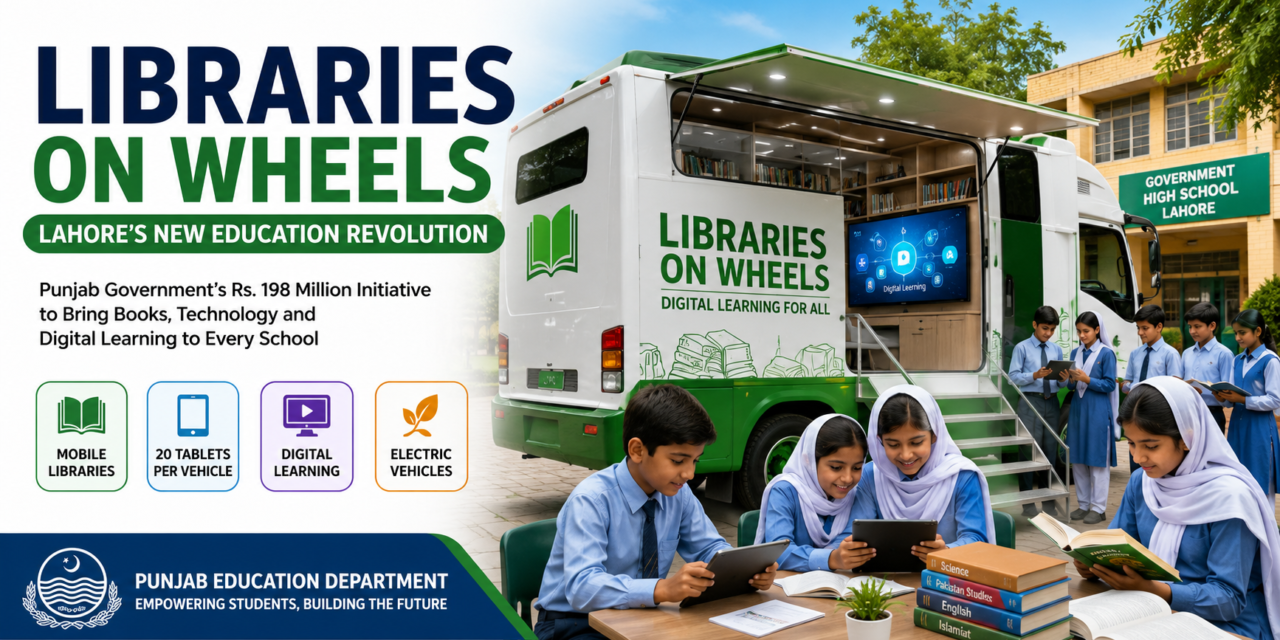
The core idea which is behind this project is simple yet powerful: instead of expecting a students to visit the libraries, the library will come as directly to them. Under this initiative, which is specially designed that electric vehicles will operate as a mobile libraries, visiting the schools of government on a fixed daily schedule. Each vehicle will be equipped with a modern educational tools such as the tablets, digital screens, and a curated collection of a books. This innovative approach have not only promotes a habits of reading in among the students but also introduces them to a methods of digital learning, with helping them as adapt to a future educational requirements.
This project is not just about providing a books; as it is about reshaping the entire environment of learning. It have integrates a traditional culture of reading with the modern technology, which is making the education as more interactive and engaging for a students. By combining a physical books with the digital resources, the initiative have ensures that students receive a balanced and enriched experience of learning. The Libraries on Wheels Lahore project is therefore seen as a major educational reform step by the government of Punjab, that are aimed at improving both an access and quality of an education in the public sector schools.
Objectives of the Mobile Library Initiative in Punjab Schools
The primary objective of the Libraries on Wheels initiative is to enhance an educational accessibility and promote a strong culture of reading in among the students in a schools of government. Many schools in underserved areas have lack a proper infrastructure of library, which have limits the exposure of students to a materials of quality learning. This project have aims to eliminate that gap by bringing a resources as directly to the students, with ensuring that every child has an equal opportunity to learn and grow as academically regardless of their location of school or facilities.
Another key objective is to introduce a students to the tools of a digital learning at an early stage. In today’s global education system, digital literacy is as important as a traditional literacy. By equipping a mobile libraries with the tablets and interactive screens, the project have encourages a students to engage with the modern platforms of learning. This will helps them to develop an essential digital skills that are necessary for a higher education and future careers in the technology-driven industries.
Additionally, the initiative have focuses on improving a habits of reading and an academic performance. Studies have shown that a regular reading have significantly enhances a comprehension, vocabulary, and skills of a critical thinking. By providing a consistent access to the books and educational content, the Libraries on a Wheels project have aims to cultivate a lifelong reading habit in among the students. The program have also encourages a sessions of an interactive learning, with making the education as more enjoyable and effective for a young learners in the government schools in Lahore.
Project Budget and Government Planning Details
The Libraries on Wheels Lahore project has been estimated at a cost of approximately Rs. 198 million, reflecting the government’s strong commitment to improving educational infrastructure in Punjab. This budget covers the procurement of electric vehicles, installation of digital equipment, purchasing of books, and setup of necessary charging stations within schools. The investment highlights the importance placed on education reform and the adoption of modern learning technologies in public schools.
Under the planning framework, a total of 85 electric vehicles will be converted into fully functional mobile libraries. These vehicles will be designed to operate efficiently across different school locations, ensuring timely and consistent visits. Each vehicle will include a 20 tablets, a large LED screen, and a carefully selected collection of the books that are covering a various subjects. The combination of a digital and materials of a physical learning have ensures that students receive a comprehensive educational experience.
Government authorities have also emphasized a sustainability in this project. By using an electric vehicles, the initiative have reduces an environmental impact while promoting an eco-friendly solutions of transportation. Charging stations will be installed within a premises of school to ensure the smooth operations and an uninterrupted service. This forward-thinking approach have demonstrates how a reform of education can also align with an environmental responsibility and technological advancement.
How Electric Mobile Library Vehicles Will Work
The operational model of the Libraries on Wheels system is designed to be both as efficient and student-friendly. Each electric vehicle will follow a fixed schedule, with visiting an assigned schools of government on a daily basis. Upon an arrival, the mobile library will serve as a center of temporary learning where a students can explore the books, use tablets, and participate in an interactive educational activities.
Inside each vehicle, a structured layout will allow the students to access a different zones for learning. One section will be dedicated to a physical books, while another will focus on a digital learning through the tablets. The large LED screen which is installed in the vehicle will be used for a sessions of group learning, presentations, and educational videos. This combination of a methods of learning have ensures that students are engaged through a multiple formats, with enhancing an understanding and retention of a knowledge.
Teachers will also play a key role in coordinating the activities in during these visits. They will guide a students on how to use the digital tools as effectively and encourage them to participate in a sessions of reading. The mobile library system is designed to complement a learning in classroom, not replace it. By integrating these visits into the school timetable, the project have ensures a consistency and maximum educational impact in across all the participating schools.
Digital Learning Features in Libraries on Wheels Project
One of the most innovative aspects of the Libraries on Wheels initiative is its strong focus on an integration of a digital learning. Each mobile library vehicle is equipped with a 20 modern tablets, with allowing the students to access a digital textbooks, educational apps, and materials of an interactive learning. This have not only enhances a learning as efficiency but also familiarizes the students with a technology from an early age.
The inclusion of a large LED screen in every vehicle have further strengthens the experience of a digital learning. Teachers and facilitators can use this screen to deliver a lessons of multimedia, educational videos, and interactive quizzes. This visual approach of learning is especially beneficial for a younger students who learn as better through an images and videos rather than the traditional text-based methods.
Additionally, the digital system is expected to support an integration in future with a platforms of an online learning. Students may eventually gain an access to the broader educational resources as beyond their textbooks, with including a virtual libraries and tools for e-learning. This step have aligns with a global trends in an education, where a digital transformation is becoming a key component of the modern systems for learning.
School Visit Schedule and Operational System
The operational structure of the Libraries on Wheels Lahore project is carefully designed to ensure maximum coverage and efficiency across government schools. Each of the 85 electric mobile library vehicles will follow a fixed daily rotation schedule, allowing them to visit different schools in a systematic manner. According to the plan, every vehicle will be assigned a specific schools within a cluster, with ensuring that no institution is left as out and that students will receive a regular access to the resources of learning. This structured system of scheduling is crucial for maintaining a consistency, which is one of the key success factors in any large-scale educational initiative.
When a mobile library have arrives at a school, it have remains as stationed for a defined slot of time in during a school hours. During this period, students are divided into a groups to participate in a different activities of learning, with including a sessions of reading, usage of a digital tablet, and interactive lessons through the LED screen. The structured rotation have ensures that all the students get an equal access without overcrowding or mismanagement. Teachers and facilitators have coordinate with a staff of mobile library to align an activities with the curriculum of school, with making sure that each visit have contributes as meaningfully to an academic learning rather than being treated as a standalone event.
Another important part of the operational system is the charging infrastructure. Since the vehicles are electric, they will require a daily charging after completing their assigned routes. For this purpose, charging stations are being installed within a premises of school or designated education department facilities. This have ensures that vehicles have remain as fully operational every day without a logistical delays. The combination of a smart scheduling and use of a sustainable energy have makes the system both as efficient and environmentally responsible, with setting a strong example for the future initiatives of an educational transport in Pakistan.
Role of Punjab Education Department in the Initiative
The Punjab Education Department have plays a central role in the planning, execution, and monitoring of the Libraries on Wheels initiative. As the main body of governing, it is responsible for ensuring that the project is implemented as effectively in across the government schools of Lahore. The department has designed the operational framework, allocated the budget, and coordinated with a technical teams to develop the mobile library vehicles. This level of an involvement have highlights the commitment of government to an educational reform and modernization in the public sector.
In an addition to the planning, the department of education is also responsible for monitoring a performance and ensuring an accountability. Regular evaluations will be conducted to assess how effectively the mobile libraries are improving an engagement of student and academic performance. Feedback from a teachers, students, and administrations of school will be collected to refine and improve the system over a time. This feedback-driven approach have ensures that the project remains as adaptive and continues to evolve as based on a real needs in classroom.
Furthermore, the department is working as closely with a providers of technology and developers of content to ensure that the material of a digital learning which is provided in the mobile libraries is up to a date and curriculum-aligned. This have includes an educational apps, digital books, and content of multimedia that have supports a different subjects such as the science, mathematics, and language studies. By integrating a technology with the traditional systems of education, the Punjab Education Department have aims to create a more balanced and future-ready environment of learning for the students in a schools of government.
Expected Impact on Students and Literacy Rate in Pakistan
The Libraries on Wheels Lahore project is expected to have a significant impact on long-term on an academic performance and the overall literacy rate in Pakistan of students. One of the most immediate benefits will be an improved access to the materials of reading. Many schools of government, especially in an underprivileged areas, lack proper libraries or updated books. This initiative will directly addresses that gap by bringing both a physical and digital resources to the students, with ensuring an equal opportunities of learning for all.
Another major expected outcome is the improvement in a reading habits and comprehension skills of students. Regular exposure to a books will encourages a curiosity, critical thinking, and better understanding of an academic concepts. Over a time, this can lead to an improved performance in exam and higher rates of a retention in among the students. The integration of a tools for digital learning have also enhances the ability of students to grasp a complex topics through the visual and interactive methods, which is making the education as more engaging and effective.
On a broader scale, the initiative is likely to contribute to a raising levels of literacy in the Pakistan. By introducing a modern techniques of learning in a public schools, the project have sets a foundation for a more educated and skilled future generation. Students who benefit from this system will be better prepared for a higher education and professional careers, especially in a fields that have require a digital literacy and technological understanding. This educational transformation on long-term is one of the most important goals of the Libraries on a Wheels initiative.
Challenges and Future Expansion Possibilities
Despite of its promising vision, the Libraries on Wheels project may face a several challenges in during an implementation. One of the primary concerns is a maintenance and operational sustainability. Since the system have relies on an electric vehicles and digital equipment, regular maintenance will be required to ensure a smooth functioning. Any technical issues with a tablets, screens, or systems of charging could potentially disrupt the process of learning if not addressed as promptly.
Another challenge is ensuring an equal coverage in across all the schools. While the current plan that have focuses on Lahore, expanding the program to a rural or remote areas may require an additional resources and infrastructure. Managing a logistics, scheduling, and coordination in across a larger network of the schools could become complex as the project have scales up. Additionally, training teachers and facilitators to effectively use a digital tools is essential for maximizing the impact of the initiative.
However, the potential of a future expansion of this project is very strong. If successfully implemented in the Lahore, it can be expanded to other cities in across the Punjab and eventually throughout a Pakistan. The concept of a mobile libraries can also be enhanced with an advanced technologies such as the connectivity of internet, AI-based tools of learning, and a virtual classrooms. This would further strengthen the education system of Pakistan and position it as closer to a global digital standards of education.
FAQs
What is the Libraries on a Wheels project in the Lahore?
It is a Punjab government initiative that introduces mobile libraries equipped with books, tablets, and digital screens to improve learning in government schools.
How will Libraries on Wheels benefit students?
It will improve reading habits, provide digital learning tools, and give students equal access to educational resources in schools.
How many vehicles are included in the project?
The project includes 85 electric vehicles that will operate as mobile libraries across Lahore government schools.
What technology is used in the mobile libraries?
Each vehicle includes tablets, LED screens, and digital learning systems to support interactive education.
Why is this project important for Pakistan’s education system?
It helps modernize public education, improves literacy rates, and introduces digital learning in underprivileged schools.
Conclusion: A Step Toward Modern Education in Punjab
The Libraries on Wheels Lahore initiative represents a major step forward in transforming Pakistan’s education system. By combining traditional reading culture with modern digital learning tools, the project creates a balanced and innovative educational environment for government school students. It have not only addresses the issue of a limited access of library but also introduces a students to the digital skills that are required in the technology-driven world of today.
This initiative have reflects a broader vision of an educational reform in the Punjab, where a technology and accessibility will play a central role in shaping the systems of learning in future. The use of an electric vehicles, tablets, and interactive screens have demonstrates a commitment to the sustainability, innovation, and inclusivity. If implemented as successfully, this project has the potential to significantly improve a rates of literacy and an academic performance in across a schools of government in Lahore.
In a conclusion, the Libraries on Wheels project is not just an educational program—it is a transformation strategy for the future of learning in Pakistan. It have brings the education as directly to a students, removes a barriers of an access, and opens a new opportunities for the digital and interactive learning. This initiative have sets a powerful example for how governments can modernize a systems of education while keeping a students at the center of the development.