Overview of the Academic Situation at Federal Urdu University Boycott
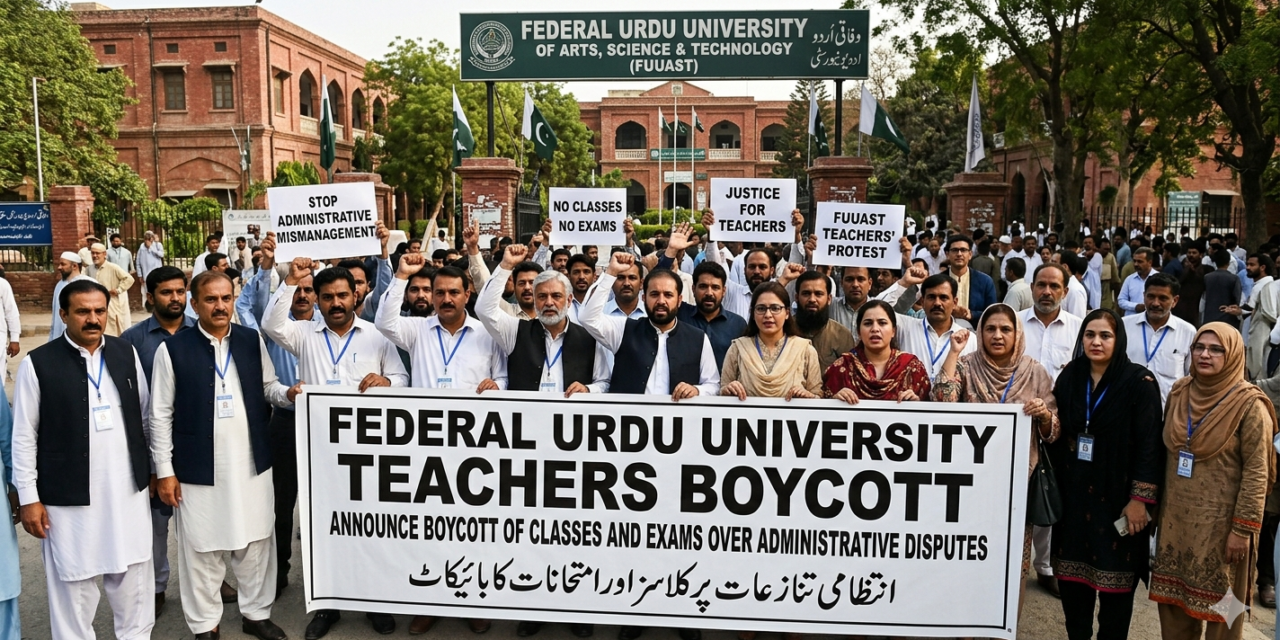
Federal Urdu University of Arts, Science and Technology in Karachi has recently entered a phase of an academic disruption after the members of faculty have announced a complete boycott of the classes and examinations. This development has created a serious concern in among the students, parents, and stakeholders of a higher education in across the Pakistan. The boycott was declared as following a joint meeting of the associations of teachers who are representing both the Abdul Haq Campus and Gulshan-e-Iqbal Campus. According to the representatives of faculty, the decision was not taken as lightly but was the result of a long-standing unresolved issues that are related to a governance, financial management, and administrative policies within the university.
The situation has now escalated into a full academic standstill, with affecting an ongoing lectures and upcoming examinations that are scheduled in an early June. Teachers have stated that they will continue their protest until their demands are addressed in a meaningful and transparent manner by the administration of university and a relevant authorities of government. This has placed the institution under a national attention, as Federal Urdu University is considered as one of the key public sector universities in the Karachi. The boycott has also raised a broader questions about the stability of a higher education system of Pakistan, especially in a public universities where the financial and administrative challenges are becoming as increasingly common.
Reasons Behind the Teachers’ Boycott and Protest Movement
The primary reasons which is behind the boycott are rooted in a combination of the financial grievances, administrative disagreements, and governance-related concerns. Faculty members have expressed a strong dissatisfaction over the delays in a salaries, pensions, and other financial benefits that they claim have remained as unresolved for a significant period. According to the teachers, these issues have not only affected their professional stability but have also created a financial stress in among both the serving and retired employees of the university.
Another major point of a contention is the alleged deduction in an allowances, with including a reported 20 percent reduction in a certain benefits, which the members of faculty as strongly oppose. Teachers have argue that such a financial policies were implemented without a proper consultation and have negatively impacted the morale of staff. Additionally, concerns have been raised as regarding to leave a deductions in encashment and pending a dues of house ceiling, which teachers have believe should be reimbursed on immediately. These financial disputes have become as central to the protest movement and are seen as the key reason which is behind the continuation of the boycott in across both a campuses of the university.
Administrative Concerns and Leadership Criticism
Alongside financial issues, teachers have also expressed a dissatisfaction with the administrative leadership of the university. The association of faculty has openly criticized the current administrative structure and has demanded an accountability from the senior leadership. In a particular, concerns have been raised as regarding the tenure of the Vice Chancellor, with a teachers who are describing the current period as one of the most challenging phases in the history of university.
Faculty members have urged the higher authorities, with including the Chancellor of the university and the Federal Education Minister, to intervene in the matter. They have called for an “educational emergency” to be imposed within the institution to restore an academic stability and administrative transparency. Teachers have argue that without a structural reforms and accountability of leadership, the university will continue to face a repeated disruptions that have negatively affect the education of students and institutional credibility. This criticism have reflects a deeper issues of governance that are often reported in a public sector universities, where an administrative decision-making and representation of faculty have remain in a conflict.
Impact of Boycott on Students and Academic Activities
The ongoing boycott has had an immediate and significant impact on an academic activities at Federal Urdu University. Classes in across a multiple departments have been suspended, and scheduled examinations are expected to be delayed or postponed. This disruption has created an uncertainty in among the students, particularly those who were preparing for a mid-year assessments. Many students are now facing a difficulties in maintaining their academic schedules, as the uncertainty which is surrounding the duration of the boycott have continues.
The suspension of an academic activities have also affects a work of research, semester progress, and timelines of a degree completion. Students who are enrolled in a final-year programs are particularly concerned about the delays in a graduation and future academic planning. The situation have highlights how an administrative disputes in between a faculty and management can directly affect the thousands of a students who depend on a timely academic progression. As the boycott have continues, pressure is increasing on a authorities of university and bodies of government to find a resolution that have restores a normal academic functioning without the further delay.
Teachers’ Demands and Institutional Reforms Sought
The association of teachers has presented a comprehensive list of the demands which is aimed at addressing both a financial and structural issues within the university. These demands have include the immediate payment of a pending salaries, pensions, and benefits of retirement for both an active and retired employees. Faculty members are also demanding the reversal of a disputed allowance deductions and full reimbursement of the financial cuts that are applied in a previous administrative decisions.
In an addition to the financial concerns, teachers are calling for an institutional reforms such as the immediate convening of the board of selection to fill a long-pending vacancies advertised in the 2022. They have also demanded a promotions for the teachers nearing a retirement under the approved policy of hardship, as well as the restoration of a medical panels that were previously in a place for the staff members. Another key demand have includes the withdrawal of the conditional admissions policy and the implementation of a merit-based system of admissions to ensure a transparency and fairness in the processes of a student enrollment. These demands have collectively reflect a broader call for the reform of governance and an administrative accountability within the institution.
Government and Higher Education Authority Response Expectations
Faculty members have also directed their concerns toward the highest levels of a government, with requesting an intervention from a national leadership. The resolution of teachers have calls upon the President of Pakistan, who have serves as the Chancellor of a federal universities, along with the Federal Education Minister, to take an immediate action. They have argue that the situation requires an urgent attention at the level of policy to prevent a further deterioration of an academic standards.
The faculty has specifically requested the imposition of an educational emergency within the university to stabilize its operations and restore a confidence in among the staff and students. Teachers have believe that only a strong governmental intervention can resolve the ongoing administrative deadlock and ensure a fair treatment of the employees. Until such an action is taken, the boycott of a classes and examinations is expected to continue, with leaving the future of an academic activities as uncertain.
Broader Implications for Pakistan’s Higher Education System
The ongoing boycott at Federal Urdu University is not an isolated incident but part of a broader pattern of the challenges that are faced by a public sector universities in across the Pakistan. Over the past few years, several higher institutions of education have experienced a similar disruptions due to the financial constraints, administrative conflicts, and governance-related disputes. This situation have highlights a systemic issues that go as beyond a single university and point toward a deeper structural weaknesses in the framework of a higher education of the country.
Public universities have often operate under a tight budgets, delayed cycles of funding, and bureaucratic decision-making processes that slow down an essential administrative actions. As a result, issues such as the delays in salary, pension backlogs, and deficiencies of infrastructure have become a recurring problems. When these issues are not addressed in a time, they often escalate into a protests or boycotts by the members of faculty, with directly impacting the academic progress of students. The situation at Federal Urdu University have serves as another reminder that a sustainable reforms are needed in a governance of higher education to ensure the stability, transparency, and accountability in across an institutions.
Role of University Governance and Policy Failures
University governance have plays a critical role in maintaining the academic stability, yet in many public institutions, structures of governance are often influenced by an administrative delays and lack of a coordination in between a decision-making bodies. In the case of Federal Urdu University, teachers have pointed toward an inconsistencies in policy and delays in implementing a key administrative decisions as major factors of contributing to the current crisis.
Faculty members have argue that an essential processes such as a boards of selection , promotions, and financial approvals have been delayed for an extended periods, with creating a frustration in among the staff. When a systems of governance have fail to respond as efficiently to an institutional needs, it have results in a breakdown of trust in between a faculty and administration. This breakdown is evident in the current boycott, where a teachers are demanding not just a financial relief but also structural reforms to improve the transparency and efficiency. Strengthening a mechanisms of governance, ensuring a timely decision-making, and improving the communication in between a stakeholders are essential steps to prevent such a crises in the future.
Student Reactions and Academic Uncertainty
Students at the Federal Urdu University have expressed a growing concern over the ongoing situation, as uncertainty have continues to disrupt their academic routines. Many students have feel as caught in between an administrative disputes in which they have no direct involvement but suffer the consequences. The suspension of a classes and delay in an examinations has created a stress, especially in among those who are preparing for a progression of semester or final-year evaluations.
Some students have also raised a concerns about the lack of a communication from the administration of university as regarding the duration of the boycott and possible academic adjustments. In such a situations, academic uncertainty can lead to a long-term effects on the motivation of student, performance, and planning. For a students who are pursuing a professional degrees, even a small delays can impact the internships, applications of job, and further studies. As the situation have continues, students are hoping for a quick resolution that have restores a normal academic activity while addressing the legitimate concerns which is raised by a members of faculty.
Government’s Responsibility in Higher Education Stability
The Federal Government of Pakistan, along with an authorities of a higher education, have plays a crucial role in resolving the institutional conflicts and ensuring a smooth academic operations. In a situations like as the Federal Urdu University boycott, timely intervention from a relevant authorities can help to prevent an escalation and minimize the disruption to the education of students. Teachers have specifically called for an intervention from the Federal Education Ministry and the Chancellor of university, with emphasizing the need for an urgent attention.
Government involvement is often necessary in a universities of public sector because many of their financial and administrative decisions have depend on a federal funding and approvals of policy. If these mechanisms are delayed or an inefficient, institutions can quickly become as unstable. Therefore, experts have suggest that a proactive monitoring, regular audits, and channels of a transparent communication in between the universities and bodies of government are essential to avoid a recurring crises. The current situation have underscores the importance of a policy-level reforms in the higher education governance system of Pakistan.
Media Attention and Public Perception of the Crisis
The boycott at Federal Urdu University has also attracted a significant attention on media, with bringing the issue into a public discussion. Media coverage have plays an important role in highlighting the institutional challenges and putting a pressure on the authorities to respond. However, it have also shapes a perception of public, which can influence how the students, parents, and policymakers have view the situation.
In this case, media reports have emphasized both the financial grievances of a teachers and the academic disruption which are faced by a students. Public opinion is often divided in such a scenarios, with some supporting the demands of teachers for a fair treatment and others expressing concern over the impact on an education of students. Balanced reporting is essential to ensure that the issue is understood in its full context, without oversimplifying the conflict. As attention of media have continues, it have increases the urgency for all the stakeholders to reach a resolution.
Possible Outcomes and Future Resolution Scenarios
There are several possible outcomes to the ongoing boycott, as depending on how the negotiations in between a teachers and administration progress. In one scenario, if authorities of government have intervene as promptly and address the key demands, the boycott could be lifted and academic activities will be resumed as quickly. This would require a financial settlements, revisions of policy, and assurances regarding to the administrative reforms.
In another scenario, if negotiations are delayed or unresolved, the boycott could continue for an extended period, with further affecting an academic schedules and progress of student. A prolonged dispute could also damage the reputation of university and create a long-term challenges in the admissions and retention of faculty. The most favorable outcome would involve a structured dialogue in between a representatives of faculty, university administration, and officials of government, with leading to a sustainable resolution that have addresses both a financial and governance concerns.
FAQ SECTION
Why are Federal Urdu University teachers on a boycott?
Teachers are protesting a financial dues, delays in salary, and an administrative issues.
Which campuses are affected by the boycott?
Both the Abdul Haq and Gulshan-e-Iqbal campuses in a Karachi are affected.
What demands have the teachers made?
They demand a payments of salary, clearance of pension, promotions, and policy reforms.
How is the boycott affecting students?
Classes and examinations are suspended, as causing an academic delays.
Conclusion
The boycott of a classes and examinations at Federal Urdu University have represents a serious academic and administrative crisis with a wide-ranging implications. While teachers have raised a legitimate concerns as regarding to the financial dues, issues of governance, and reforms of policy, the resulting disruption has significantly impacted the students and academic progress. The situation have highlights the urgent need for an effective communication, transparent governance, and timely intervention by an authorities to restore a stability within the institution.
Moving as forward, a balanced approach that have addresses a grievances of faculty while protecting the academic interests of students is essential. Without such a resolution, the crisis may continue to deepen, with affecting not only a Federal Urdu University but also setting a concerning precedent for the other institutions of a higher education in Pakistan.