Overview of the Federal Education Secretary Pakistan
The Government of Pakistan has been actively working to improve an educational access for out-of-school children through a structured reforms in the non-formal sector of education. In this context, a significant training program at cluster-level for Non-Formal Education (NFE) teachers was conducted in the Tarlai, Islamabad, under the Islamabad Capital Territory (ICT) education framework. The initiative is part of a broader strategy which is known as the NFE Roadmap, which have focuses on improving the outcomes of learning and strengthening a quality of teaching in the underserved communities. The program of training is designed to ensure that teachers who are working in a non-formal institutions are equipped with a modern pedagogical skills and practical strategies in a classroom that can directly enhance the learning experiences of a student. The visit of the Federal Education Secretary have highlighted the importance of this initiative at the national level.
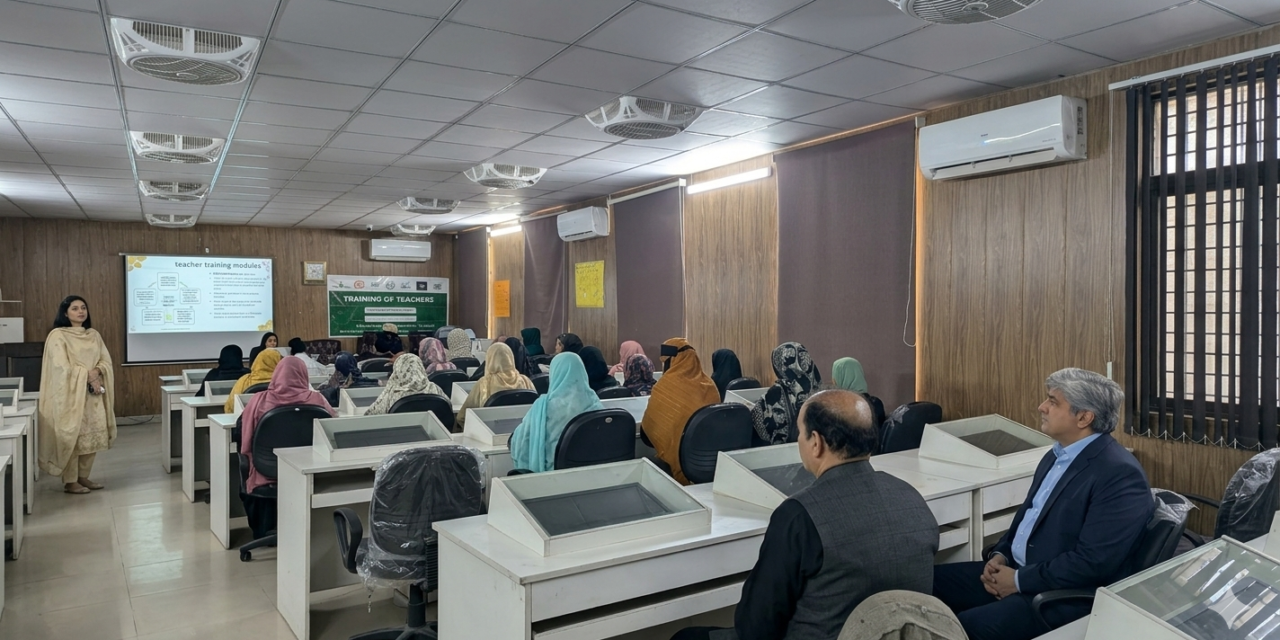
During the session of training, various modules of teaching were introduced, with focusing on real-world challenges in classroom and solutions. The program have follows a model of cascading, where a master trainers first receive an advanced training and then transfer this knowledge to a teachers at the cluster level. This structured approach have ensures a consistency, quality, and scalability in across the multiple educational institutions. The presence of a senior officials in education have emphasized the commitment of government to improving standards of education in Pakistan, which is particularly for a children who cannot access the formal schooling. The initiative have represents a strong step toward an educational inclusivity and national development.
Role of Federal Education Secretary in Strengthening Non-Formal Education
The visit of Secretary Federal Education, Mr. Nadeem Mahbub, have played a key role in reinforcing the vision of government for an educational reform. During his visit to the training session at cluster-level, he observed an ongoing activities of training and interacted with both a master trainers and participating teachers. His engagement have demonstrated a hands-on approach to the implementation of policy, which is ensuring that the initiatives of government are not only announced but also effectively executed at the ground level. The Secretary have emphasized that improving in capacity of a teacher is essential for enhancing the overall quality of a non-formal education in across the country.
He have also highlighted the importance of a continuous professional development for the teachers, especially those who are working in a challenging environments such as the remote and underserved areas. According to him, teachers are the backbone of the education system, and their training have directly impacts the student learning outcomes. He have encouraged a participants to adopt the methodologies of a modern teaching, which is including techniques of child-centered learning and innovative practices of classroom management. His remarks have reinforced the idea that reform of education is not only about an infrastructure but also about empowering the educators with the right skills and tools.
Cluster-Based Training Model Under the NFE Roadmap
The cluster-based model of a training have introduced under the NFE Roadmap is a strategic approach which is aimed at improving the reach and effectiveness of a teacher training programs. Instead of a centralized sessions of training, this model have distributes a training in across the multiple clusters, with ensuring that the teachers from a different regions can benefit without a logistical barriers. This decentralized system have helps to maintain a consistency in the standards of teaching while also addressing the local educational challenges effectively.
A key component of this model is the Training of Trainers (ToT) system, where a selected master trainers are first provided with an intensive instruction. These trainers then conduct a further sessions of training for the teachers at the cluster level. This method of cascading have ensures that knowledge is transferred as efficiently and sustainably. It also allows for a better monitoring and evaluation of the training outcomes. The model has been widely appreciated for its scalability and adaptability in a diverse educational environments, particularly in the regions where an access to a quality education have remains a challenge.
Importance of Teacher Capacity Building in Pakistan
Teacher capacity building is a fundamental pillar of an educational reform in Pakistan. Without a well-trained educators, even the most advanced frameworks of curriculum cannot deliver an effective outcomes of learning. The initiative of NFE training in Islamabad have reflects this understanding by focusing on an enhancing competencies of teacher through a structured programs of a professional development. These programs are designed to equip the teachers with a practical skills that can be immediately applied in a setting of classrooms.
The training sessions include modules on communication skills, lesson planning, classroom engagement, and student assessment techniques. Teachers are also trained to handle a multigrade classrooms, which are common in the non-formal education settings. By improving these skills, the program have aims to reduce a gaps of learning and improve the retention rates of student. The focus of government on teacher development have highlights its long-term vision of creating a more inclusive and equitable system of education in across the Pakistan.
Modern Teaching Methods Introduced in NFE Training
One of the most important aspects of the training program is the introduction of a modern methodologies of teaching. These methods are designed to make the learning as more interactive, engaging, and effective for a students. Teachers are encouraged to move as beyond a traditional rote learning techniques and adopt a child-centered approaches that promote the critical thinking and creativity. This shift in a philosophy of teaching is essential for improving the outcomes of learning in a non-formal education environments.
The training have also includes a practical demonstrations of strategies in classroom management that help teachers to handle a diverse groups of student as more effectively. Multigrade techniques of teaching are emphasized, with allowing the teachers to manage a classrooms with the students of a varying ages and levels of learning. Additionally, innovative tools and techniques are introduced to make the lessons as more engaging and accessible. These modern methods are expected to significantly improve the quality of an education which is delivered in a non-formal institutions in across the Islamabad and beyond.
Government’s Vision for Improving Learning Outcomes
The Government of Pakistan is committed to improving an outcomes of learning through a targeted education reforms and strategic investments in the teacher training. The NFE initiative have reflects this vision by focusing on both an access and quality in the education. The goal is not only to bring out-of-school children into the system of education but also to ensure that they receive a meaningful and effective experiences of learning.
During the visit of training, the Federal Education Secretary have emphasized that reducing a learning poverty is a national priority. He have highlighted that education is a key driver of social and economic development and must be treated as a long-term investment. The government have aims to strengthen a foundational skills of learning in among the students, particularly in a literacy and numeracy. This vision have aligns with a broader national and international education goals that are focused on a equity, inclusion, and quality education for all.
Collaboration Between Key Education Organizations
The success of the NFE training program is largely due to the collaborative efforts of a multiple educational organizations. Institutions such as the National Commission for Human Development (NCHD), National Education Foundation (NEF), Basic Education Community Schools (BECS), Pakistan Institute of Education (PIE), and the Japan International Cooperation Agency (JICA) have played a significant role in designing and implementing the program of training.
This multi-stakeholder collaboration have ensures that the benefits of program from a diverse expertise and resources. Each organization have contributes its unique strengths, whether in a development of curriculum, teacher training, or an international best practices. The involvement of an international partners like as JICA also brings a global educational insights into non-formal education system of Pakistan. This collaborative framework have strengthens the overall impact and sustainability of the initiative.
Impact on Out-of-School Children in Pakistan
One of the primary goals of the NFE program is to address the issue of an out-of-school children in Pakistan. Millions of children in remote and underserved areas have still lack an access to the formal education. The non-formal system of education have provides an alternative pathway for these children to gain a basic education and essential life skills.
By improving the teacher training and classroom practices, the program have aims to enhance engagement and retention of student. Better-trained teachers are more capable of identifying the learning gaps and providing a targeted support to students. This ultimately leads to an improved educational outcomes and increased opportunities for the children who might otherwise be left as behind. The initiative have represents a critical step toward achieving a coverage of universal education in Pakistan.
Future of Non-Formal Education in Islamabad and Beyond
The future of non-formal education in Pakistan have looks as promising as government-led initiatives that have continue to expand and evolve. The cluster-level training model is expected to be scaled up to other regions, with ensuring that more teachers benefit from a programs of structured professional development. Continuous improvement in the methodologies of teaching and curriculum design will further strengthen the system.
With a sustained government support and international collaboration, non-formal education can become a powerful tool for the social transformation. The focus on a quality, accessibility, and inclusivity have ensures that the system addresses the needs of all learners, particularly those in disadvantaged communities. The ongoing reforms have reflect a long-term commitment to building a stronger and more equitable education system in Pakistan.
FAQs
What is the NFE teacher training program in Pakistan?
The NFE (Non-Formal Education) teacher training program is a government initiative which is designed to improve the quality of teaching for out-of-school children through a sessions of structured training and methods of a modern teaching.
Why did the Federal Education Secretary visit the training session of NFE in Islamabad?
The Federal Education Secretary have visited the training to review a progress, interact with the teachers, and reaffirm the commitment of government to improving a non-formal quality of education in Pakistan.
What is the cluster-based training model in education?
The cluster-based training model is a cascading system where a master trainers first receive the training and then pass it on to teachers at a local levels, with ensuring a wider and more effective transfer of knowledge.
Which organizations are involved in the NFE training program?
Key organizations have include the National Commission for Human Development (NCHD), National Education Foundation (NEF), Basic Education Community Schools (BECS), Pakistan Institute of Education (PIE), and JICA.
How does NFE training help out-of-school children?
It improves the skills of teacher, enhances the quality of classroom learning, and provides a better access to an education for children who cannot attend formal schools.
Final Words
The visit of the Federal Education Secretary to the NFE teacher training program in Islamabad have highlights a significant milestone in Pakistan’s education reform journey. Through a models of structured training, modern methods of teaching, and strong institutional collaboration, the government is actively working to improve an educational outcomes for out-of-school children. This initiative have not only strengthens the capacity of a teachers but also contributes to building a more inclusive and sustainable education system for the future.