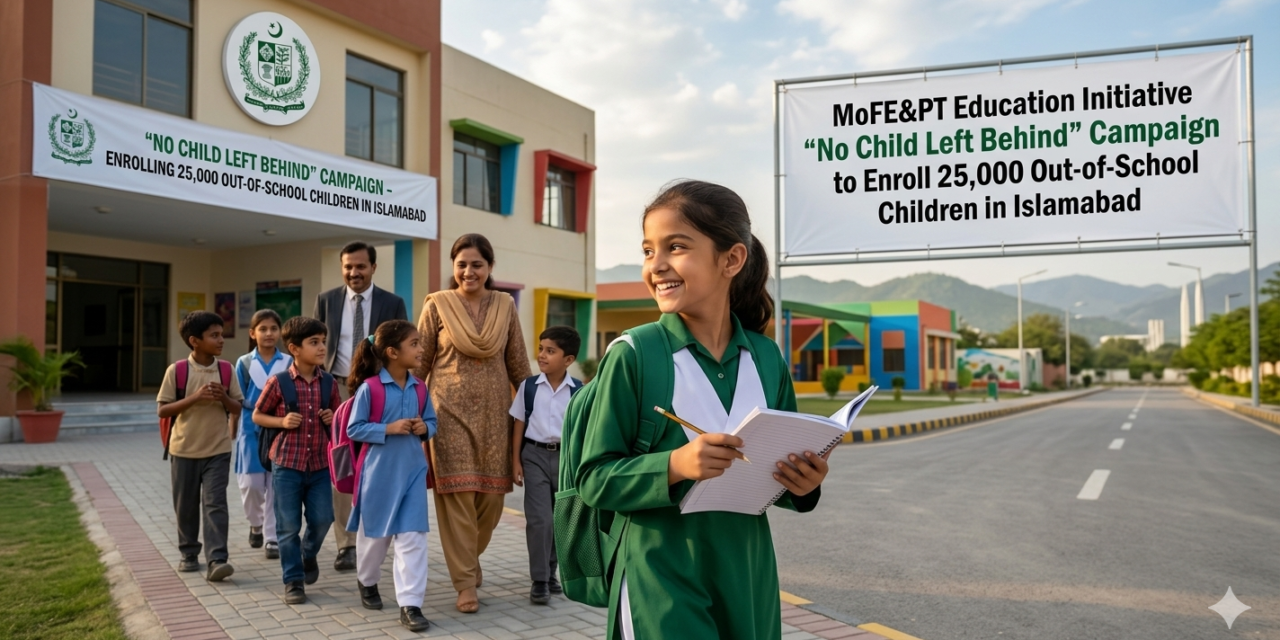
Overview of the MoFE&PT Education Initiative “No Child Left Behind” Education Campaign in Pakistan
The Government of Pakistan, through the Ministry of a Federal Education and Professional Training (MoFE&PT), has launched and strengthened its nationwide vision under the campaign of “No Child Left Behind”, which have focuses on ensuring a universal access to the education, especially for out-of-school children in the Islamabad Capital Territory. This initiative is part of a broader education reform agenda which is aimed at improving the rates of literacy, reducing an educational inequality, and bringing every child into the system of a formal schooling. The campaign is being implemented through a structured Union Council-wise approach, which have allows the authorities to identify, track, and enroll the children who are currently not attending the school.
This initiative is not only a program of government but also a coordinated effort which is involving an organizations of civil society, NGOs, and stakeholders of community. The purpose is to ensure that no child is left as behind regardless of a social or economic background. The campaign have uses a combination of the household surveys, door-to-door visits, and a digital monitoring tools to gather an accurate data on children who are not enrolled in the schools. The goal of enrolling a 25,000 out-of-school children have reflects a strong commitment to an educational inclusion and sustainable development in the capital territory of Pakistan.
Federal Education Ministry Reviews Progress in Islamabad Meeting (April 2026)
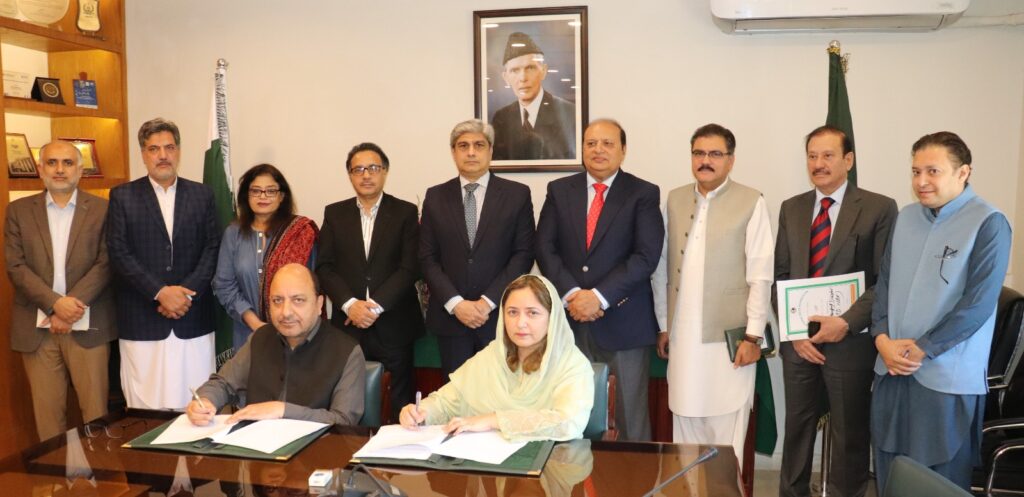
On the April 13, 2026, a high-level review meeting was held under the leadership of the Ministry of a Federal Education and Professional Training to assess the ongoing progress of the “No Child Left Behind” campaign. The meeting was chaired by a Federal Secretary Nadeem Mehbub and included a participation from the multiple organizations of a civil society and partner NGOs that are working in the field of a education. During this session, detailed reports of progress were presented, which is highlighting an achievements in the surveys of household, enrollment drives, and campaigns of awareness that are conducted in across a various Union Councils in the Islamabad. The meeting have served as a critical checkpoint to evaluate the performance of field and identify an operational challenges that are affecting the campaign as efficiency.
A major focus of the meeting was an improving coordination in between the government bodies and implementing an organizations to ensure a faster execution of the goals of campaign. Issues such as the data accuracy, reporting a delays, and field-level logistical constraints were discussed in a depth. The Ministry have emphasized the importance of a monitoring systems on real-time and structured mechanisms of reporting to ensure a transparency and accountability. The discussion have also reinforced the need for an engagement of community to encourage the parents to enroll their children in a schools, especially in the underprivileged areas where an access to the education have remains a challenge.
Role of NGOs and Civil Society Organizations in OOSC Enrollment Drive
Civil society organizations and NGOs have play a crucial role in the success of the “No Child Left Behind” campaign by acting as the bridge in between the government and local communities. These organizations are actively involved in a field operations such as the household surveys, campaigns of awareness, and a direct mobilization of community. Their presence on the ground have helps identify out-of-school children as more effectively and ensures that the data collected is accurate and reliable. The collaboration in between the institutions of government and NGOs have strengthens the overall structure of implementation of the Out of School Children (OOSC) program in Islamabad.
During the review meeting, representatives from a various NGOs have shared an updates on their ongoing fieldwork, which is including the challenges as faced in during the collection of data and engagement of community. They have emphasized the importance of building a trust within the local communities to encourage the parents to send their children to school. Additionally, NGOs have highlighted the need for a better mechanisms of coordination with the departments of government to streamline the reporting and improve an operational efficiency. The collective effort of these organizations have significantly enhances the reach and impact of the education enrollment drive in across the Union Councils.
New Partnerships: Signing of LoUs with Muslim Hands and ACT International
A key development in the campaign was the signing of a new Letters of Understanding (LoUs) with a two prominent organizations, Muslim Hands and ACT International. These partnerships have mark a significant expansion of the collaborative network which is supporting the “No Child Left Behind” initiative. The inclusion of these organizations is expected to strengthen a field-level capacity, improve the efforts of outreach, and accelerate the identification and enrollment of a out-of-school children in the Islamabad Capital Territory.
The involvement of a Muslim Hands and ACT International have brings an additional expertise and manpower to the campaign, which is enabling a more efficient execution of the door-to-door surveys and programs of an community awareness. These organizations are known for their experience in a humanitarian and educational projects, which have makes them as a valuable partners in achieving the ambitious target of campaign of enrolling a 25,000 children. The partnerships have also reflect the commitment of government to a public-private collaboration model that have enhances an effectiveness and sustainability in the education reforms.
Union Council Wise Strategy and Door-to-Door Survey Implementation Plan
The “No Child Left Behind” campaign is being implemented through a structured Union Council-wise strategy, which have ensures a localized planning and execution. This approach have allows the field teams to focus on a specific geographical areas, which is making it as easier to identify out-of-school children and monitor a progress as effectively. Door-to-door surveys are a core component of this strategy, which is enabling the field workers to directly interact with a families, collect the data, and raise an awareness about the importance of an education.
This method is particularly effective in addressing a hidden or unregistered children who are often missed in a traditional school enrollment systems. Field teams have use a structured questionnaires and digital tools to ensure a collection of accurate data and real-time reporting. The integration of a technology in the process of survey that have enhances a transparency and helps the policymakers to make an informed decisions. This approach have aligns with a global best practices in the outreach of education and supports the broader goal of achieving a universal primary education in Pakistan.
Target of Enrolling 25,000 Out-of-School Children in Islamabad Capital Territory
One of the most ambitious goals of the campaign is the enrollment of a 25,000 out-of-school children within a defined timeline. This target have reflects the strong commitment of government to improving a rates of literacy and ensuring an equal access to education for all the children in a Islamabad Capital Territory. The focus on a measurable outcomes have ensures that the campaign remains as result-oriented and accountable.
To achieve this target, multiple strategies are being implemented, which is including an awareness campaigns, school enrollment drives, and community engagement programs. Special attention is being given to a marginalized communities where school dropout rates are higher. The involvement of a NGOs, local stakeholders, and departments of government have creates a multi-layered support system that have increases the likelihood of achieving the goals of enrollment. This target is not just a number but a reflection of the long-term vision of Pakistan for an educational inclusion and social development.
Use of Digital Tools and Real-Time Monitoring in Education Campaign
Technology have plays a vital role in the successful implementation of the “No Child Left Behind” campaign. Digital tools are being used for a collection of data, monitoring, and reporting, which have ensures a transparency and efficiency in the field operations. Real-time systems of monitoring have allow the policymakers to track a progress in across the different Union Councils and identify an areas that have require an additional support.
These digital solutions have help to reduce a manual errors and improve the accuracy of a data which is related to an out-of-school children. Field teams can instantly update the information, which is then analyzed to generate an insights for a decision-making. The integration of a technology into the enrollment of education have drive represents a modern approach to governance and aligns with a trends of global digital transformation in the public sector management.
Government Commitment Under Article 25A for Free Education
The campaign is strongly aligned with an Article 25A of the Constitution of Pakistan, which have guarantees the right to free and compulsory education for all the children who are aged 5 to 16 years. This constitutional provision have forms the legal foundation for the initiative of “No Child Left Behind” and reinforces the responsibility of government to ensure an educational access for every child.
By implementing this campaign, the Ministry of a Federal Education is actively working toward fulfilling a constitutional obligations and promoting the social equity. The collaboration in between the institutions of government and NGOs have demonstrates a unified effort to eliminate the barriers to education. This commitment have highlights the dedication of Pakistan to building an inclusive system of education that have supports a national development on long-term.
Also Read: FBISE HSSC Exam 2026 Complete Guide: Schedule, Passing Marks, Roll Number Slips & Online System
Future Roadmap for Universal Education in Pakistan
Looking as ahead, the “No Child Left Behind” campaign have represents a critical step toward achieving a universal education in the Pakistan. The success of this initiative in Islamabad Capital Territory will serve as a model for a similar programs in across other regions of the country. Future plans have include expanding a systems of digital monitoring, strengthening the partnerships of NGO, and increasing a participation of community to ensure the sustainable results.
The Ministry have aims to build a infrastructure of robust education that not only enrolls the children but also ensures a retention and quality learning outcomes. Continuous evaluation and adjustments of policy will be essential to maintaining a progress and addressing the emerging challenges. With a strong political will, engagement of community, and institutional collaboration, Pakistan is moving as closer to achieving its goal of a universal education for all children.
FAQ
What is the campaign of “No Child Left Behind” in Pakistan?
The “No Child Left Behind” campaign is a government initiative by the MoFEu0026amp;PT which is aimed at enrolling the out-of-school children and ensuring a universal access to the education in Islamabad Capital Territory.
How many out-of-school children are targeted in this campaign?
The campaign have aims to enroll an approximately u003cstrongu003e25,000 out-of-school childrenu003c/strongu003e through a coordinated efforts with the NGOs and organizations of civil society.
Which organizations are involved in the campaign of OOSC?
Key partners have include the NGOs such as u003cstrongu003eMuslim Handsu003c/strongu003e and u003cstrongu003eACT Internationalu003c/strongu003e, along with other civil society organizations that are supporting the field operations.
How does the government identify out-of-school children?
Children are identified through a u003cstrongu003edoor-to-door surveys, Union Council-level mapping, and digital data collection toolsu003c/strongu003e which is used by the field teams.
What role does Article 25A play in this campaign?
Article 25A of the Constitution of Pakistan have guarantees a free and compulsory education for the children who are aged in between 5 to 16, with forming the legal foundation of this initiative.
Is technology being used in this education campaign?
Yes, the campaign have uses a u003cstrongu003ereal-time digital monitoring systems and data toolsu003c/strongu003e to track an enrollment progress and improve the transparency.
Why is this campaign important for Pakistan?
It have helps to improve a rates of literacy, reduce the inequality, and ensure that every child gets an access to the education, with supporting a goals of national development.