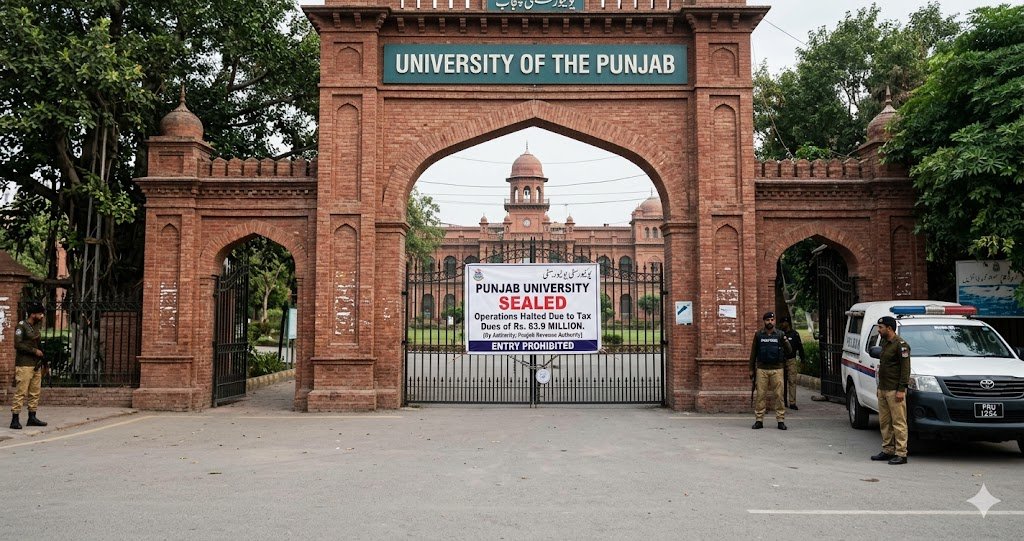
Introduction to Punjab University Sealed – Major Tax Enforcement Action in Faisalabad Sparks Attention
A significant development has been reported from the Faisalabad where a well-known institution of a higher education, NFC University which is located on the Jaranwala Road, was allegedly sealed by the Punjab Excise and Taxation Department over an unpaid property tax dues that are amounting to a Rs. 83.9 million. According to the reports of a local media, the action was taken after the institution have reportedly failed to clear a long-standing arrears of tax despite of a repeated notices and administrative reminders from the relevant authorities.
This incident has gained an attention in across the education and governance circles of Pakistan because it have involves a public-facing institution and highlights the importance of a compliance of tax within the sector of a higher education. The action of enforcement have reportedly resulted in the temporary suspension of a operations in university, with raising a concerns in among the students, staff, and stakeholders that are associated with the institution.
From a broader perspective, the case have reflects the increasing focus of a provincial authorities on mechanisms of a property tax recovery and enforcement under an existing laws of taxation in Punjab. The action is being viewed as part of a larger effort by the government to strengthen a compliance and ensure that all the institutions have contribute their fair share of a taxes.
Why Was the University Sealed? Alleged Tax Non-Compliance Explained
The primary reason behind the reported sealing of NFC University is the accumulation of unpaid property tax dues. Officials cited in media reports stated that the institution allegedly owed approximately Rs. 83.9 million in a property tax, which have remained as unpaid for a prolonged period despite of a repeated efforts of recovery by the Excise and Taxation Department.
Property tax is a legally mandated obligation which is imposed on a owners of property and institutions as based on the value and usage of their land and buildings. In this case, the campus of university which is located on a Jaranwala Road in Faisalabad have reportedly fell under the tax net, and the outstanding dues have accumulated over a time due to the non-payment or delayed payment.
Authorities have reportedly took the action after exhausting multiple administrative channels, including notices and warnings. When compliance was not achieved, enforcement measures were initiated under applicable tax recovery laws. The sealing of the premises is considered a strong step that have reflects the seriousness of a policies of tax enforcement in the Punjab.
This development have also highlights a growing issue in the institutional compliance, where a large organizations have sometimes face a financial or administrative challenges in fulfilling the obligations of tax, with leading to a legal consequences.
Role of Punjab Excise and Taxation Department in Enforcement Action
The Punjab Excise and Taxation Department is responsible for the collection and enforcement of a various provincial taxes, with including a property tax. In cases where the taxpayers have fail to comply with a legal requirements, the department has the authority to initiate a proceedings of recovery, which may include a sealing of the properties, attachment of an assets, or legal action.
In this reported case, officials from the department have visited the premises of university and carried out the procedures of enforcement after completing a necessary legal formalities. According to a reports, the action was not sudden but followed a structured process which is involving a notices, documentation, and verification of the outstanding dues.
The role of department in such a cases is not only limited to the collection of revenue but also includes ensuring a fairness and compliance in across all the sectors. Educational institutions, commercial properties, and private entities are all required to adhere to a regulations of tax under the property tax laws of Punjab.
The sealing of a university campus, if confirmed, have represents a high-level action of enforcement and demonstrates the seriousness with which a provincial authorities are treating a long-pending arrears of tax.
Location and Background of NFC University Faisalabad
The reported incident have took place at NFC University which is situated on a Jaranwala Road in Faisalabad, which is a major industrial and educational hub in the Punjab. The institution is known for offering a various academic programs in the engineering, technology, and applied sciences, with contributing to the higher education landscape of region.
Faisalabad itself is one of largest cities of the Pakistan and a key center for an industry, commerce, and education. Universities in the region will play a critical role in producing a skilled professionals and supporting the local economic development.
The alleged sealing of the campus has therefore raised a concerns as not only about the administrative compliance but also about the potential disruption of an academic activities. If operations have remain as suspended, it could affect the academic progress of students, examinations, and an institutional planning.
While the reports have suggest an action of enforcement was taken due to a tax arrears, further an official clarification from the relevant authorities or the institution would provide a more context as regarding to the current operational status and future course of an action.
Understanding Property Tax System in Punjab
Property tax in Punjab is a provincial tax which is levied on a buildings and land as based on an assessed rental value or category of usage. It is one of the key sources of a revenue for the provincial government and is administered by the Excise and Taxation Department.
The tax have applies to a residential, commercial, industrial, and institutional properties, with including an educational buildings. Institutions are required to regularly file and pay their dues as per the regulations of government.
Failure to comply with an obligations of a property tax can result in a penalties, fines, and actions of enforcement. In a severe cases, authorities may proceed with a sealing of the properties or procedures of a legal recovery to ensure a compliance.
The system is designed to ensure that all the owners of property have contribute as fairly to a revenue of public, which is used for a development of infrastructure, public services, and administrative functions within the province.
Growing Focus on Tax Compliance and Enforcement in Punjab
In a recent years, the government of Punjab has placed an increased emphasis on strengthening the mechanisms of a tax compliance in across all the sectors. This have includes a digitization of the tax records, improved systems of monitoring, and stricter enforcement in against the defaulters.
The reported action against NFC University reflects this broader policy direction. Authorities are increasingly taking steps to recover long-outstanding dues, particularly in cases where repeated notices have not resulted in payment.
Such actions of enforcement are also intended to send a strong message regarding to the expectations of compliance and legal accountability. Educational institutions, being as publicly visible and influential, are often expected to maintain a high standards of the financial and administrative responsibility.
Impact on Students and Institutional Operations
Although an official confirmation regarding to the operational status of the university may vary, such an actions of enforcement have typically raise an immediate concerns for a students and academic staff. Potential impacts may include a suspension of the classes, delays in an examinations, and administrative uncertainty.
Students who are enrolled in the ongoing academic programs have depend as heavily on a continuity in the institutional operations. Any disruption can affect their academic schedules, timelines of a degree completion, and future planning.
Similarly, faculty and administrative staff may face an uncertainty as regarding to the continuity in employment and institutional governance in during such a periods of the enforcement.
However, in many cases, institutions have resolve a tax disputes through the plans of settlement or payment, after which a normal operations have resume.
Broader Significance of the Incident
The reported sealing of NFC University highlights the importance of financial compliance within public-facing institutions. It have also underscores the growing role of a agencies of government enforcement in ensuring the collection of tax as efficiency.
From a perspective of policy, such a cases have reflect the balance in between an institutional autonomy and accountability of a regulatory. While an educational institutions have serve an essential public function, they are also required to comply with a financial obligations under the provincial law.
This incident may also encourage other institutions to review their status of compliance and ensure a timely payment of the taxes to avoid a similar actions of enforcement.
What Happens Next? Possible Outcomes of the Tax Dispute
Following the reported sealing of NFC University, the next steps largely depend on how quickly the institution addresses the outstanding property tax dues and completes the necessary legal and administrative procedures. In similar enforcement cases across Punjab, institutions are typically given an opportunity to resolve the matter either through full payment of dues or through negotiated settlement plans approved by the relevant authorities. Once a compliance is achieved, the Excise and Taxation Department may allow a reopening of the premises after a verification and clearance of the legal requirements.
However, until such a resolution is formally confirmed, the situation have remains as uncertain for a students, staff, and stakeholders who are associated with the institution. Administrative communication between the university management and government authorities becomes critical at this stage, as delays in resolution can prolong operational suspension. This case also highlights how financial governance and regulatory compliance are directly linked to institutional continuity in Pakistan’s higher education sector.
Legal and Administrative Process in Property Tax Recovery
The process of a property tax recovery in Punjab have follows a structured legal framework which is designed to ensure a fairness and enforceability. When a taxpayer have fails to meet an obligations, the Excise and Taxation Department have initiates a series of the formal notices, with giving an ample opportunity for the compliance of voluntary. If these notices are ignored or unresolved, the department will escalates the matter to an actions of enforcement, which may include a sealing of the property, freezing of an assets, or proceedings of a legal recovery.
In an institutional cases like as the universities or a large organizations, authorities have typically ensure that all the procedural requirements are completed as before taking a strict measures. This includes verification of outstanding amounts, issuance of final notices, and documentation of non-compliance history. The reported sealing of NFC University, therefore, is being viewed within this legal framework as an enforcement action following prolonged non-payment.
Such procedures are not only aimed at revenue collection but also at reinforcing the importance of tax discipline across public and private entities operating within the province.
Impact on Higher Education Sector in Punjab
This reported incident has a broader implications for the sector of a higher education in Punjab, as it have emphasizes the importance of a financial accountability in among an educational institutions. Universities have operate as semi-public entities that are expected to maintain a compliance with the regulations of government, with including an obligations of tax. Failure to do so can lead to an operational disruptions, reputational challenges, and an administrative complications.
The situation have also serves as a reminder for other institutions to regularly audit their financial and tax records to avoid a similar actions of enforcement. In an environment where an oversight of regulatory is increasing, universities are expected to adopt a more transparent financial management systems. This have includes a timely payment of the dues, proper documentation, and proactive engagement with an authorities of tax.
From a policy perspective, such an incidents may encourage a stronger frameworks of governance within the education sector to prevent an issues of compliance in future.
Also Read: PU 2nd Admission Test 2026 Announced – Registration, Dates & Complete Application Guide
Public Reaction and Media Attention
The reported sealing of the university has attracted an attention on the platforms of a local media and social discussions due to the scale of the alleged tax dues and the involvement of a institution of higher education. While an official confirmations and detailed statements are awaited, the development has sparked a conversations about the compliance of tax, institutional accountability, and practices of an enforcement in government.
Public reaction have often tends to focus on the potential impact on a students and academic continuity, as well as the broader implications for a governance. Such a cases have highlight the importance of a transparency and timely communication from both the institutions and departments of government to prevent a misinformation and uncertainty.
Key Facts From the Reported Incident
- The institution which is involved is reportedly NFC University which is located on the Jaranwala Road, Faisalabad
- Alleged outstanding property tax dues amount to approximately Rs. 83.9 million
- The action was reportedly taken by the Punjab Excise and Taxation Department
- The campus was allegedly sealed after prolonged non-payment of taxes
- Legal formalities were reportedly completed before enforcement action
- Operations were temporarily halted as according to the reports of media
Frequently Asked Questions (FAQs)
Why was the university reportedly sealed in a Faisalabad?
The university was reportedly sealed due to an alleged non-payment of a dues of property tax amounting to Rs. 83.9 million, as part of an enforcement action by the Punjab Excise and Taxation Department.
Which department have carried out the action?
The Punjab Excise and Taxation Department is reported to have carried out the action of enforcement after completing a legal formalities.
Where is NFC University located?
The university is located on a Jaranwala Road in the Faisalabad, Punjab, Pakistan.
How much tax was allegedly unpaid?
According to the reports, the outstanding amount of a property tax was approximately a Rs. 83.9 million.
Can the university reopen after sealing?
Yes, in similar cases, institutions can resume operations after clearing dues or reaching a settlement with authorities.
Is this action permanent?
Not necessarily. Such an actions of enforcement are typically reversible upon a compliance with the obligations of tax and legal requirements.
What is property tax in Punjab?
Property tax is a provincial tax which is levied on a land and buildings as based on their assessed value, and collected by the Excise and Taxation Department.
Conclusion
The reported sealing of NFC University in Faisalabad over an alleged property tax have arrears of Rs. 83.9 million that have highlights the growing emphasis on a compliance of tax and enforcement in the Punjab. While the development have raises a concerns about the institutional continuity and academic disruption, it have also reflects the strengthened approach of government toward a recovery of revenue and accountability of a regulatory. The situation have underscores the importance for all the institutions, especially in the sector of education, to maintain a transparent financial practices and ensure a timely compliance with the obligations of tax.
As the matter have develops further, official confirmations and updates will provide a clearer insight into the future status of the institution and possible pathways of a resolution. For now, the incident have stands as a significant example of how a mechanisms of tax enforcement have operate within the legal framework of province.