Overview of New Sindh Teachers Attendance System
The Government of Sindh, through its Education Department, has introduced a modern and strict system for a monitoring of the digital attendance for all the teaching and non-teaching staff that is working in a public schools across the province. This new initiative is based on a technology of facial recognition, which is designed to ensure a transparency, accountability, and real-time monitoring of the employee attendance. According to an official updates, this system have aims to eliminate an errors of manual attendance, reduce the practices of a proxy attendance, and improve the overall discipline in the sector of education.
Under this new system, every teacher and school staff member will be required to register their facial data within a specific timeframe which is announced by the department. Once the process of registration is completed, the system will automatically record a daily attendance through the facial recognition at the time of an entry and exit from the premises of school. The initiative is part of a broader digital strategy of transformation which is being implemented in the institutions of government to enhance an efficiency and reduce the corruption in a attendance-related processes.
Officials have clearly stated that this system is not optional, and compliance will be strictly enforced in across all the districts of a Sindh. Schools failing to adopt the system or employees failing to register within the deadline may face administrative actions, including salary delays or deductions. The system is also directly linked with the AG Sindh Treasury, making it a fully integrated payroll and attendance monitoring solution.
Facial Recognition Registration Process for Teachers and Staff
The process of registration for the attendance system of facial recognition has been structured in a phased manner to ensure a smooth implementation in across all the public schools in Sindh. During the phase of registration, which will be conducted in between a June and July, all the teaching and non-teaching employees will be required to physically appear at a designated centers of registration or school-level units of verification. Their facial data, which is including a biometric facial scans, will be captured and securely stored in the centralized database of attendance.
This registration is mandatory for all government school employees without exception. Teachers, administrative staff, clerks, peons, and other supporting staff members must complete this process within the given deadline. The system is designed in such a way that only registered employees will be allowed to mark attendance through facial recognition devices installed in schools.
Authorities have emphasized that an incomplete or delayed registration will result in a restrictions in system. Employees who fail to register on a time will not be able to mark an attendance, which may automatically affect their processing of salary. This step has been introduced to ensure that no staff member have bypasses the system or avoids a procedures of monitoring.
Additionally, the data of registration will be cross-verified with an existing records of government to ensure an accuracy and prevent the duplication or fraudulent entries. The Education Department has also instructed the heads of school to facilitate an employees in during this process and ensure a 100% compliance within the deadline.
Implementation Timeline: June to August Rollout Plan
The Sindh Education Department has planned a structured rollout of the facial recognition attendance system in three major phases. The first phase, which began in June, focuses on awareness and initial registration of all employees across the province. During this phase, schools are required to coordinate with district education offices to ensure that every staff member is informed about the new system and its requirements.
The second phase, scheduled for July, is dedicated to completing the biometric facial registration process. During this time, all employees must submit their facial data and verify their identity in the system. Technical teams will also be deployed to ensure proper installation of attendance devices in schools where infrastructure is still being developed or upgraded.
The final phase will begin in August, when the system will become fully operational across Sindh. From this point onward, daily attendance will be recorded as exclusively through the devices of a facial recognition that are installed at the entry of school and points of exit. Manual registers of attendance will no longer be considered as valid for an official records.
This phased approach has been introduced to minimize a disruption in the operations in school while ensuring a smooth transition from the systems of a traditional attendance to a framework of fully digital monitoring.
Salary Deduction and Attendance Rules Explained
One of the most significant aspects of the new system is its direct impact on employee salary processing and attendance compliance. The Education Department has clearly stated that the facial recognition system will be directly integrated with the AG Sindh Treasury, meaning that attendance records will automatically influence payroll calculations.
Under the new rules, employees who fail to comply with a requirements of attendance may face an automatic deductions in salary. Late arrivals and unauthorized absences will be recorded in a real-time, and repeated violations may result in a financial penalties. Additionally, the policy have specifies that if an employee takes a more than two leaves in a month, those extra leaves will be considered as excessive and may lead to a further deductions or disciplinary review.
The system is designed to promote a punctuality and discipline in among the school staff. By linking an attendance as directly with the disbursement in salary, the government have aims to reduce an absenteeism and ensure that the teachers and staff are present in during a school hours. Officials have believe this will significantly improve the quality of an education in the public schools by ensuring the availability of a consistent teacher.
Employees are therefore advised to strictly follow the rules of attendance and ensure a timely check-in and check-out with using the new system. Any technical or attendance-related issues must be reported as immediately to the relevant authorities to avoid an unnecessary disruptions in salary.
Link Between Attendance System and AG Sindh Treasury
One of the most important upgrades in the new facial recognition attendance system introduced by the Sindh Education Department is its direct integration with the AG Sindh Treasury system. This integration is a major step toward the digital governance and automated payroll management in the public education sector. Through this connection, data of attendance will no longer remain a separate or manually processed record but will directly influence the calculations of salary, deductions, and approvals of a monthly payroll.
The system is designed in such a way that every time a teacher or staff member have marks an attendance through the facial recognition, the data is instantly transmitted to the centralized database of a government. This database is connected with the system of treasury, which have processes a salaries of all the employees of government. As a result, any absence, late arrival, or irregular attendance will be automatically reflected in a reports of salary without a manual intervention.
This automated linkage have reduces the chances of a human error, favoritism, or manipulation of the records of attendance. It have also ensures a transparency in the distribution of salary, as every deduction or approval will be based on a real-time data of attendance. Government officials believe that this system will significantly improve accountability and financial discipline among school staff, leading to a more efficient education management structure across Sindh.
Government Warning for Non-Compliance and Late Registration
The Sindh Education Department has issued strict warnings regarding compliance with the new facial recognition attendance system. According to official notifications, all teaching and non-teaching staff are required to complete their registration within the stipulated deadline of June to July. Failure to comply with this requirement will result in serious administrative consequences, including suspension of salary payments.
Authorities have clearly stated that employees who do not register within the given timeframe will not be able to mark attendance in the new system. Since the attendance system is directly linked to payroll processing, any failure to register will automatically lead to salary delays or stoppages. This strict policy of enforcement has been introduced to ensure a full participation and avoid a resistance to the new digital system.
In an addition, repeated violations such as the habitual late arrivals, unauthorized absences, or failure to comply with a rules of attendance may lead to a further disciplinary actions. These actions can include a deductions in salary, written warnings, or in a severe cases, departmental inquiries. School heads have been instructed to ensure a 100% compliance and report any non-cooperative staff members to a higher authorities.
The government has emphasized that this initiative is not just a technological upgrade but a necessary reform to improve an efficiency, discipline, and accountability within the education system of a Sindh.
Impact on Teachers and School Employees in Sindh
The introduction of the facial recognition attendance system is expected to have a significant impact on both a teaching and non-teaching staff in across the schools of government in Sindh. For many employees, this system have represents a shift from the traditional manual methods of attendance to a fully automated and monitored digital environment. While some view this as a positive step toward the modernization, others have expressed a concerns with regarding to a strict monitoring and potential technical challenges.
Teachers are now required to be as more punctual and consistent in their attendance, as every entry and exit will be recorded in a real time. This have eliminates the possibility of an attendance of proxy or manual corrections, which were previously possible under a paper-based systems. As a result, school discipline is expected to improve, and availability in classroom of a teachers will increase, which may positively impact the outcomes of learning of student.
However, some staff members may face a difficulties in during the initial phase of implementation, especially in a rural or underdeveloped areas where a technical infrastructure may not be fully stable. To address these issues, the Education Department has planned support teams to assist schools in a troubleshooting and maintenance of system. Despite these challenges, the government have remains as committed to fully implementing the system in across all the districts.
Overall, this reform is expected to bring a long-term improvements in the accountability, efficiency, and transparency in the sector of education.
How Facial Recognition Attendance System Will Work
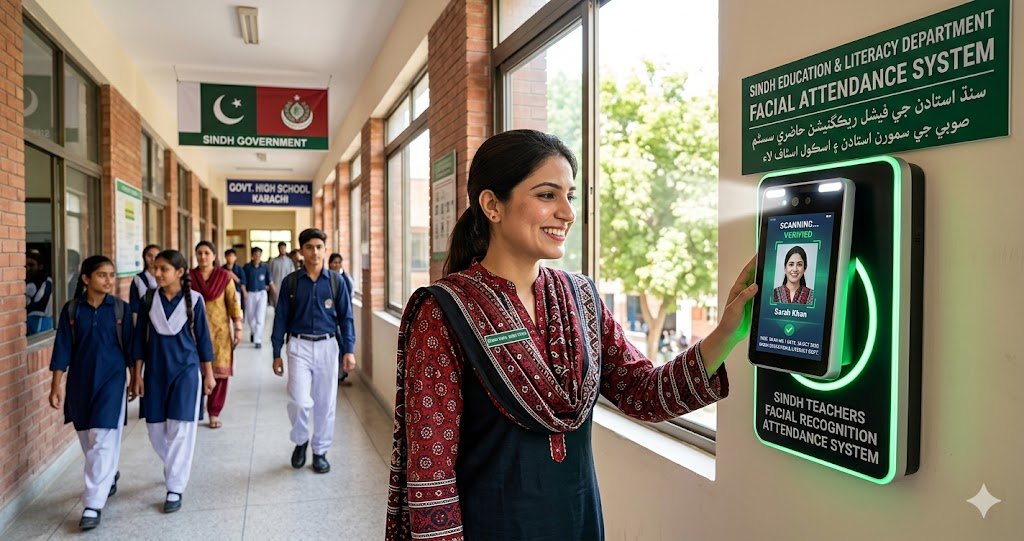
The working mechanism of the new attendance system is based on advanced biometric facial recognition technology. Each registered employee’s facial data is stored in a secure government database. When an employee will arrives at school, they must stand in front of the installed device of a facial recognition, which will scans and verifies their identity within a seconds.
Once verified, the system will automatically records the time of an arrival and marks the employee as present. The same process is repeated at the time of a departure, with ensuring an accurate tracking of a working hours. This system have eliminates the need for a manual attendance registers and reduces the chances of an errors or manipulation.
In an addition, the system is designed to detect an unauthorized attempts, such as the attendance of proxy or fake entries. If the system will detects any mismatch or irregularity, it will automatically flag the record for a review by the higher authorities. This have ensures that only a genuine attendance is recorded and maintained in an official records.
Rules for Leaves and Absenteeism
Under the new policy, leave management has also been strictly regulated. Employees are allowed a limited number of the leaves per month, but exceeding this limit will result in an additional consequences. According to the policy, more than a two leaves in a month will be classified as excessive and may lead to a deductions in salary or administrative review.
All the types of an absences, whether as planned or unplanned, will be recorded in the system and linked to a payroll calculations. Unauthorized absences will have a more severe impact, as they directly affect the scores of a attendance compliance. Teachers are advised to apply for the leave through a proper channels to avoid the penalties and ensure a transparency in the record-keeping.
The goal of this policy is to encourage a regular attendance and reduce the unnecessary absenteeism in a schools of government, with ensuring that students receive an uninterrupted education throughout the academic year.
Also Read: GCUF Fall Admissions 2026-27 for BS, MS, MPhil & PhD Programs Across Multiple Campuses
Automatic Salary Deduction Mechanism
The automatic salary deduction system is one of the most strict features introduced in this new attendance framework. Since the system is directly connected with AG Sindh Treasury, any violation of attendance rules will automatically reflect in salary calculations without manual approval.
If an employee arrives late, leaves early, or is absent without proper authorization, the system will record the incident and apply deductions accordingly. These deductions will be processed in real time and reflected in monthly salary reports. The automation of this process eliminates delays and ensures that payroll is fully aligned with actual attendance performance.
This mechanism is designed to create a performance-based system of accountability where a salary is directly linked to the behavior of attendance. It have encourages the employees to maintain a discipline and ensures that the resources of government are utilized as efficiently.
Required Registration Steps for Employees
To successfully register in the attendance system of facial recognition, employees must follow a structured process. First, they will be required to visit a designated centers of registration or school-level units of verification where their facial data will be captured with using a devices of biometric. This data will then be securely uploaded to the central database.
Next, employees will receive a confirmation of the successful registration, after which their data will be activated in the system of attendance. Once activated, they will be able to mark a daily attendance with using a devices of facial recognition that are installed at the entrances of school.
School administration has been instructed to assist the employees throughout the process and ensure that no one is left as unregistered. Technical support teams will also be available in during the rollout phase to resolve any issues as related to capture the data or errors in system.
Frequently Asked Questions (FAQ)
What is the new attendance system of facial recognition in a Sindh schools?
The Sindh Education Department has introduced a facial recognition-based attendance system for all the teachers and staff in a government school. It have automatically records a daily check-in and check-out using the scanning of a biometric facial to ensure the transparency and accurate monitoring of attendance in across the province.
Who is required to register in this new system of attendance?
All the teaching and non-teaching staff which is working in a government schools of Sindh must register in the system. This have includes a teachers, clerical staff, administrative employees, and support staff such as the peons and assistants without any exception.
When will the facial recognition system become fully active?
The registration process will take place during June and July, while the system will become fully operational from August. After August, attendance will only be marked through facial recognition devices installed in schools.
What happens if an employee does not register on time?
Employees who fail to complete registration within the given deadline may face serious consequences, including being unable to mark attendance and possible salary delays or stoppages until they are registered in the system.
How is the new system linked to salary payments?
The attendance system is directly connected with the AG Sindh Treasury. This means that the records of an attendance will automatically affect a calculations of salary, and any absence, late arrival, or violation may result in an automatic deductions from salary.
Will registers of a manual attendance still be used?
No, once the system becomes as fully operational, registers of a manual attendance will no longer be valid for an official records. Only a facial recognition-based digital attendance will be considered as authentic.
What is the rule for a leaves under the new system?
According to the new policy, more than a two leaves per month will be treated as excessive and may lead to a deductions in salary or administrative review as depending on the performance of attendance.
What will happens if someone arrives as late or leaves early?
Late arrival or early departure will be recorded as automatically by the system and may result in a deductions in salary. The system have ensures a real-time monitoring of the working hours for all employees.
What should employees do if they face a technical issues in during the marking of attendance?
Employees should immediately report a technical issues to the administration of school or designated IT support teams. The Education Department has instructed a schools to provide an assistance in during the phase of implementation.
Why has the government of Sindh introduced this system?
The main purpose of this system is to improve a transparency, reduce the absenteeism, ensure a punctuality, and enhance an accountability in the schools of government. It is part of a broader digital governance reform in the education sector.
Conclusion
The introduction of the facial recognition attendance system in Sindh schools have represents a major step toward the digital transformation in the public education sector. By integrating a monitoring of attendance with the payroll systems, the government have aims to improve a transparency, reduce the absenteeism, and ensure a better accountability in among the teachers and staff.
While the system have introduces a strict rules and penalties for the non-compliance, it have also brings a long-term benefits such as the improved discipline, better management in classroom, and more efficient use of a resources of government. As the system will becomes fully operational from the August onward, it is expected to significantly reshape the administrative structure of a school management in Sindh.