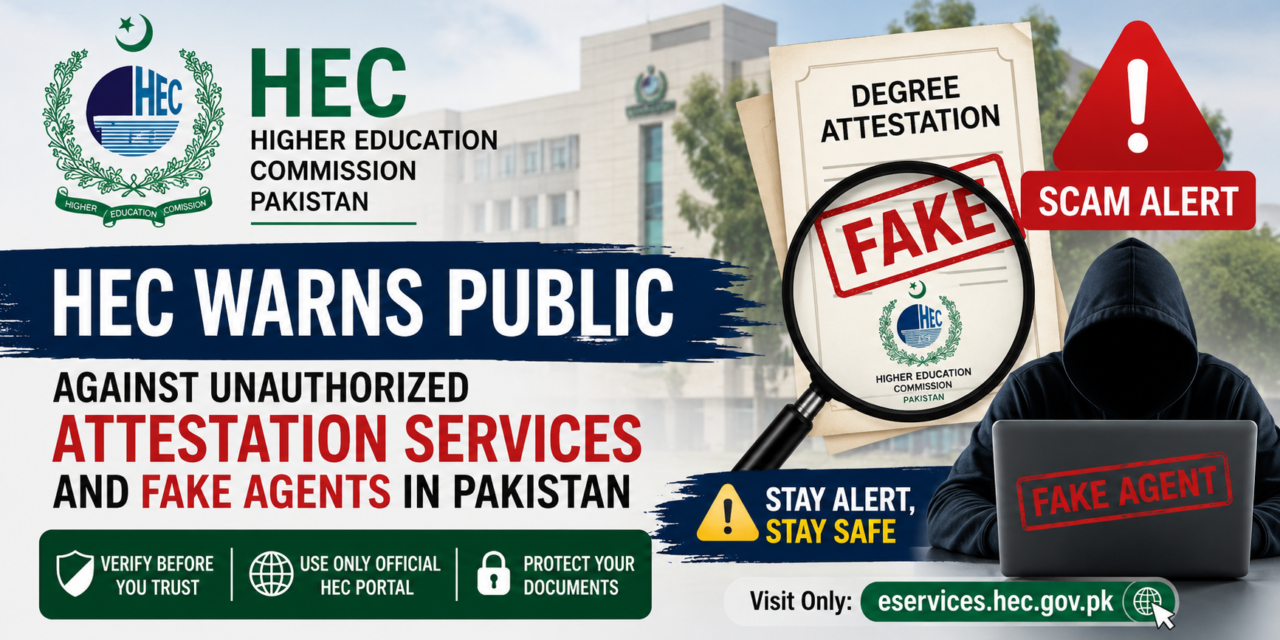
Introduction to HEC Attestation Scam
The Higher Education Commission (HEC) of Pakistan has recently issued an important public warning which is regarding to a fraudulent individuals and fake agents who are misleading the students, graduates, and applicants by offering an unauthorized services of a document attestation. These scammers are falsely claiming to represent the HEC and are attempting to collect a personal and educational documents through an unofficial channels. According to the official advisory, HEC has clearly stated that its entire system of attestation is fully digital, paperless, and operates only through its official online portal of e-services. No third-party or external agent is authorized to provide a services of attestation on behalf of the HEC.
This warning have comes at a time when the demand for an attestation of a educational document has increased as significantly due to an academic admissions, applications of job, and processes of an international verification. Fraudsters are exploiting this demand by targeting a vulnerable individuals, especially the students and recent graduates who may not be fully aware of the official procedures. HEC has strongly advised that all the citizens to remain as vigilant, avoid sharing a sensitive personal data with an unauthorized persons, and rely as strictly on a verified platforms of government. This advisory highlights the importance of digital awareness and secure document handling in Pakistan’s evolving education verification system.
HEC Issues Official Warning About Fraudulent Attestation Agents
HEC has officially confirmed that a multiple complaints have been received as regarding to the individuals who are impersonating an attestation agents. These fraudsters are using a misleading tactics, with including a fake websites, pages on social media, and personal contacts, to convince the students that they can expedite or guarantee a services of attestation. In a reality, these services are entirely unauthorized and have no connection with the official operations of HEC.
The commission have emphasized that all an attestation-related processes are strictly managed through its centralized online system. Applicants are required to submit their documents as directly through the e-portal of HEC, where each request is verified through a secure process of digital verification. The presence of a fake agents have not only creates a financial risk for the applicants but also exposes them to identity a theft and misuse of the personal academic records. HEC has urged the public to immediately report any suspicious individuals or platforms claiming to represent the organization. This official stance have reinforces the commitment of government to maintaining a transparency and security in the systems of an academic verification.
How Fake HEC Attestation Scams Are Targeting Students and Graduates
Fraudulent attestation scams are becoming as increasingly sophisticated in the Pakistan, with particularly targeting a students who are unfamiliar with the official system of HEC. These scammers have often approach the individuals through an apps of messaging, platforms on social media, or even a physical offices that have appear as legitimate at a first glance. They claim to offer a “fast-track attestation,” “guaranteed approval,” or “special access” to the services of HEC, which are completely a false claims.
In many cases, victims are asked to share a sensitive documents such as the copies of degree, information of CNIC, and academic certificates. Some fraudsters have also demand for an advance payments under the pretext of a service charges or fees of processing. Once the information or money is collected, these agents will disappear, leaving the victims with a financial loss and risks of potential identity. HEC has clarified that no such third-party service have exists and that all the processing is done as directly through its official digital platform. This growing trend have highlights the urgent need for a digital literacy in among the students and awareness about an official procedures of government.
Official HEC Online Attestation System Explained
The Higher Education Commission has developed a fully automated and system of a paperless attestation which is designed to ensure a transparency, efficiency, and security in the verification of document. This system have eliminates the need for a physical agents or intermediaries, which is making the process as more secure and user-friendly. Applicants can simply create an account on the official e-services portal of HEC and submit their attestation requests as online.
Once submitted, each document have undergoes a process of verification where an academic records are cross-checked with a relevant institutions and databases. Applicants can also track the status of their requests in a real time through the portal. The system is designed to minimize a delays and prevent the fraudulent manipulation of a documents. HEC has repeatedly emphasized that this is the only legitimate method for an attestation and any alternative service should be considered as suspicious. By digitizing the entire process, HEC have aims to reduce a corruption, improve an efficiency, and ensure that the academic credentials have remain as secure and verifiable in across the Pakistan and abroad.
Steps to Use HEC E-Services Portal for Document Attestation
To ensure safe and legitimate document attestation, applicants must strictly follow the official HEC e-services procedure. The process have begins by registering on the online portal of HEC with using a valid email address and personal information. After a registration, users are required to log in and create an application for the attestation of document by selecting the relevant category such as a degree, transcript, or certificate.
Next, applicants must upload a clear scanned copies of their documents along with a required details of identification. The system then generates a tracking ID that have allows the users to monitor the progress of their application. Payment for the service of attestation is also made as online through a secure channels of banking that are integrated into the portal. Once the process of verification is complete, applicants are notified to collect their attested documents or download a digital verification if it is applicable. This structured process have ensures that no external party can interfere or manipulate the workflow of attestation.
How to Identify and Avoid Fake Attestation Agents
One of the most critical aspects of public advisory of HEC is educating the students and graduates on how to identify an agents of a fraudulent attestation. These scammers have often use a highly convincing methods to appear as legitimate, but there are clear warning signs that can help the individuals to protect themselves. A major red flag is when someone claims to have an “inside access” to HEC or promises a guaranteed approval of the documents within an unusually short time. HEC has clearly stated that no such shortcut have exists in its official system, as every document have undergoes a standardized process of verification.
Another common tactic which is used by a fake agents is requesting a personal documents such as the copies of CNIC, degree certificates, or information of passport through WhatsApp or unofficial emails. This is extremely dangerous because such a data can be misused for a theft of identity or fraudulent activities. Additionally, scammers have often demand an extra fees that are not part of the official structure of HEC, sometimes claiming these are “processing charges” or “urgent service fees.” HEC has emphasized that all the official payments are only made through the e-services portal, and no external method of payment is recognized.
Applicants are strongly advised to verify any provider of service by checking the official website of HEC and avoiding the individuals or pages that are not linked to a domains of government. Awareness and caution are the strongest defenses in against such a scams, and users should immediately report a suspicious activity to support the channels of HEC.
HEC Advisory for Students and Public Safety Measures
HEC’s advisory is not only a warning but also a comprehensive safety guideline designed to protect students and the general public from fraud. The commission has urged all the applicants to ensure that they use only an official channels of communication when dealing with an attestation of document. This have includes the e-services portal of HEC and the official help desk, which is designed to provide an assistance regarding to the submission of application, verification of document, and a technical issues.
The advisory have further highlights that students should not rely on an advertisements on social media or unofficial agents who are claiming an affiliation with the HEC. In many cases, these fraudulent advertisements are designed to mislead a users into sharing the personal data or making an unauthorized payments. HEC has also encouraged an educational institutions to spread an awareness in among the students about a proper procedures of attestation, especially in among a fresh graduates who are more likely to fall the victim to such a scams.
To strengthen the measures of safety, HEC have continues to improve its digital infrastructure, with ensuring that all the data is securely stored and verified through an encrypted systems. This have reduces the chances of a forgery of document and ensures that an academic credentials have remain as authentic and traceable. Public cooperation have plays a vital role in making this system as effective, and users are encouraged to stay as informed and cautious.
Importance of Protecting Educational Documents from Fraud
Educational documents such as the degrees, transcripts, and certificates are in among the most valuable assets for a students and professionals. These documents are often required fo an admissions in a higher education, applications of job, and an international processes of a verification. Because of their importance, they have become a primary target for the fraudsters who attempt to misuse or replicate them for an illegal purposes.
HEC’s warning have highlights the importance of protecting these documents from an unauthorized access. Once personal academic data is shared with fake agents, it can be misused in multiple ways, including fake job applications or fraudulent academic claims. This can have long-term consequences for individuals, including legal issues and damage to their academic reputation.
The digitization of the HEC attestation system has significantly improved document security, but user awareness is still essential. Individuals must ensure that they never share an original or scanned copies of their documents with an unknown persons. Instead, all the submissions should be made as directly through the official portal, which have provides a secure and traceable environment. By following a proper procedures, applicants can ensure that their academic records have remain as safe and valid.
Official Channels for HEC Help and Support
To assist the applicants and ensure a transparency, HEC has established an official channels of support that users can access for a guidance and resolution of problem. The primary source of an assistance is the e-services portal of HEC, where users can not only submit their applications but also track their progress and resolve a technical issues. Additionally, HEC have provides an online desk of help that have responds to a queries that are related to a procedures of attestation, requirements of document, and account management.
Applicants are strongly encouraged to use these official channels instead of relying on an external agents or third-party services. The help desk is designed to provide an accurate and verified information as directly from the representatives of HEC, with ensuring that the users will receive a reliable guidance. This have reduces the risk of a misinformation and helps to maintain the integrity of the system of attestation.
HEC has also emphasized the importance of reporting a fraudulent individuals or websites that misuse its name. Public cooperation in reporting such cases helps the organization take legal action against scammers and protect future applicants. By using official support channels, users can ensure a smooth, secure, and legitimate attestation experience.
FAQs
Is attestation of HEC done through an agents?
No, HEC attestation is only done through its official online portal.
How can I apply for the attestation of HEC?
You must register and apply through the e-services portal of HEC.
Are fake HEC agents real?
No, HEC has officially warned that such an agents are fraudulent.
What should I do if someone contacts me as an agentof HEC?
Immediately avoid them and report to the official support of HEC.
Conclusion
The recent advisory which is issued by the Higher Education Commission have serves as a critical reminder of the importance of a digital safety and awareness in the academic processes. With the increasing reliance on an online systems for the verification of document, the risk of a fraudulent activities has also grown. Fake attestation agents are exploiting this shift by targeting the students and graduates with a misleading promises and unauthorized services.
HEC has made it as clear that its entire system of attestation is fully online, secure, and managed as exclusively through its official portal of e-services. No third-party or external agent is authorized to provide a services of attestation on its behalf. This have reinforces the importance of a public awareness and responsible digital behavior.
Students and professionals must remain as vigilant, avoid sharing a personal information with the unknown individuals, and rely only on a verified platforms of government. By following these guidelines, individuals can protect their academic credentials and ensure a safe process of verification. Ultimately, this advisory have not only protects the users but also strengthens a trust in the higher education verification system of Pakistan.