HEC Foreign Degree Rules Introduction
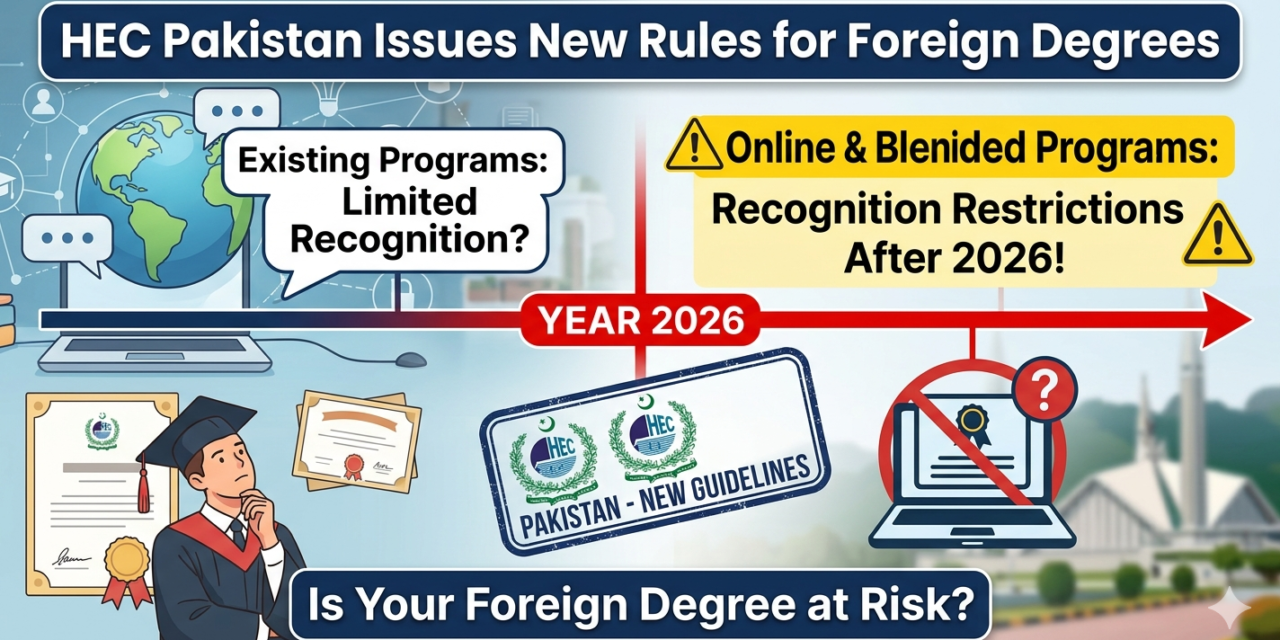
HEC Foreign Degree Rules has recently issued an important advisory that have directly impacts the students who are planning to pursue a higher education in abroad. According to the updated framework of policy, foreign degrees that are completed through an online or modes of a blended learning may face a limitations of recognition in Pakistan after Spring 2026 unless these modes are officially approved by the regulatory authority of the host country. This development has created a significant attention in among the students, parents, and education consultants because it have changes how an international degrees will be evaluated in the future. The policy have emphasizes that students must carefully verify the academic structure of their chosen program as before enrolling, especially whether it is fully on-campus or partially/fully online. The advisory have also applies not only to a future applicants but also to the students who are already enrolled in a foreign universities. This have means the decision has both an immediate and consequences on long-term for an academic planning. The goal of this article is to explain the policy in a detail, its implications, and what the students should do to avoid an issues of recognition while studying in abroad under the supervision of a Higher Education Commission (HEC) Pakistan.
Overview of HEC Foreign Degree Policy Update
The updated guidelines that are issued by a Higher Education Commission (HEC) Pakistan have focus on ensuring that a foreign degrees meet the proper academic standards and approval of a regulatory. The key change is related to the recognition of an online and programs of a blended learning that are offered by an international universities. Previously, many students who are enrolled in a foreign institutions under a flexible modes of learning without fully understanding how their degrees would be evaluated in the Pakistan. Under the new advisory, degrees that are officially registered as on-campus programs but completed as entirely online may not be recognized unless the host country’s regulatory authority explicitly have approves such a modes of delivery. This policy have aims to align the education standards of Pakistan with a frameworks of an international accreditation and ensure that the academic qualifications will maintain a credibility in both the local and global markets. The update have also introduces a stricter checks for the equivalence applications of degree through the online verification system of HEC. Students are now required to provide a detailed documentation about their mode of study, structure of attendance, and an institutional accreditation. This change have reflects a broader shift toward the assurance of quality and transparency in a recognition of an international education.
Why HEC Introduced New Rules for Foreign Degrees
The main reason which is behind this shift in policy is the increasing global trend of an online and hybrid education programs, especially after the expansion of a platforms of digital learning. Many universities in worldwide have began as offering a structures of flexible degree that have allow the students to complete their studies as remotely. However, not all of these programs have meet the same academic standards as traditional on-campus education. Higher Education Commission (HEC) Pakistan have introduced these rules to protect students from enrolling in a programs that may later lose a recognition or fail to meet the standards of equivalence. Another major reason is the concern about an academic authenticity and assurance of quality. In some cases, institutions have offered a degrees that are labeled as “on-campus” while delivering most of the coursework online, with creating a confusion in the credential evaluation. The policy have also aims to strengthen the higher education system of Pakistan by ensuring that a foreign qualifications are consistent with an international bodies of accreditation. Additionally, it have helps to prevent a disputes in future where the students face a difficulties in the employment or further studies due to an unrecognized degrees. This proactive approach is designed to safeguard both a careers of students and the integrity of an academic standards.
Impact of Online and Blended Learning Programs
One of the most significant aspects of the new policy is its impact on an online and programs of a blended learning which is offered by a foreign universities. Many international students have prefer these flexible modes of study due to a lower costs and convenience. However, under the updated rules by a Higher Education Commission (HEC) Pakistan, such the programs will now be closely evaluated for an eligibility of recognition. If a program is originally designed as an on-campus degree but completed as fully online without an approved authorization, it may not qualify for an equivalence in the Pakistan after 2026. This will creates a serious concern for students who are currently enrolled in such a programs, as their validation of a future degree may depend on the compliance with a standards of regulatory. Blended programs of learning that have combine an online and physical attendance must also meet a minimum requirements of residency that are set by the host country’s education authority. This have means that the students must ensure that their institution is not only accredited but also legally permitted to offer a formats of hybrid learning. The impact have extends to a universities as well, as they may need to revise their structures of program to maintain an international recognition and attract the students of Pakistan.
Who Will Be Affected by the New Policy
The new policy have applies as broadly to both a current and future students who are planning to study in abroad. This have includes the students who are already enrolled in a foreign universities under the online or hybrid programs, as well as those who are preparing to apply in the future. According to the Higher Education Commission (HEC) Pakistan, the advisory is not limited to a new admissions but is also relevant to an ongoing academic enrollments. Students who are pursuing the degrees as remotely without a proper approval of regulatory from the host country may face a challenges in during the applications of a degree equivalence. Additionally, graduates who complete their programs after Spring 2026 under a non-compliant modes of study may experience an issues of recognition when applying for a jobs or higher education in the Pakistan. The policy have also affects a consultants of education and institutions that promote a foreign admissions, as they must now provide an accurate guidance regarding to the accreditation of program and format of delivery. Families that are planning to invest in an international education must also be more cautious, as financial and academic decisions could be impacted by an outcomes of recognition. Overall, the policy have introduces a wider responsibility on the students and advisors to verify an academic legitimacy as before an enrollment.
Degree Recognition and Equivalence Process in Pakistan
The process of a degree recognition in Pakistan is handled through a structured system of verification which is managed by a Higher Education Commission (HEC) Pakistan. Students who complete their education in an abroad must apply for an equivalence of degree to ensure their qualifications are officially recognized for an employment or further studies. The updated policy have strengthens this process by requiring a detailed verification of the mode of study, institutional accreditation, and requirements of a physical attendance. Applicants must submit an official transcripts, certificates of degree, and proof of a structure of program, with including that whether the course was completed on-campus or online. HEC have evaluates each application individually as based on merit and compliance with an international standards. Under the new advisory, programs that do not meet an approved conditions of regulatory may be rejected or delayed in an approval of equivalence. The online system which is used for a verification have also plays a crucial role in ensuring the transparency and reducing a fraudulent claims. This process have ensures that only a genuine and properly accredited degrees receive a recognition in the academic and professional sectors of Pakistan.
Important Guidelines for Students Planning to Study Abroad
Students who are planning to study in abroad must now take an extra precautions before enrolling in any program of foreign university. According to a Higher Education Commission (HEC) Pakistan, it is essential to verify tthat whether the program is officially recognized in its host country and whether the mode of a study have complies with a standards of regulatory. Students should confirm if the program is fully on-campus, partially online, or fully online, and whether such a formats are accepted for the accreditation of degree. It is also recommended to check the global ranking of institution, status of accreditation, and requirements of a physical residency before making any financial commitments. Consulting an official education advisors or resources of HEC can help to prevent an issues of recognition in future. Additionally, students should carefully read the documents of admission and ensure that the title of degree and method of delivery are clearly stated. Proper planning at the initial stage can prevent a major academic and financial losses in the future. This proactive approach is now more important than ever due to the stricter implementation of a foreign degree policies oof recognition.
Risks of Non-Compliance with HEC Rules
Failure to comply with the updated guidelines can result in a serious academic and professional consequences. If a student have completes a degree through an unapproved online or blended format, the qualification may not be recognized in the Pakistan. According to a Higher Education Commission (HEC) Pakistan, this could lead to a rejection of the applications of a degree equivalence, limiting opportunities for an employment, higher education, or jobs in government. In some cases, students may also face a financial losses due to the investments in a non-recognized programs. Employers in Pakistan have often require an HEC-recognized degrees, and lack of an equivalence can significantly impact the growth of career. Additionally, misinformation from an unauthorized agents or institutions can increase the risk of enrolling in an invalid programs. The policy have therefore emphasizes the importance of a transparency and proper verification as before an enrollment. Students are encouraged to cross-check all the academic details through an official channels to avoid a complications in future. Non-compliance have not only affects an individual students but also damages a trust in the international systems of education.
Difference Between On-Campus and Online Degree Programs
Understanding the difference in between an on-campus and programs of an online degree is crucial under the new framework of policy. On-campus programs have require the students to physically attend a classes at the university, participate in labs, and meet the requirements of residency. In a contrast, online programs are conducted as entirely through a digital platforms, with allowing the students to study as remotely. Blended programs will combine both a formats but still require minimum physical attendance as depending on the regulations of institution. According to Higher Education Commission (HEC) Pakistan, only those programs that have comply with an approved standards of regulatory will be eligible for a recognition in Pakistan. Many students have previously assumed that an online degree from a reputable university would automatically be accepted, but the new policy have clarifies that a mode of delivery is equally important as accreditation. This distinction is critical because it have directly affects a decisions of degree equivalence and opportunities of a career in future. Students must now carefully analyze the structure of program as before enrollment to ensure that their qualification have remains as valid in Pakistan.
FAQs
What is the new rule of HEC foreign degree?
HEC will not recognize some as online and blended foreign degrees after the Spring 2026 without a proper approval.
Are online degrees from a foreign universities valid in the Pakistan?
Only if the program is approved by the regulatory authority of host country.
Who will be affected by this policy?
Both the current students and future applicants who are studying in abroad.
How can students avoid an issues of a degree recognition?
By verifying an accreditation, mode of study, and requirements of a residency as before enrollment.
Conclusion
The updated recognition of a foreign degree policy which is introduced by a Higher Education Commission (HEC) Pakistan have marks a significant shift in the higher education evaluation system of Pakistan. By placing a strict conditions on online and blended programs of learning, the policy have aims to maintain an academic integrity, ensure the international compliance, and protect a students from an invalid qualifications. While the changes may seem as challenging for a current and future students, they ultimately promote a transparency and quality in the global education standards. Student who are planning to study in abroad must now adopt a more informed and cautious approach when selecting the universities and programs of degree. Proper verification of an accreditation, study mode, and requirements of a residency is essential to avoid an issues of a future recognition. In the long run, this policy will help to strengthen the credibility of a foreign degrees and ensure that the graduates of Pakistan have remain as competitive in both a local and international job markets.